Why This Fails Locally
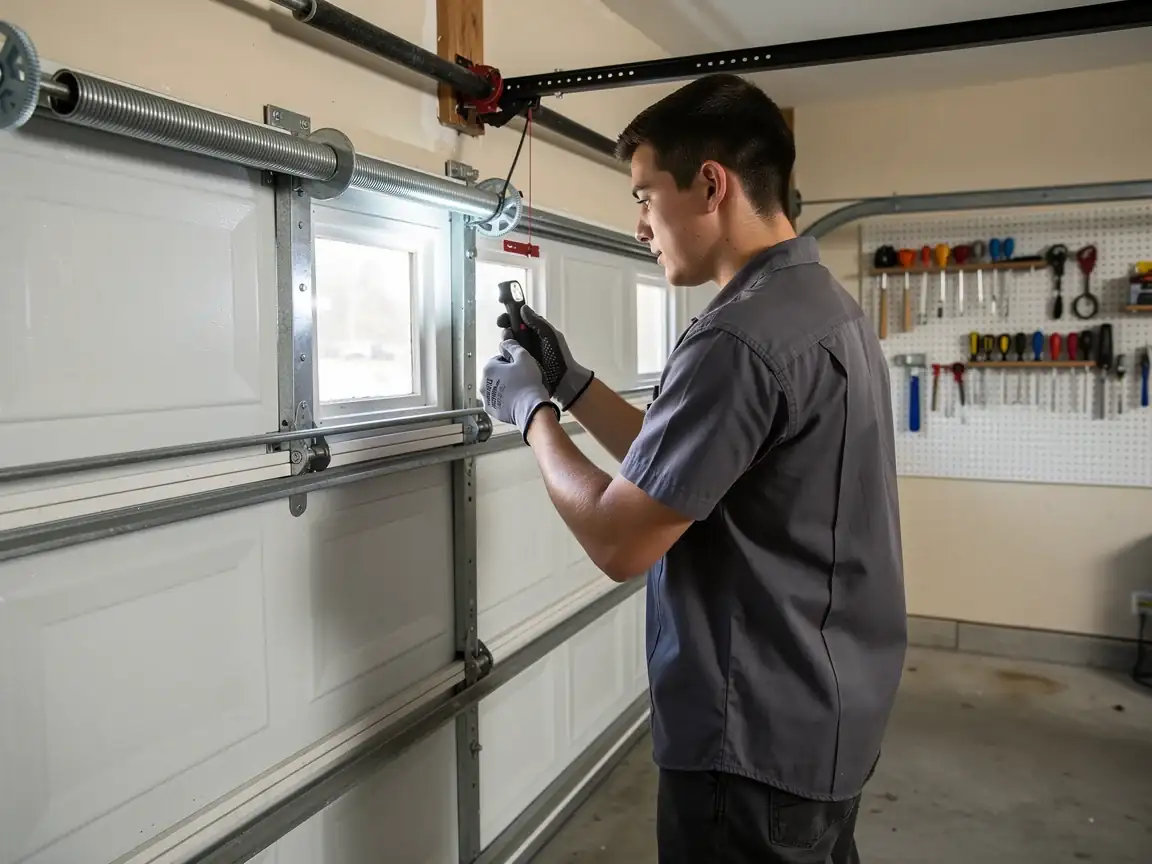
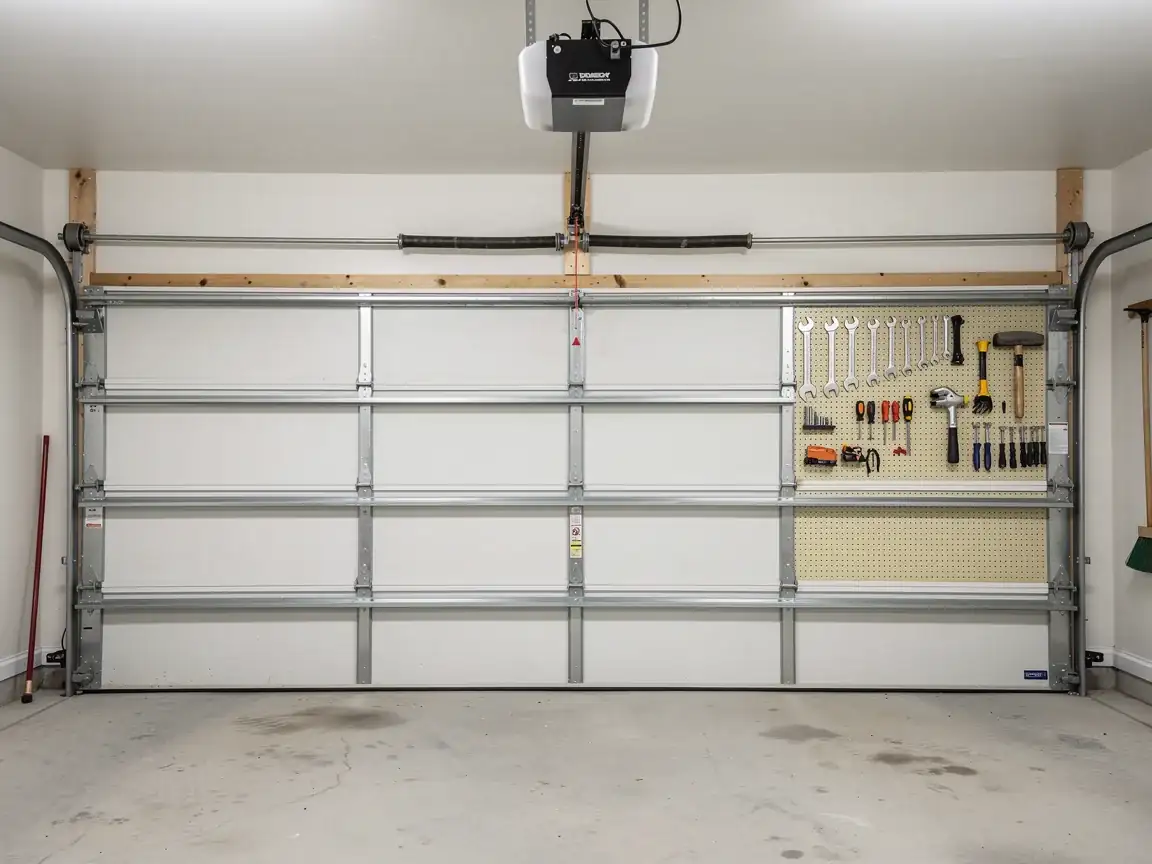
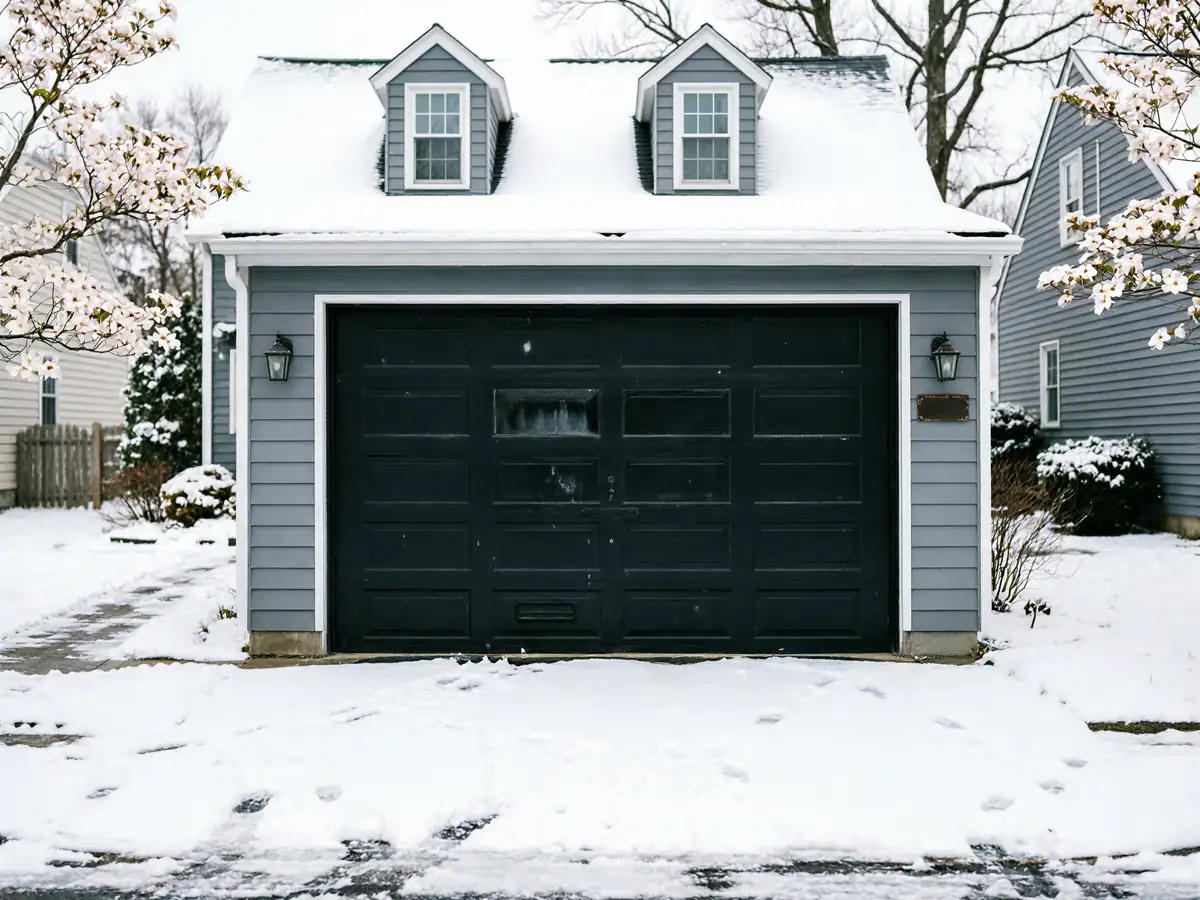
The region's housing stock runs 1938 to 1996 with a median around 1982, and Auburn sits right at that median with most homes dated to 1983. That means the original torsion hardware on a lot of these doors is now over 40 years old - the springs have cycled tens of thousands of times through a cold climate that's classified as severe, and steel fatigues faster through repeated winter cold-to-warm swings than most owners expect. A spring rated for a certain cycle count doesn't fail gracefully; it just lets go one morning when the door is cold and stiff. Combine 40-year-old wire with a door that was already built heavy for a double bay, and you get the pattern we see across this part of the service area: springs that look fine on inspection and then snap on the next cold morning.
The Symptom
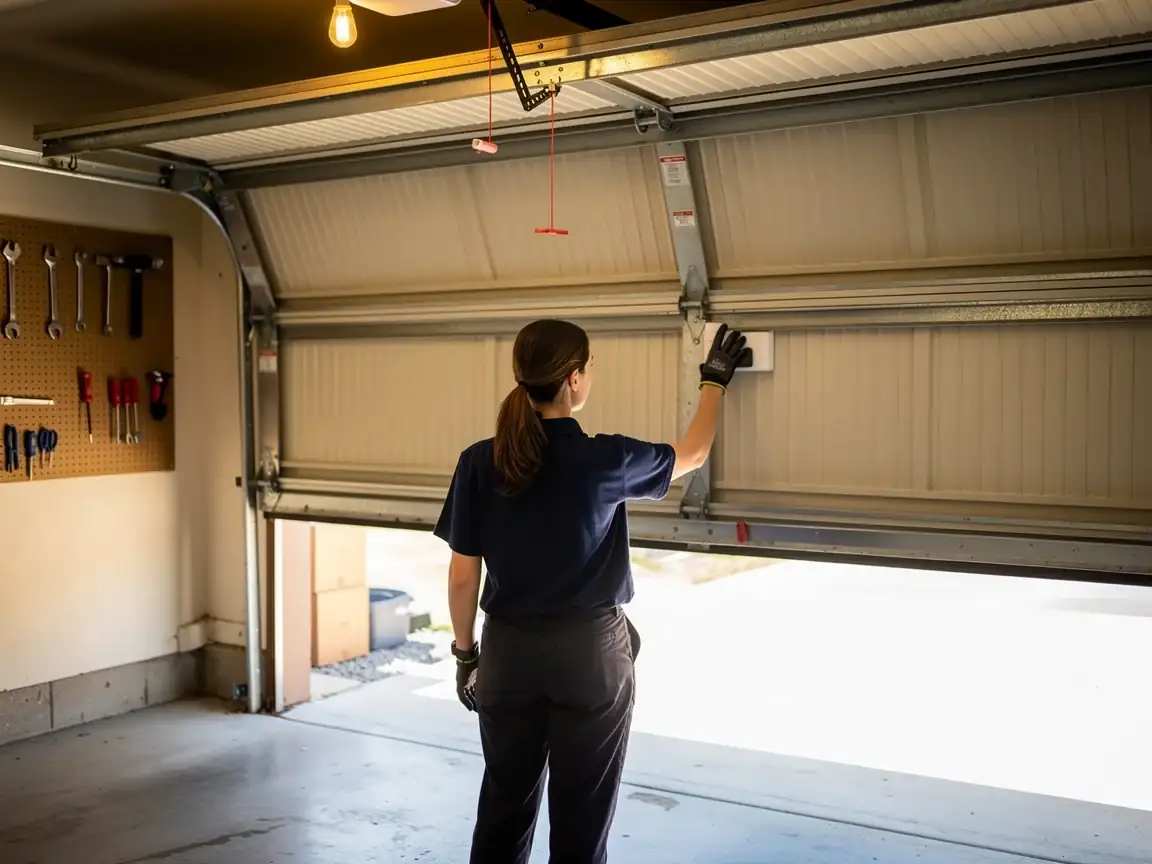
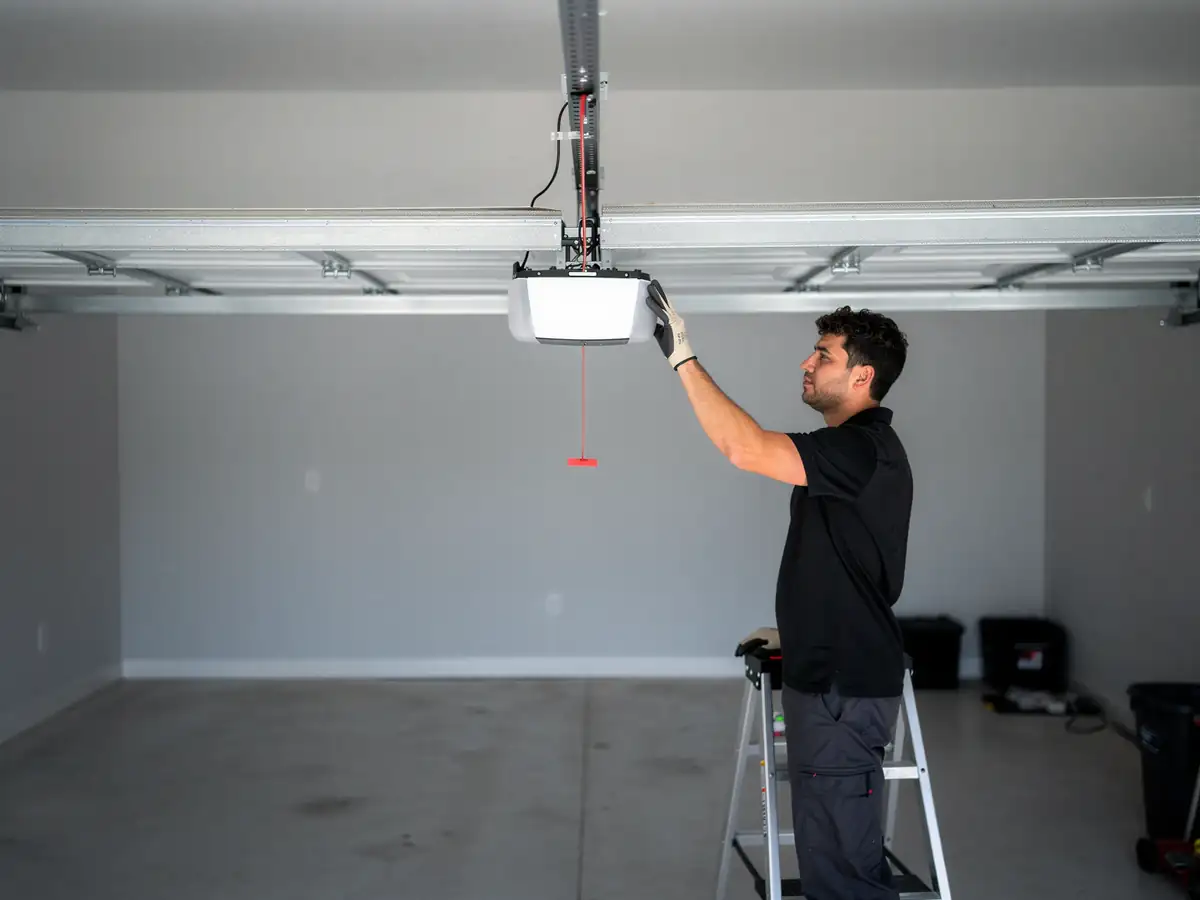
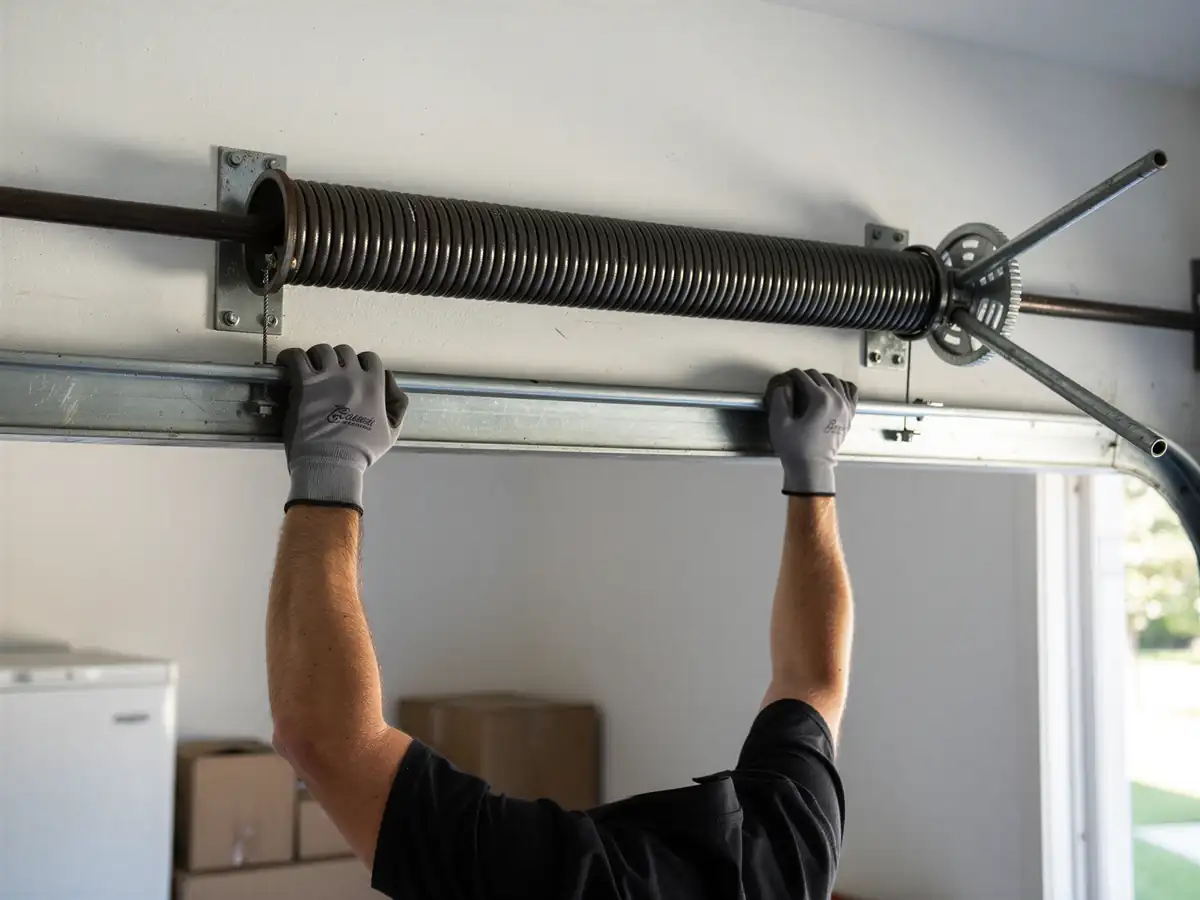
The door won't move, or it moves a few inches and stalls. Sometimes there's a bang from the garage - that's the spring letting go, not the opener failing. On a double door from this era, you'll often see one spring still wound tight and the other hanging loose with a visible gap in the coil. The opener isn't broken; it was never built to lift a spring-less door, and trying to force it with the wall button will burn out the drive gear fast. If the door lifts unevenly, cocked to one side, that's one spring still holding while the other has already gone - still an emergency, just a slower-looking one.
Stocked Parts
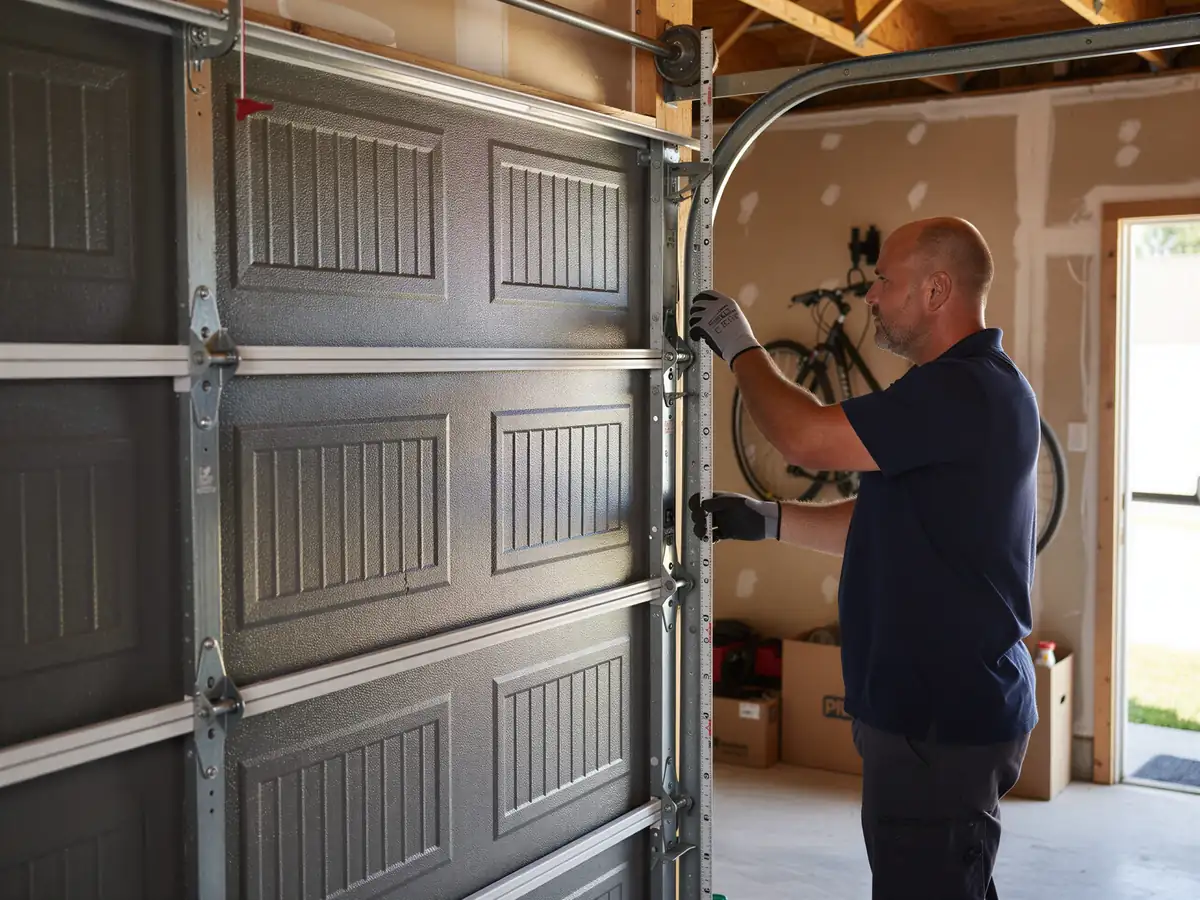
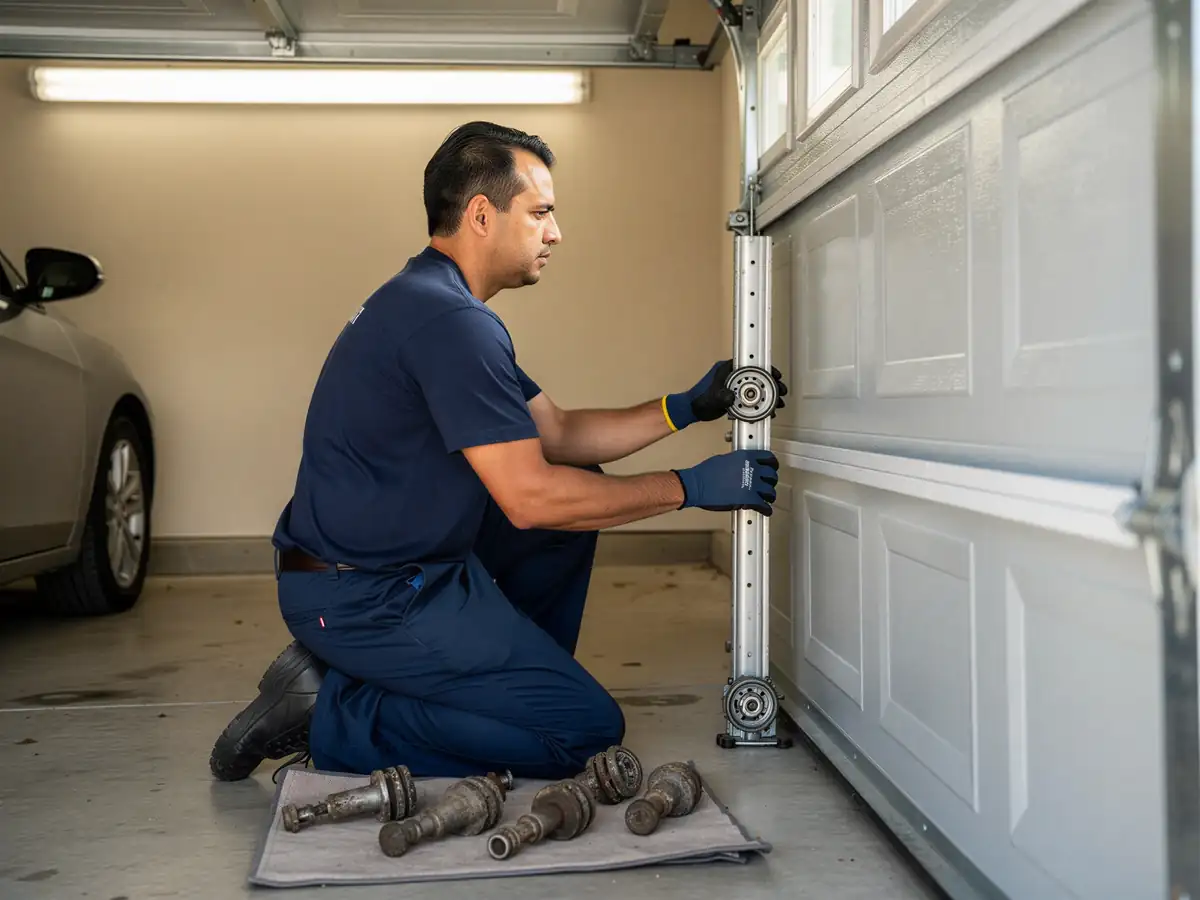
We carry the common torsion spring sizes that fit 1980s and 90s steel sectional doors on the truck, because that's what we run into most on this side of Londonderry. Less common wire gauges or oversized commercial-grade springs sometimes have to come from a supplier, which can add a day or two - we'll tell you straight if that's the case rather than quote a same-visit fix we can't deliver.
Time on the Job
A standard torsion spring swap on a double door, done with the right bars and a stocked part, usually runs under two hours once we're on-site. We're coming from Londonderry, about 10 miles out, so factor that drive into when we can get there rather than how long the repair itself takes - the wrench time doesn't change, the travel does.