Stocked Parts
Most of the calls we get for opener repair come down to the same handful of parts
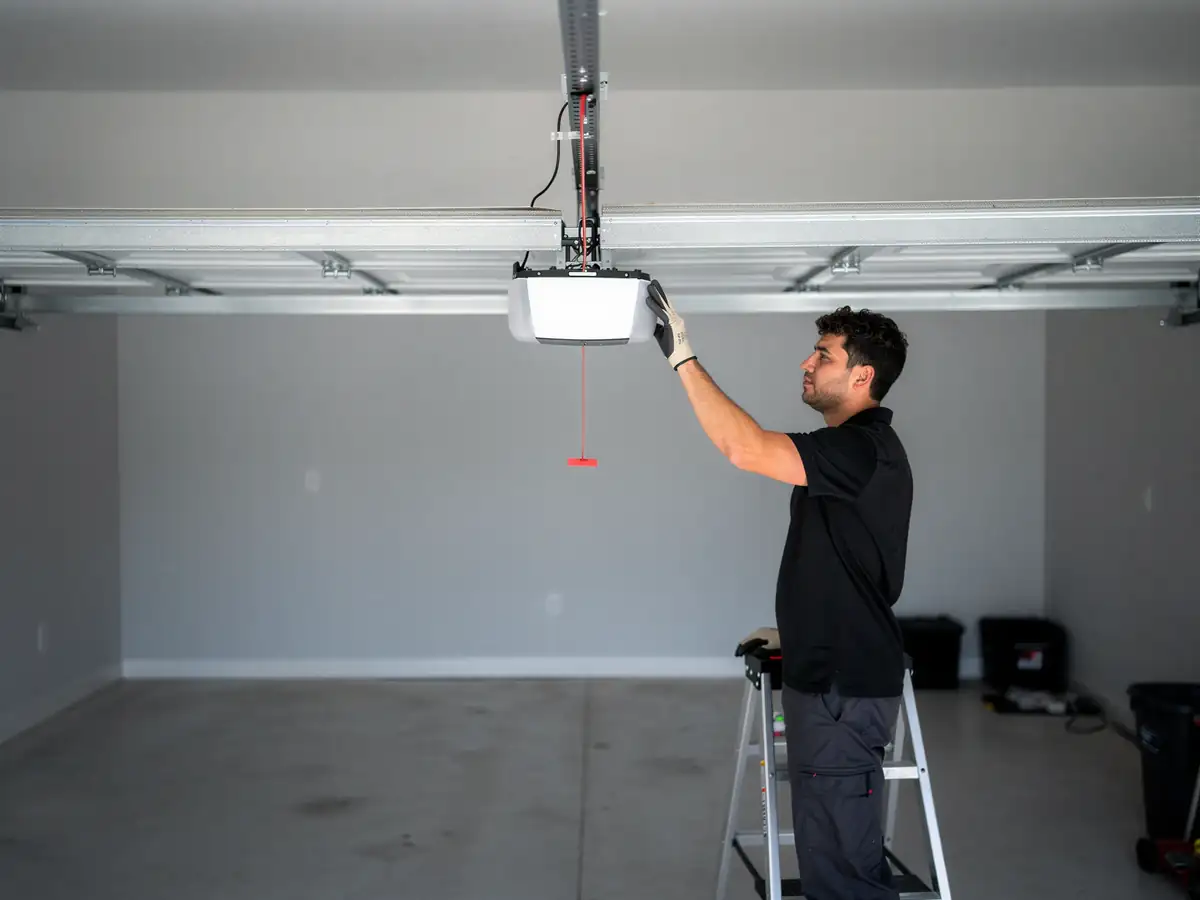
And we keep them on hand because the housing stock around here makes them predictable failures. The service area runs from Litchfield and Hudson out to Chester, Sandown, and the rest of the 28 towns we cover, and the bulk of that housing went up between 1938 and 1996, with the median landing in 1982. That means a lot of chain and screw-drive openers installed during that building run, along with the circuit boards, gear and sprocket kits, wall consoles, and photo-eye safety sensors that go with them.
We carry logic boards for the drive types that were common in that era
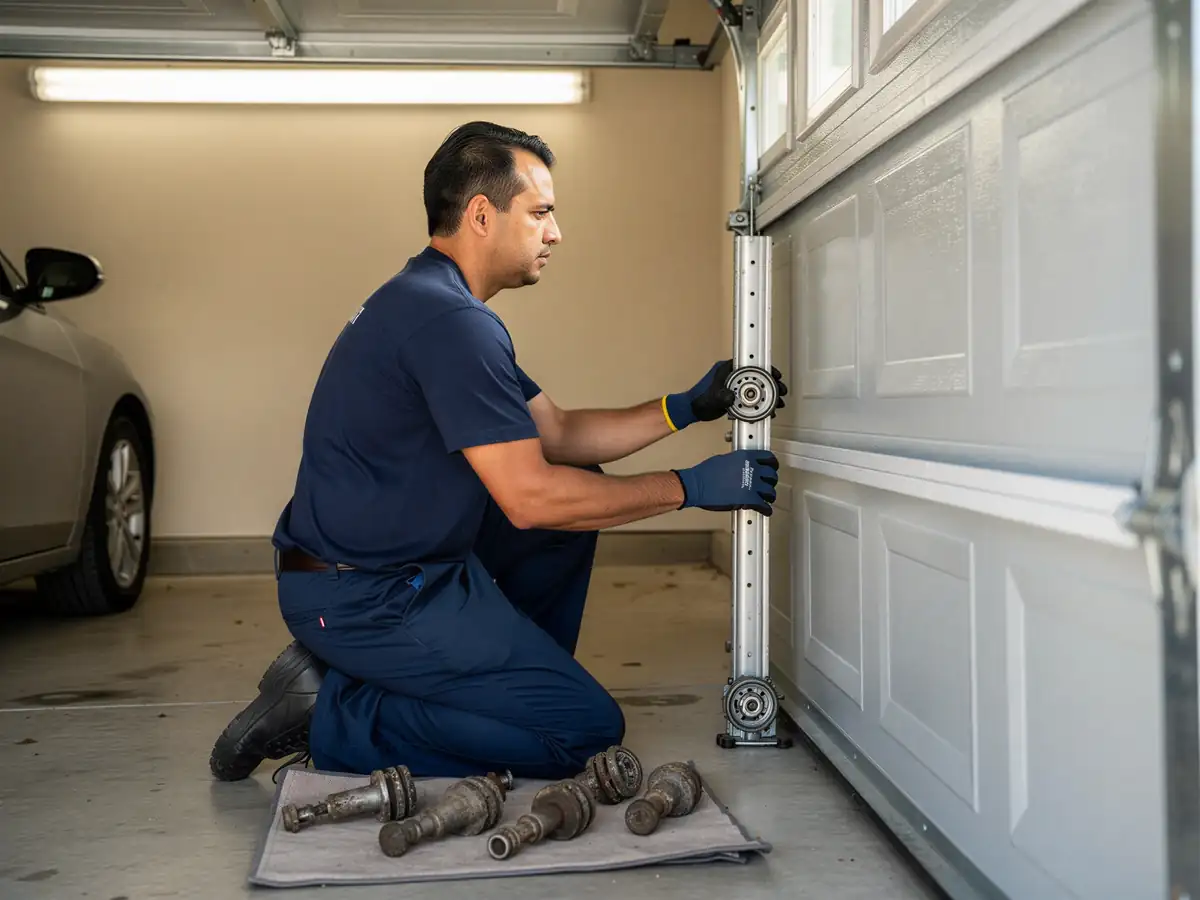
Replacement gear sets (the small plastic gear that strips is the single most common part we swap), capacitors for the motor start circuit, and travel-limit switches. Belt and chain assemblies we stock in the lengths that fit standard residential door heights. What we don't carry on the truck is every control board for every opener model ever sold - some of the older proprietary boards have to be special-ordered, and that can mean a short wait instead of a same-visit fix.
The Symptom
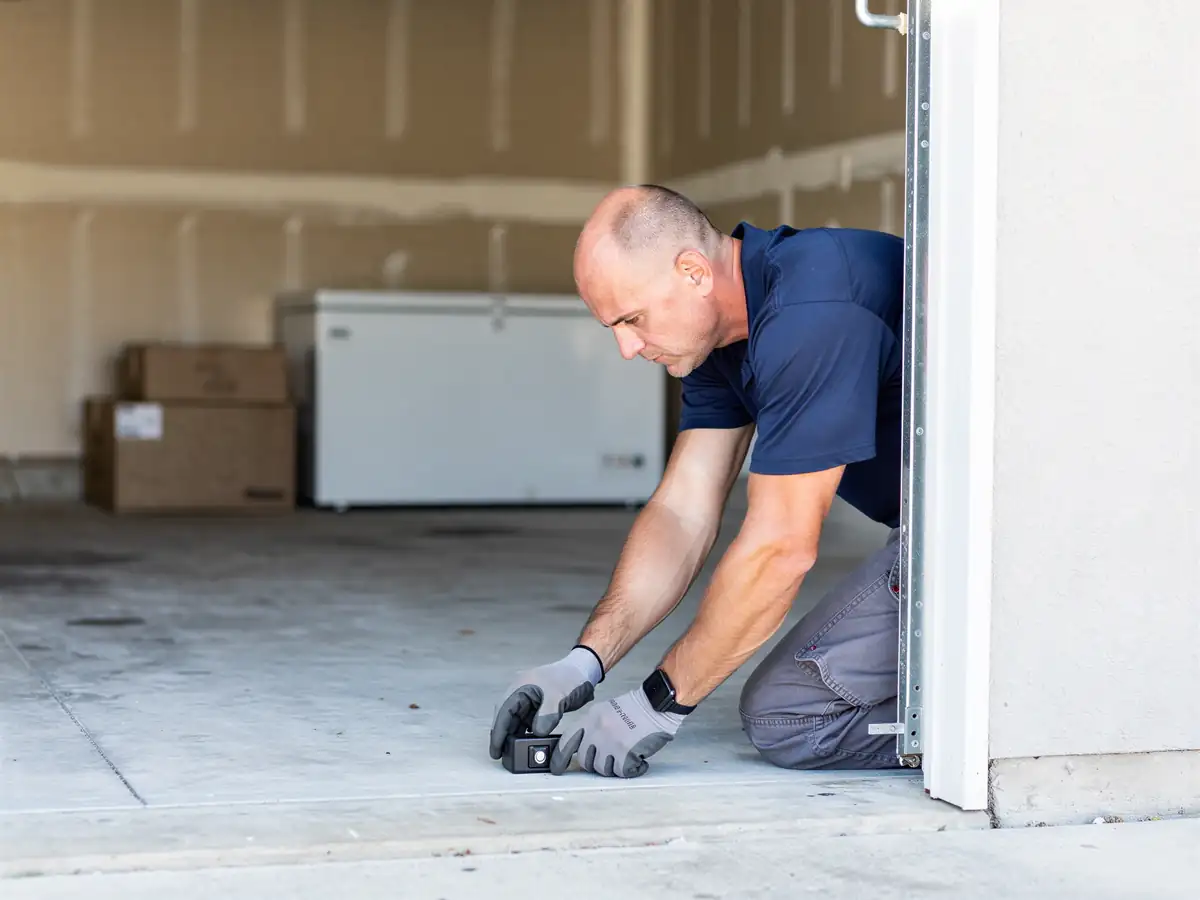
The complaint usually sounds like one of three things. The opener hums or clicks but the door doesn't move at all - that's almost always a stripped gear or a dead capacitor, not the motor itself. The door starts up, gets partway, then reverses and goes back down - that's a limit switch out of adjustment or a force setting that's drifted, sometimes paired with a safety sensor that's gone out of alignment. Or the remote and wall button do nothing, the light doesn't blink, and the opener seems dead - that points to the circuit board or the power supply to it.
Less common but still frequent: the opener runs but the door lags behind, moving slower than it used to, or makes a grinding noise partway through the cycle. That's usually the gear again, or a chain that's stretched and needs re-tensioning. None of these mean you need a new opener right away. Most of them are a parts swap, not a unit replacement, and we'd rather tell you that up front than sell you a whole new system for a thirty-dollar gear kit.
Why This Fails Locally
Two things line up here that make opener failure a high-volume call in this area rather than an occasional one. First, the age of the housing stock: with a median build year of 1982 and most construction between 1938 and 1996, a large share of the openers in this service area were installed or replaced during a window that's now two to four decades old. Gear sets, capacitors, and circuit boards in units from that era are well past the point where failure is a surprise - it's a matter of when, not if.
Second, the climate band here sits at the severe end of cold. Cold weather is hard on an opener in specific ways: chain and gear lubricant thickens and adds resistance right when the motor is already working against a door that's heavier from cold-stiffened weatherstripping, and capacitors lose capacity faster in cold garages, which is why dead-on-cold-mornings calls cluster in winter. With 34,548 owner-occupied houses across this service area, that combination of old stock and cold winters means opener failures aren't rare - they're one of the most common calls we take between November and March.
What the Fix Involves
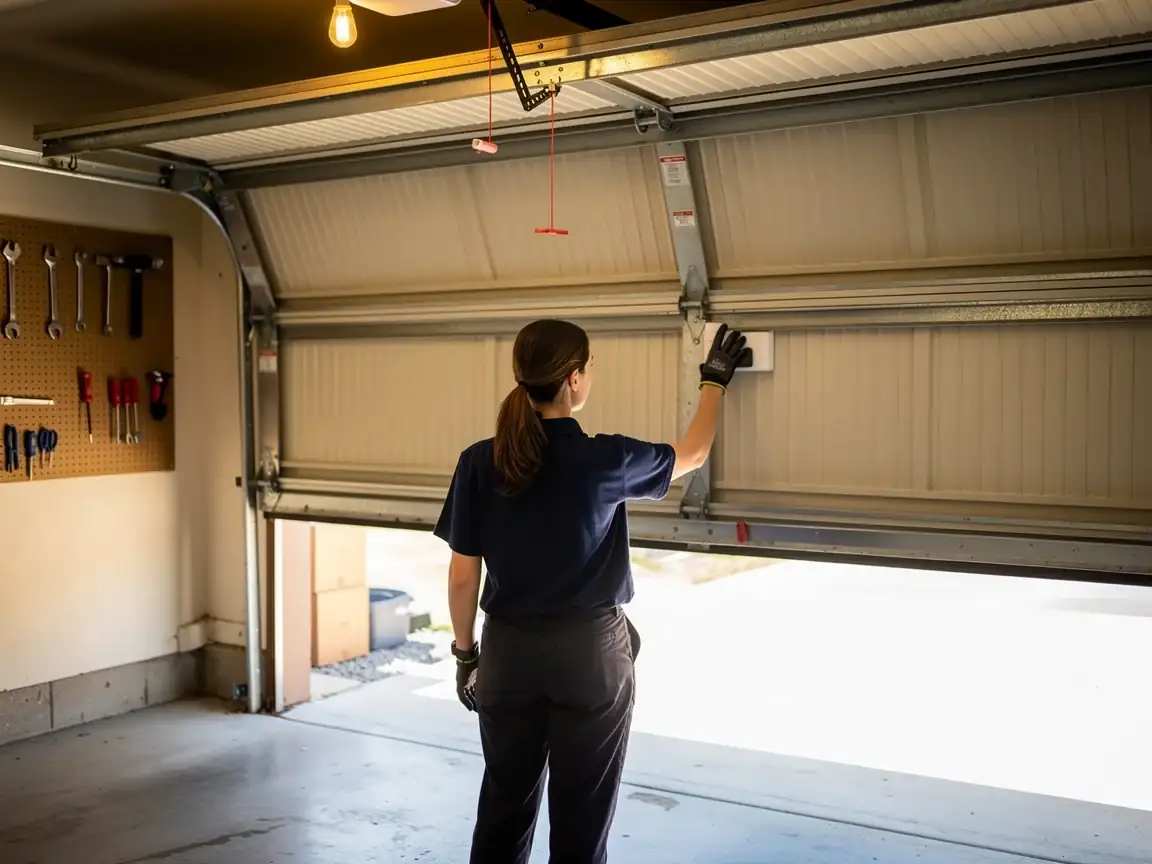
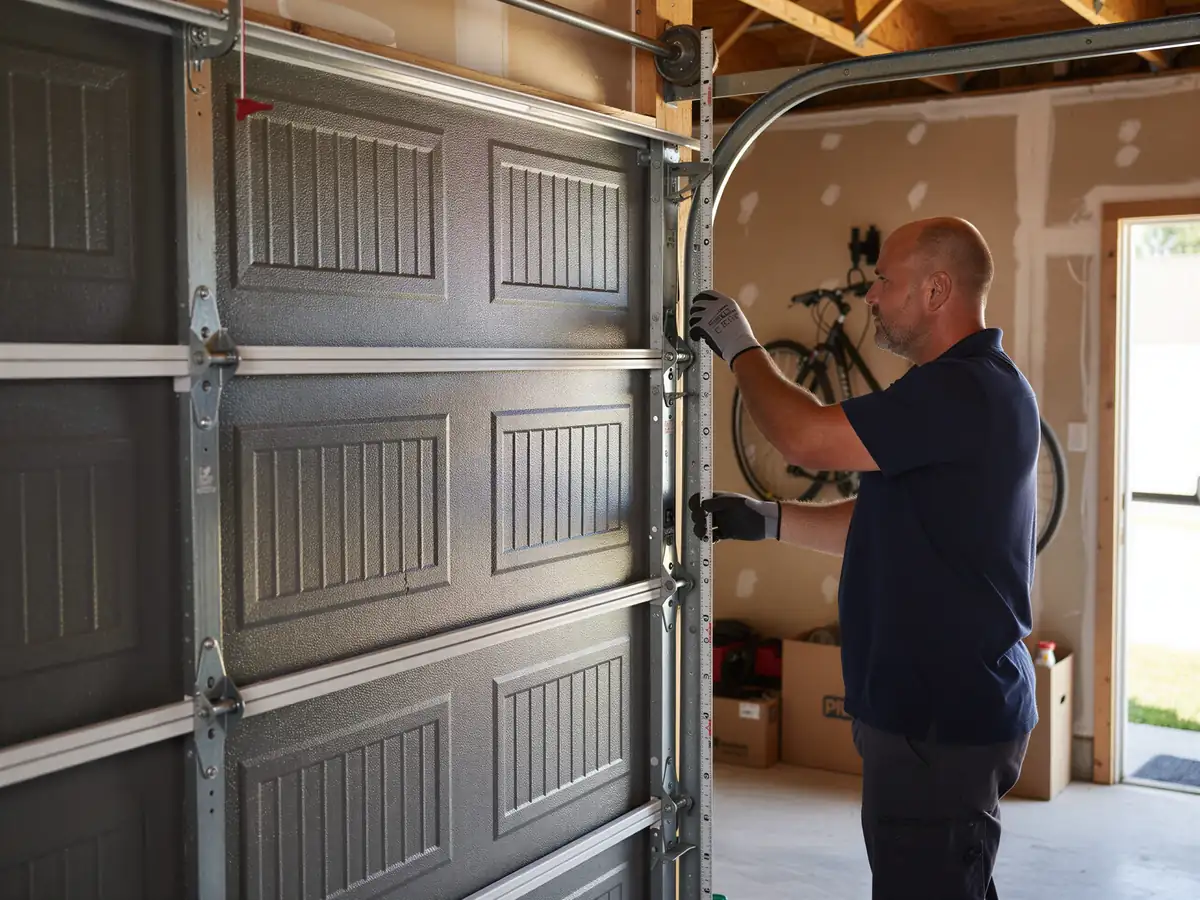
We start by watching the door run a full cycle, both directions, before touching anything
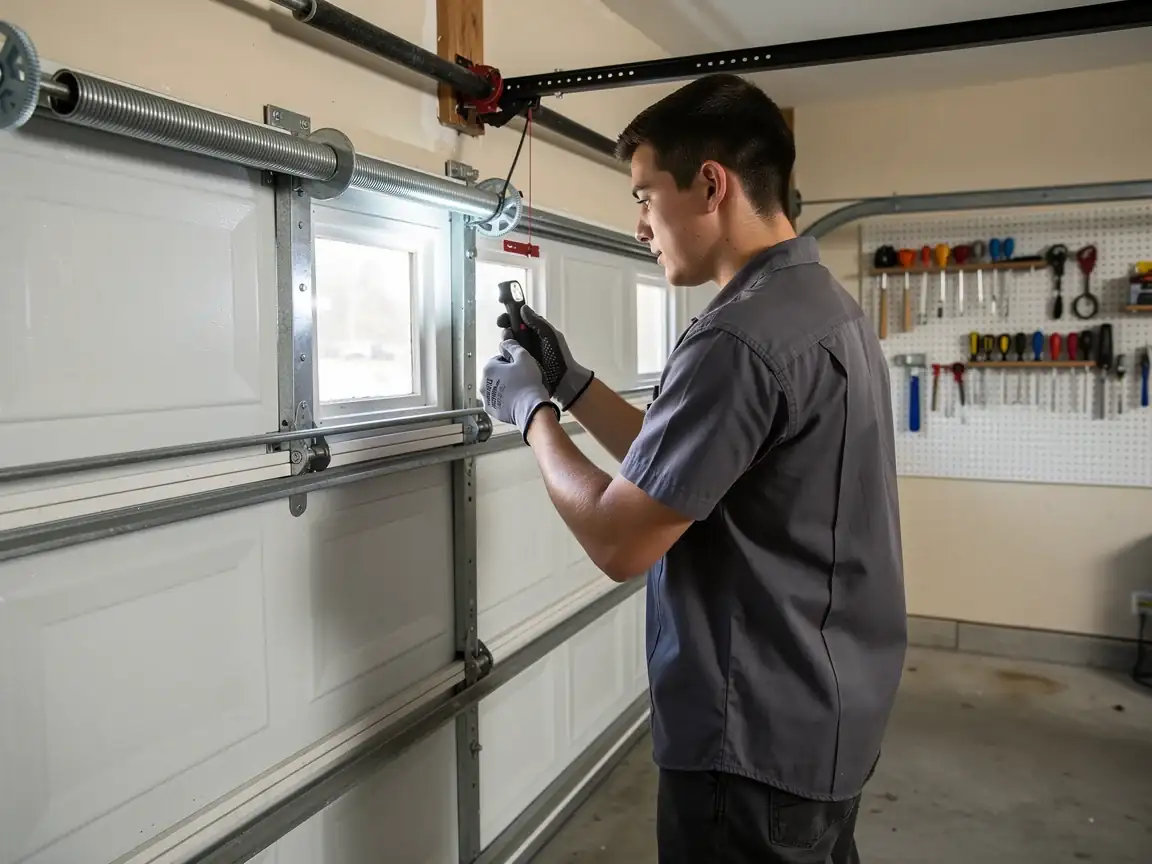
That tells us whether the problem is mechanical (gear, chain, belt) or electrical (board, capacitor, wiring) faster than pulling the cover first. If it's a stripped gear, that's a straightforward swap - open the housing, replace the gear and sprocket kit, re-grease, test the travel limits and force settings, and run it a few cycles to confirm it holds.
If the symptom points to the board or capacitor, we test the power supply to the unit first
Since a bad outlet or GFCI trip gets blamed on the opener more often than you'd think. From there it's a board swap or capacitor replacement, then a full force and limit recalibration, because those settings drift after any internal part is replaced.
Here's the honest limitation
If your opener is an older proprietary model and the board has to be special-ordered, we'll tell you the wait time before we start rather than after. And if the unit is old enough that a repair would cost close to what a new opener runs, with a median household income of $125,774 across this area, most homeowners choose replacement at that point rather than chase parts for a unit nearing the end of its run anyway.
- $125,774 median household income