What a New Garage Door Installation Looks Like in Londonderry
Londonderry Garage Door Pros installs new garage doors built for New Hampshire's cold winters, matched to the area's 1980s-90s housing stock and openers.
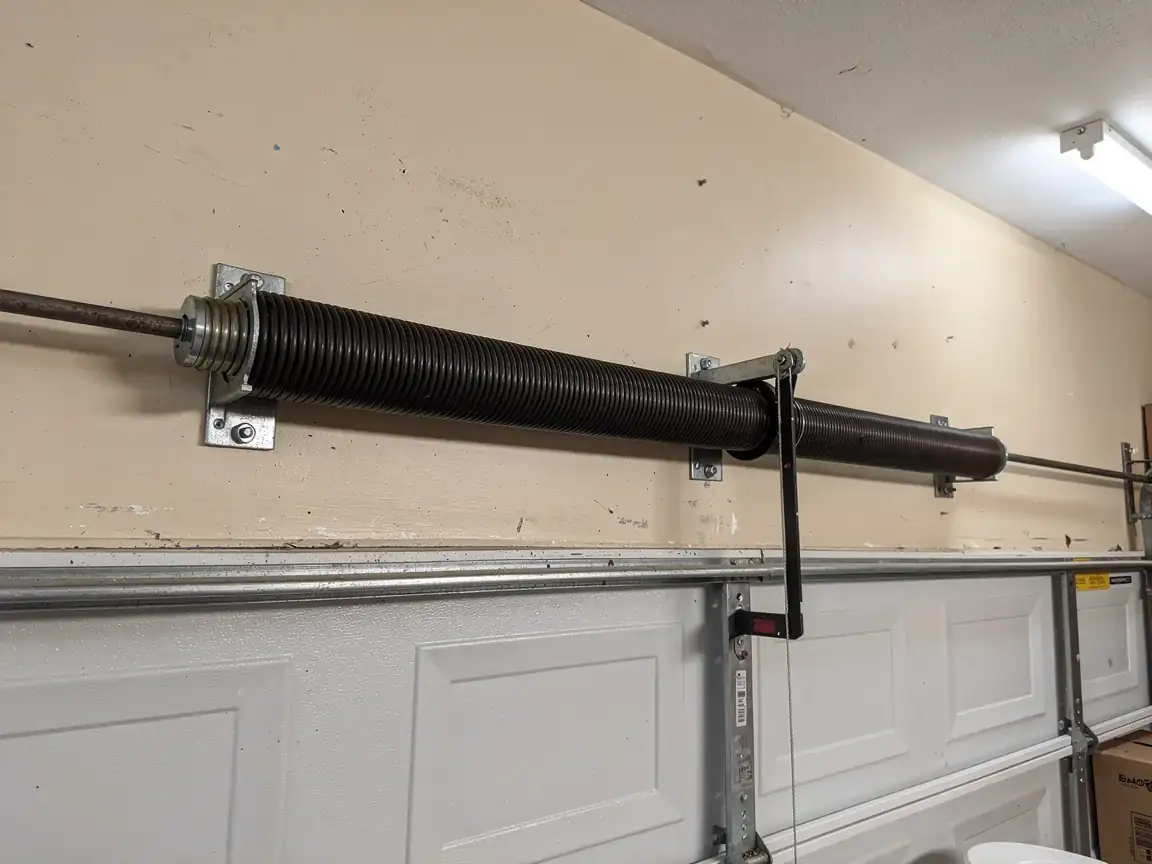
Our truck carries the parts that actually move in this market, not a catalog of everything that exists. That means torsion springs wound for the standard 7-foot and 8-foot openings you find on houses built across the 1938-1996 window that makes up most of this area's stock, insulated steel sections in the widths that fit those same openings, nylon rollers, galvanized track, and openers rated for unheated garages. If you want a door style outside that common range - a custom height, a non-standard material, a specialty window pattern - we can order it, but it's a special-order lead time, not a same-week job. We'd rather tell you that up front than promise a truck-stock part we don't actually carry. For a straight swap on a door built to match what's already in the opening, we're usually working with what's already on the van.
The Symptom
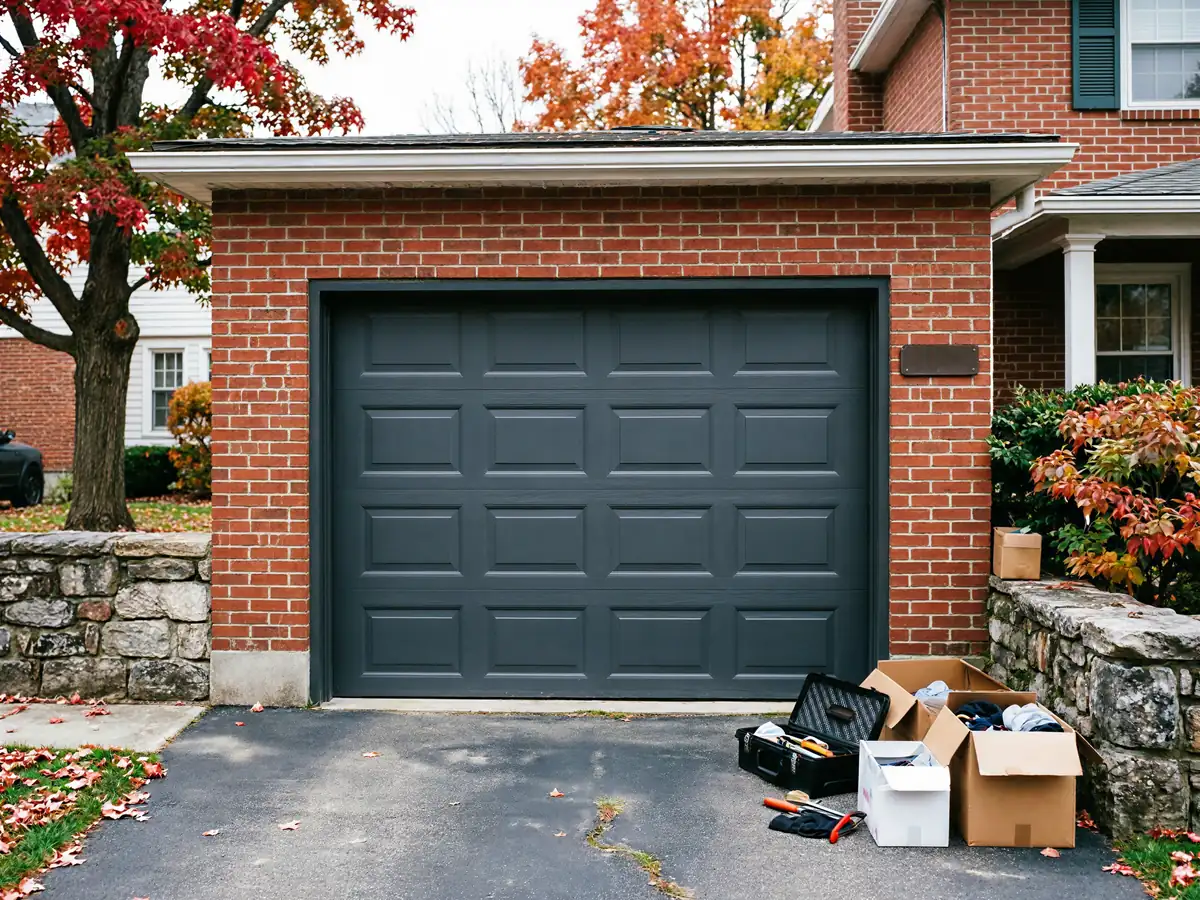
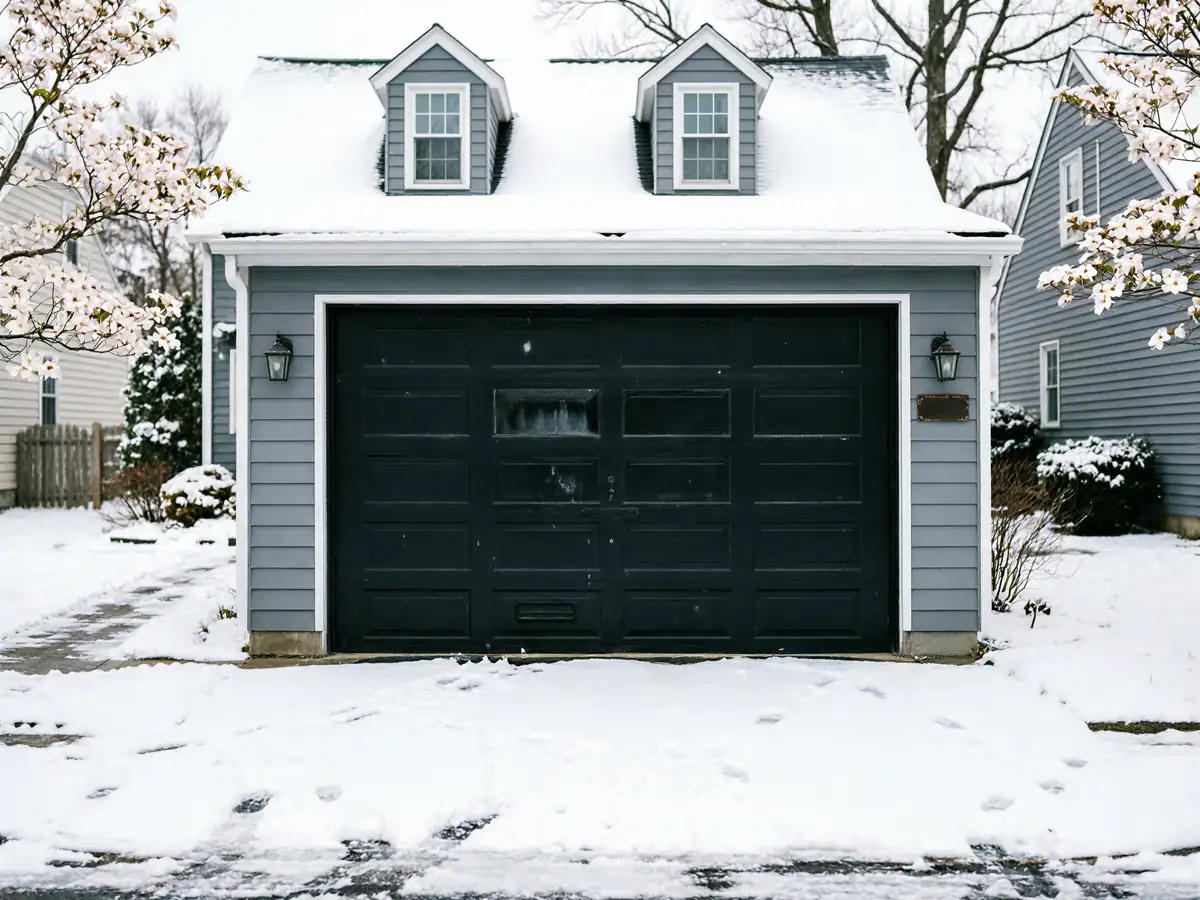
The call usually starts the same way: the door still opens, but it's working harder than it used to. It sags visibly in the middle when it's down. The bottom panel has started to rust from the inside out where moisture sits against bare steel. The opener strains and groans on the last foot of travel, or the door comes down crooked on one side. None of that is an opener problem by itself - it's a door built in the 1980s or 90s, the era that makes up most of the housing stock in this market, reaching the end of what a non-insulated steel door is built to do. By the time an owner notices the sag, the torsion spring and the track alignment are usually both past adjustment and into replacement territory.
Why This Fails Locally
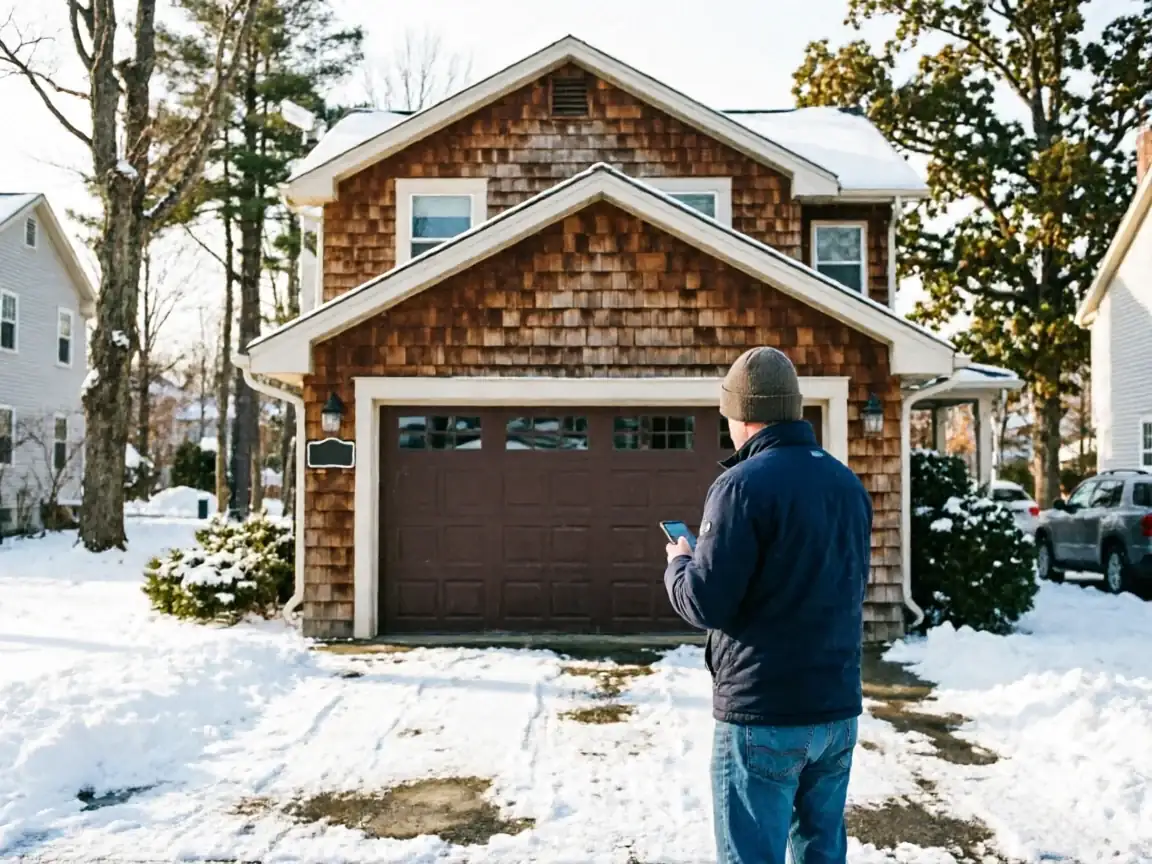
This area sits in a cold-severe climate band, and that matters more here than it would somewhere milder. A steel door built in the early 1980s, before insulated cores were standard on mid-range doors, takes forty years of freeze-thaw cycling on the panel seams and the bottom seal. The steel doesn't insulate, so condensation forms on the inside face every winter, and that's what starts the rust you see on older doors before the hardware even fails. With roughly 34,548 owner-occupied houses out of 55,192 households in this market, and most of that stock dating to the 1980s and 90s, a large share of garages are still running a door that was never built for the temperature swings this climate puts on it. Replacement at that point isn't about the look of the door - it's that the panel itself has stopped doing its job, and no amount of weatherstripping fixes a warped section.
What the Fix Involves
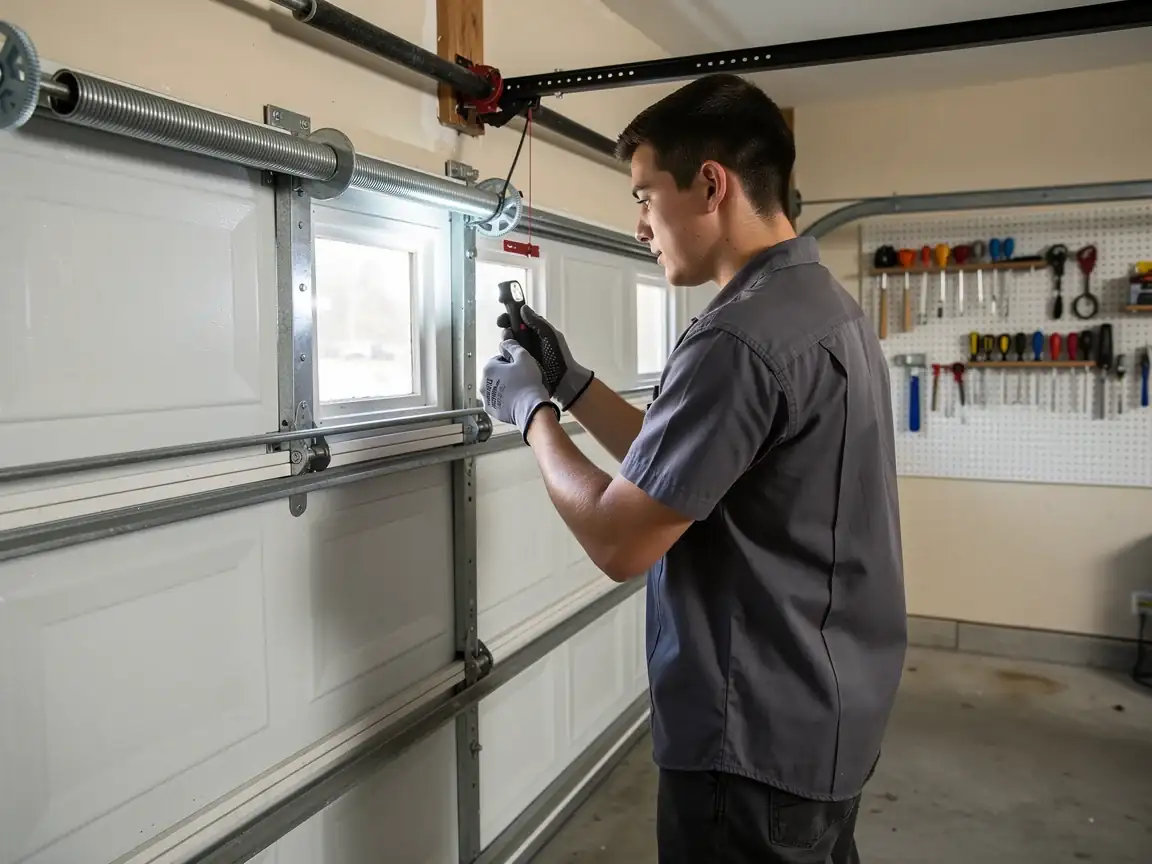
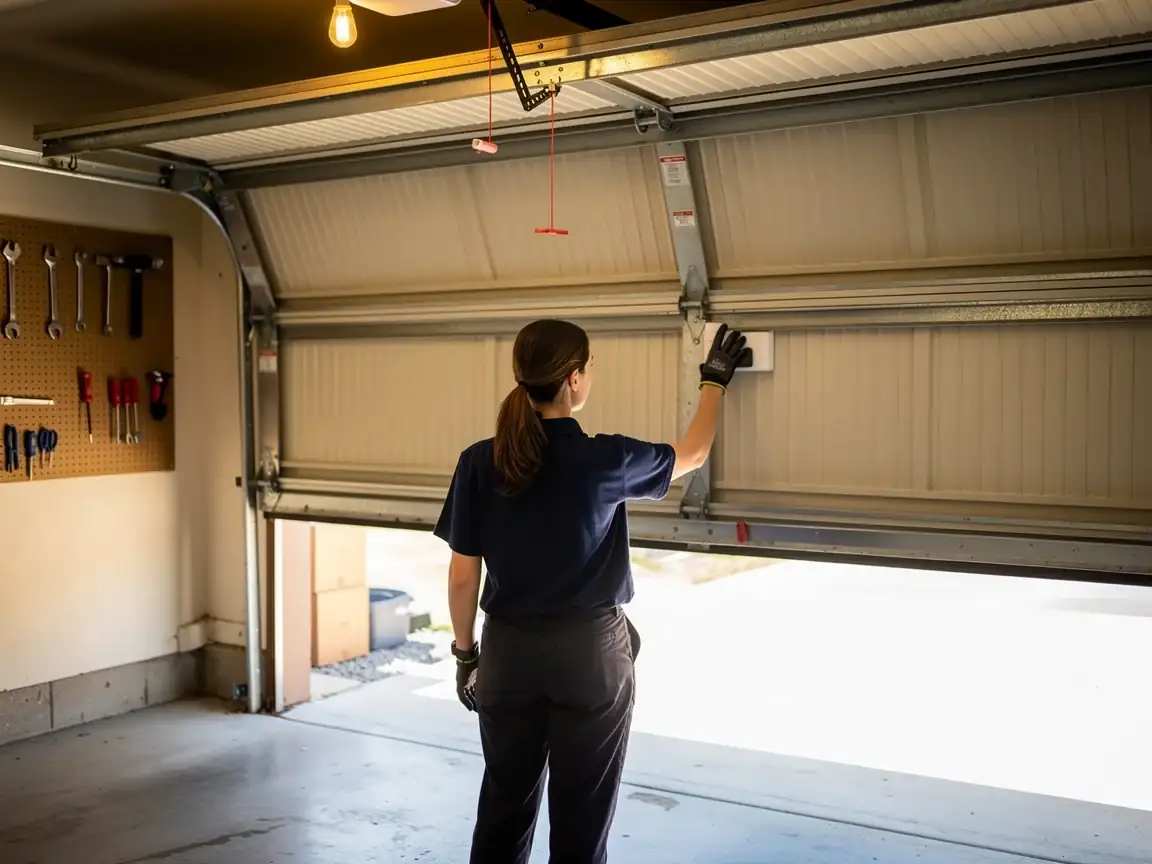
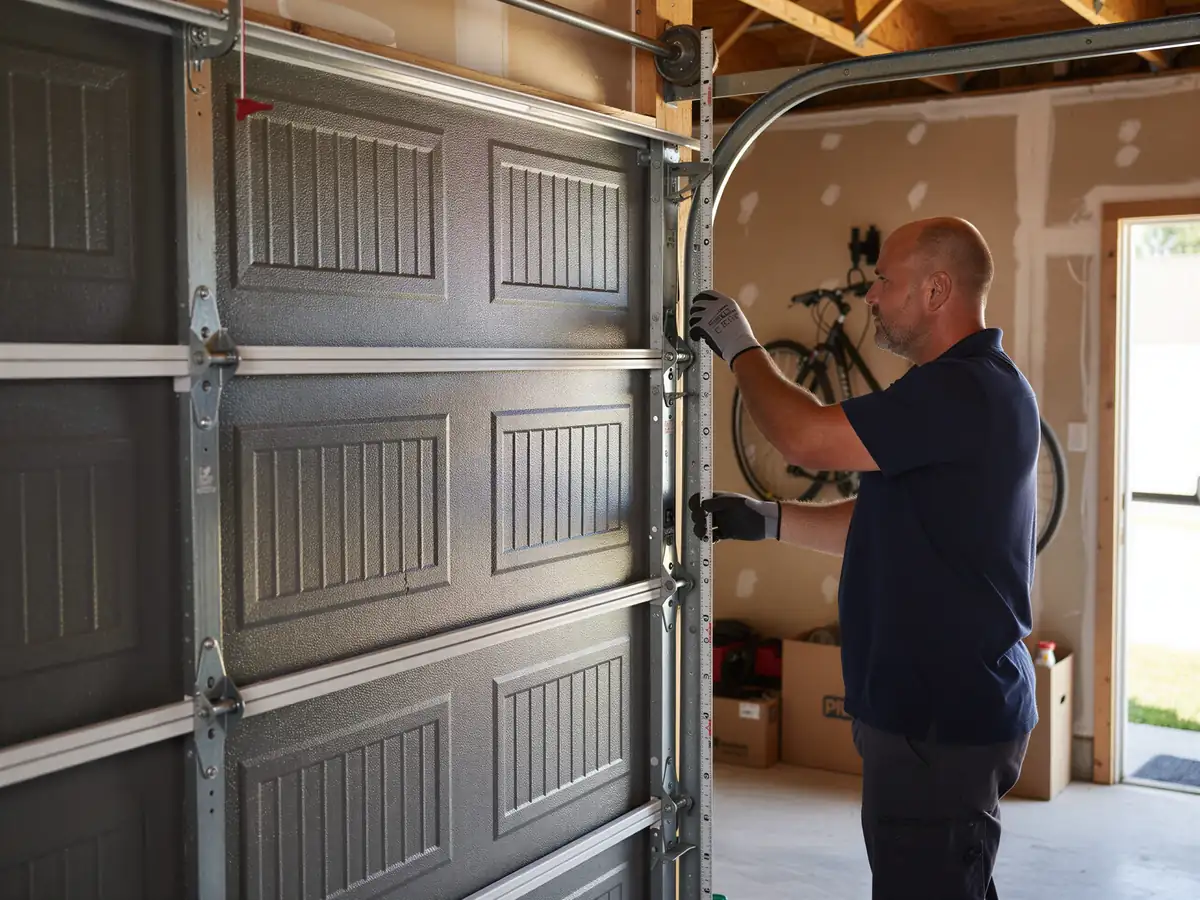
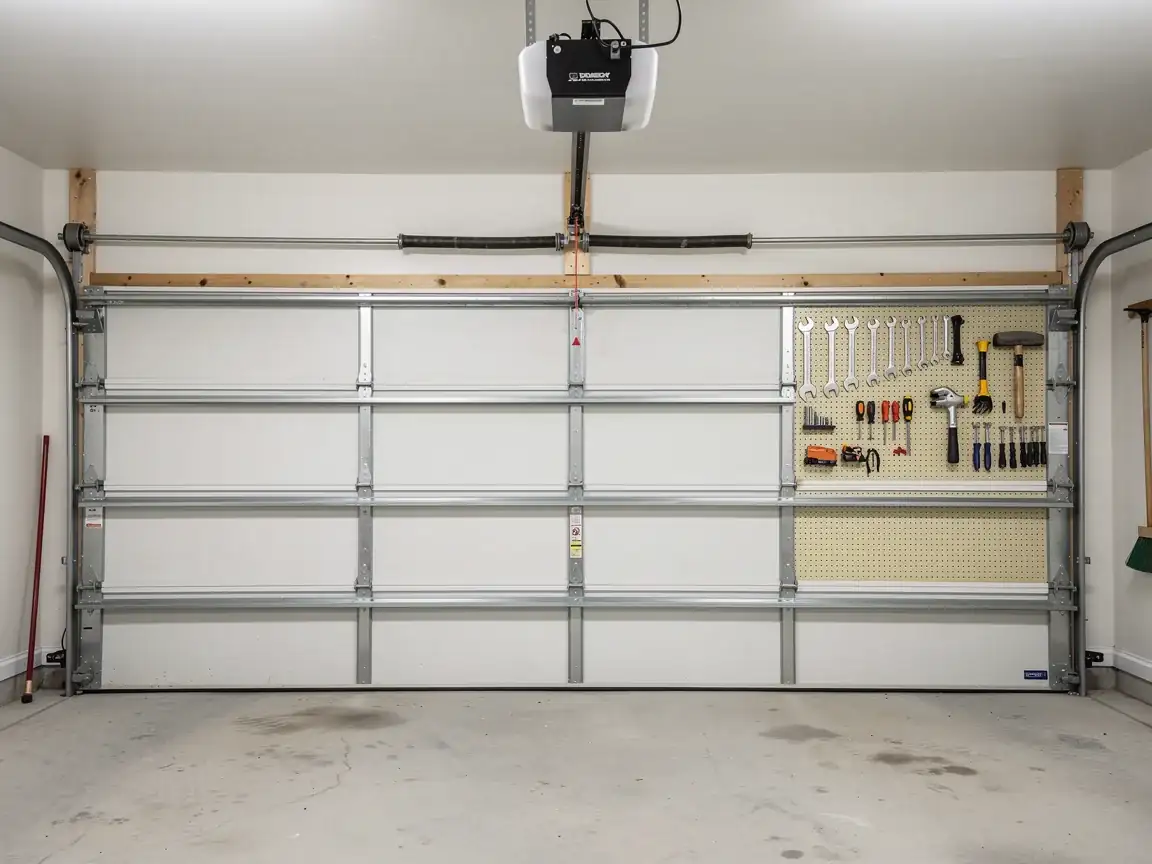
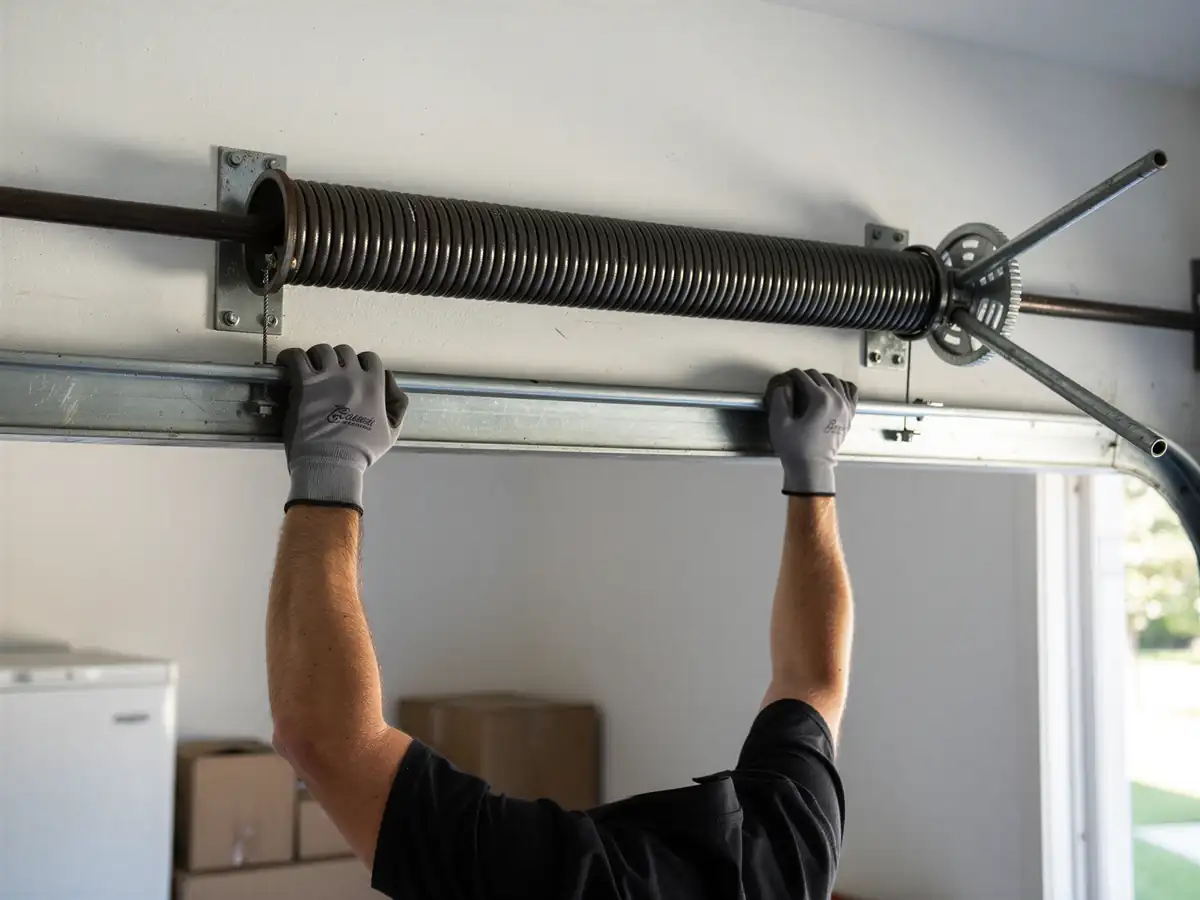
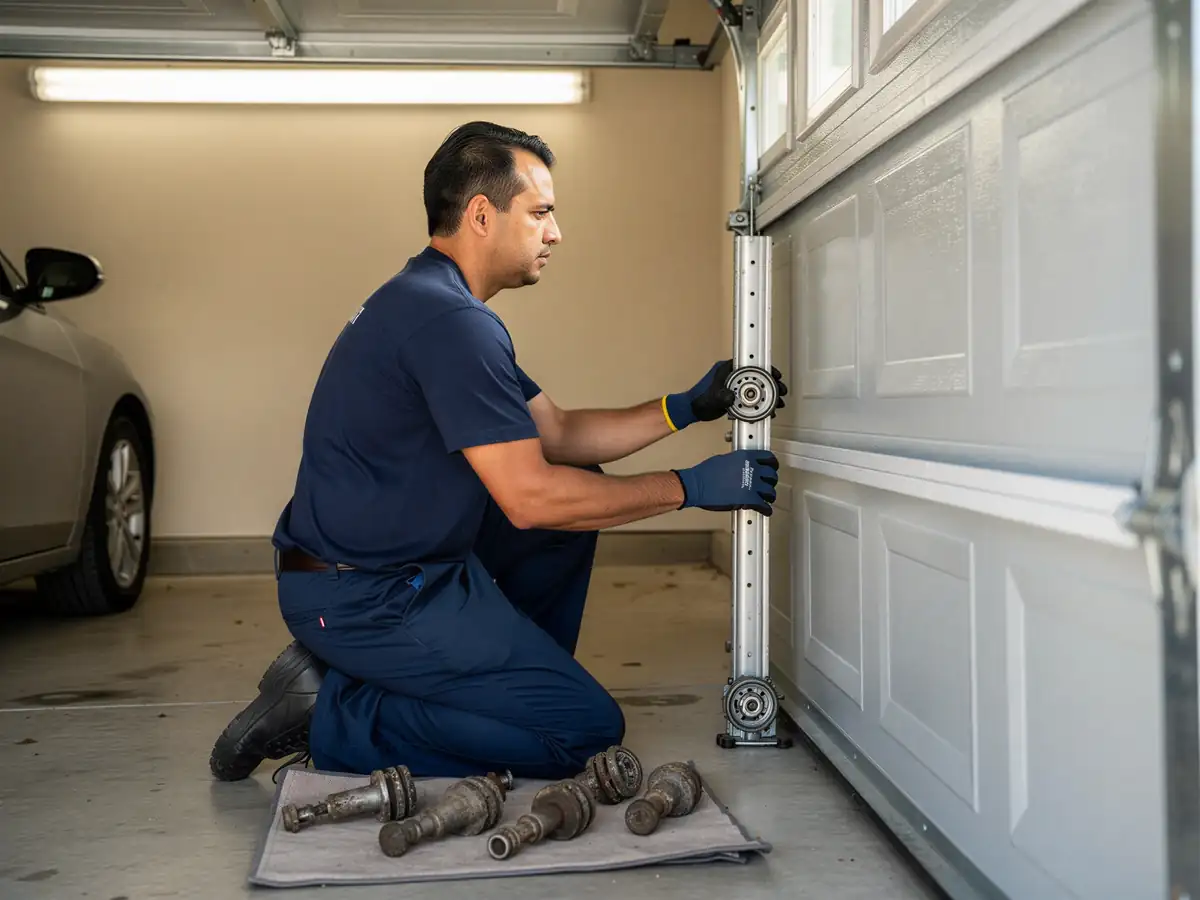
A proper installation starts with the opening, not the door - we measure the jambs and header on site because houses from this era settle unevenly after forty-plus years, and a stock-size door doesn't always mean a stock-size fit. From there it's a new insulated steel door sized to the opening, a torsion spring wound to the actual weight of that door (not the old one), new track and rollers set square, and a cold-rated opener if the existing one is staying. We test the balance by hand before the opener ever touches it - a door that isn't balanced on the spring will burn out any opener within a year, regardless of how good the opener is. With a median household income of $125,774 across this market, most owners replacing an old door are choosing a fully insulated model rather than the cheapest panel available, and that's the one we'd recommend for this climate anyway.
How it works
From “it’s stuck” to “it’s fixed”
1
Tell us what’s wrong
Describe the symptom - won’t open, loud bang, opener runs but the door won’t move.
2
On-site diagnosis
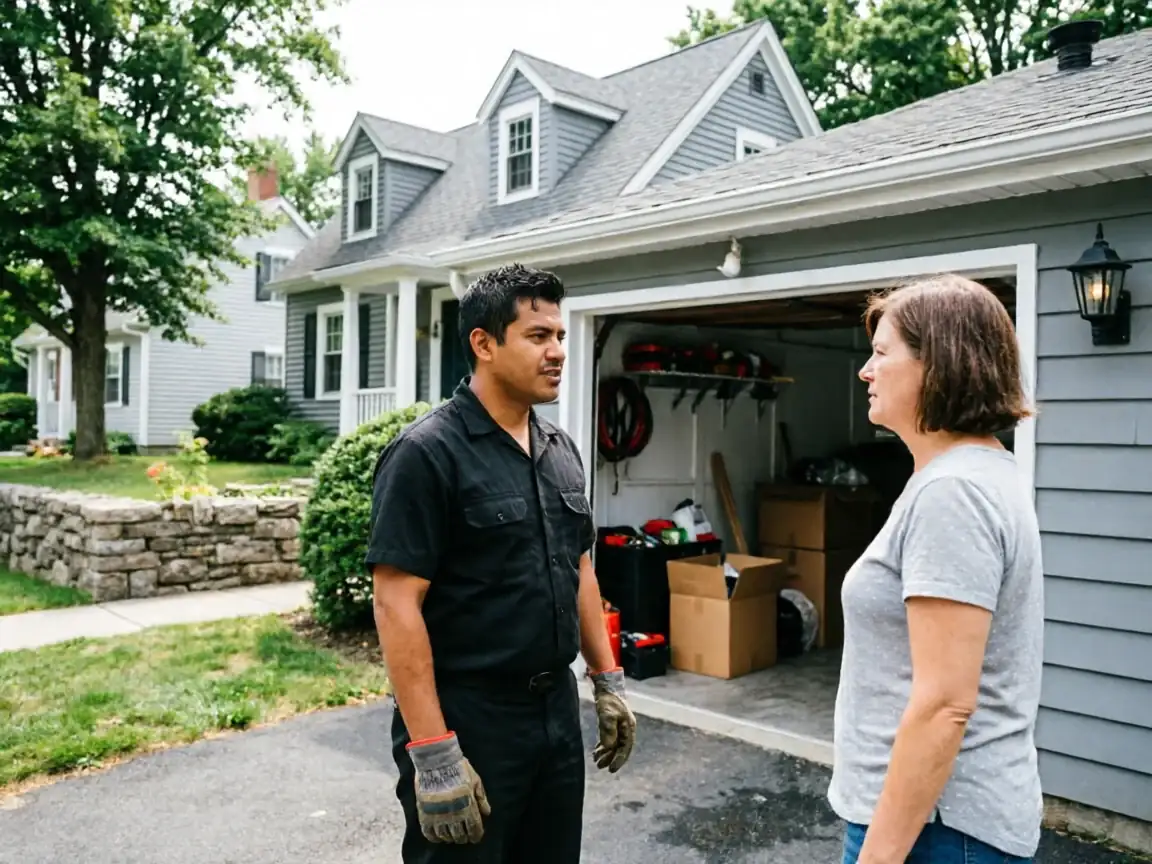
A technician tests the door under power and by hand and finds what actually failed.
3
Clear, up-front plan
You get the fix that’s needed and what drives the cost - before any work starts.
4
Repaired & tested
The repair is done, the door is set true and tested, and the work area left clean.
Next step
Not sure which repair your door needs in Londonderry, NH? Describe what it’s doing - every job starts with a diagnosis.
How do I know if I need a new door or just a repair?
If the panels are rusted through, the door is visibly sagging, or the spring has failed on a door already fifteen-plus years old, replacement is usually the better call than repair. A lot of houses in this market are running original 1980s-90s doors, and at that age the steel itself, not just the hardware, is the problem.
Will a new door fit my existing opener?
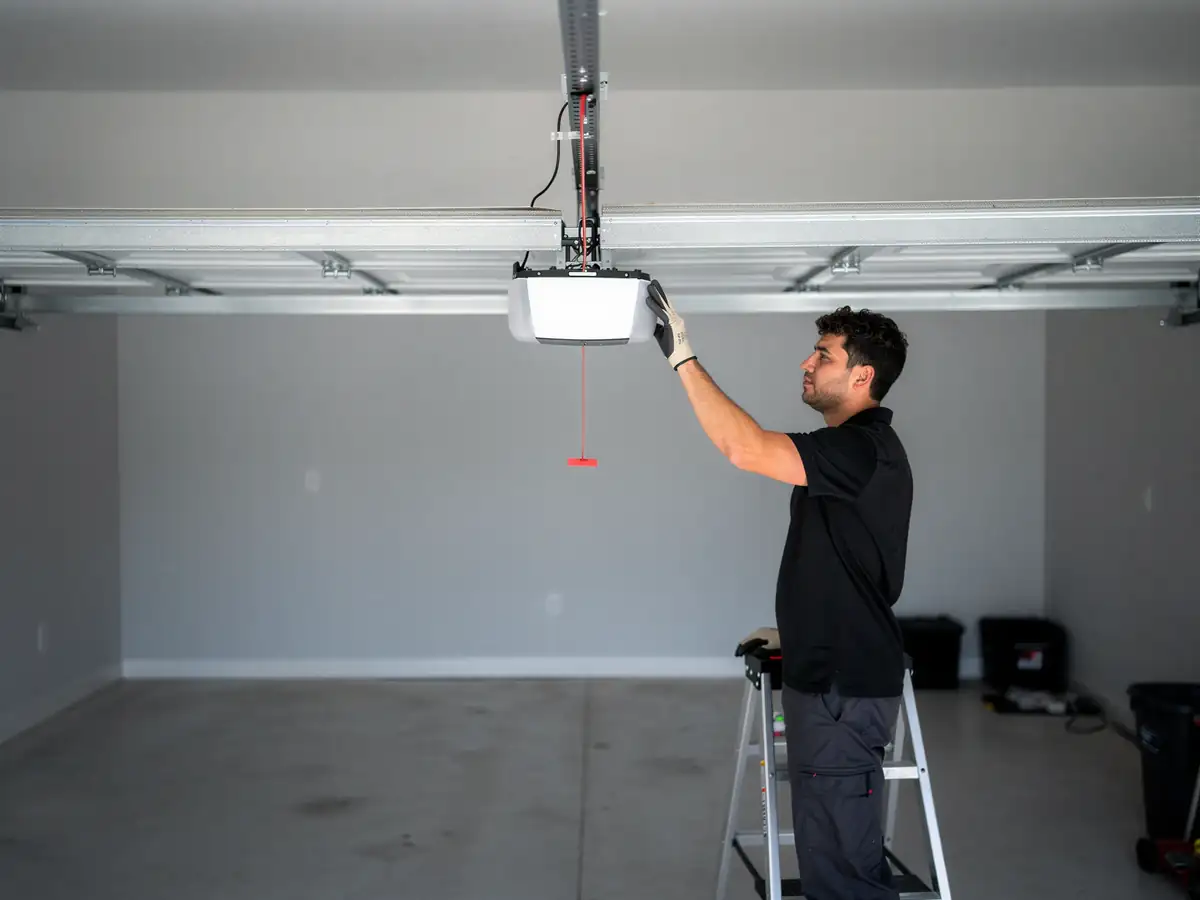
Often yes, as long as the opener is cold-rated and in good condition, but we test the balance on the new door and spring before reconnecting it. If the opener is older than the door it's replacing, we'll tell you honestly whether it's worth keeping or swapping at the same time.
Why does my garage door sweat and rust in winter?
That's condensation forming on the inside of a non-insulated steel panel, which is common in this area's cold-severe winters. Doors built before insulated cores were standard take the worst of it, and the rust you see starting at the bottom panel is usually where that moisture sits longest.
Ready to get your garage door sorted?
Tell us what it’s doing and where you are in Londonderry - we’ll take it from there.