Stocked Parts
We carry torsion springs in the wire diameters and wind lengths that match the doors most common across this service area
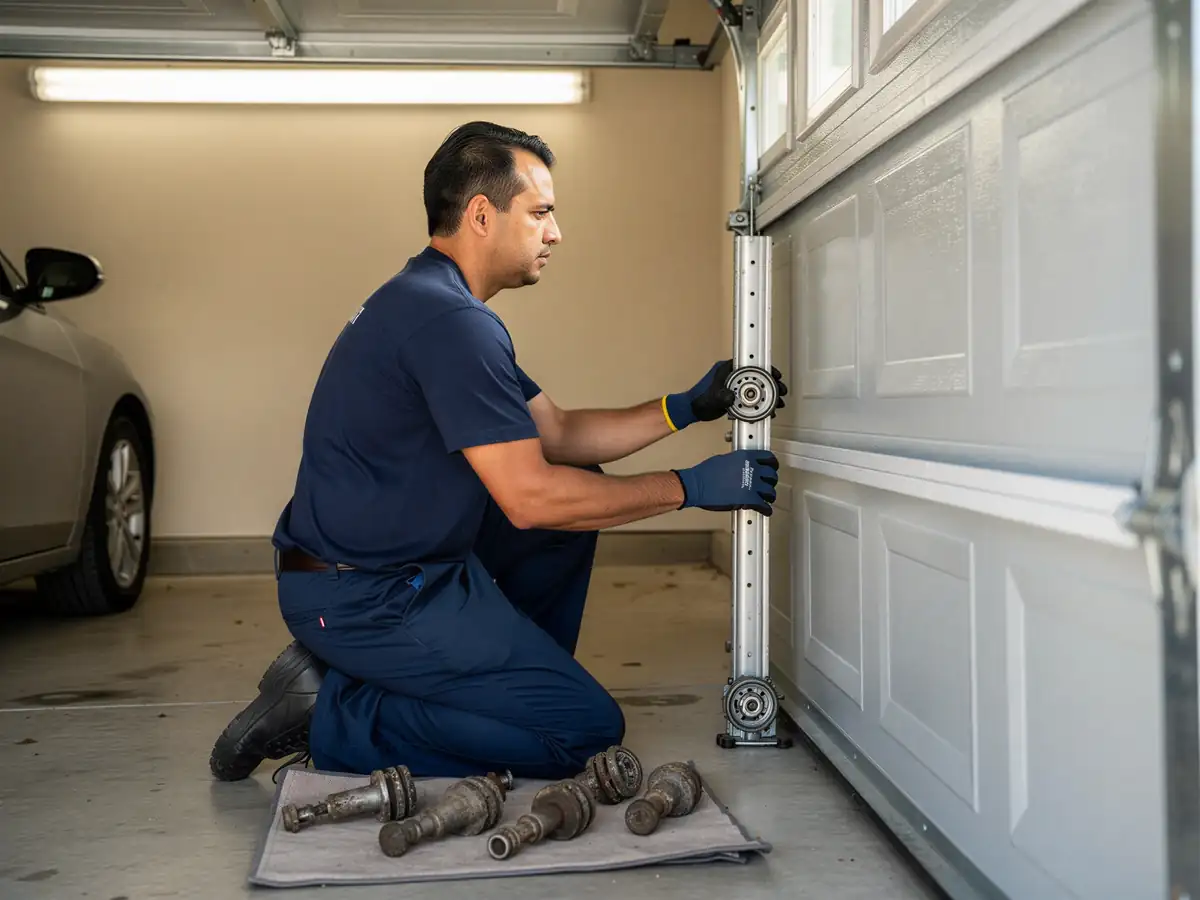
The 7x9 and 8x7 sections that builders ran through the 1980s and 90s, plus the heavier double-door springs used on the 16-foot openings from the same era. Drums, end bearing plates, lift cables, and standard torsion bar in the lengths that fit those openings are on the truck, not on back order.
Across 55,192 households here, most garage doors fall into a narrow band of sizes
Which is why stocking common parts covers the large majority of calls. Where we run short is on odd stuff: older low-headroom hardware, discontinued extension-spring conversions, and anything custom-cut for a non-standard opening. If your door needs one of those, we'll tell you straight that it's a special order and give you a lead time instead of guessing.
- 55,192 households
We size springs to the door's actual weight and the drum's wind, not to a universal number
A spring that's close but not matched will either bind the opener or let go again inside a year, so we measure before we quote.
The Symptom
The door feels like it suddenly gained a hundred pounds. It stalls halfway up, the opener strains and reverses, or it drops the last foot instead of lowering smooth. Sometimes there's a bang from the garage - that's the spring itself letting go, usually when nobody's home to hear it happen in the moment.
A cable that's frayed instead of snapped shows up differently: the door tracks crooked, one side dips lower than the other, or it jams partway and won't budge either direction. Both failures share a cause - a torsion spring under constant tension finally fatigues past the point it can hold the door's weight, and once it goes, the opener has no chance of lifting the door on its own. Trying to force it with the opener motor just burns out the opener next.
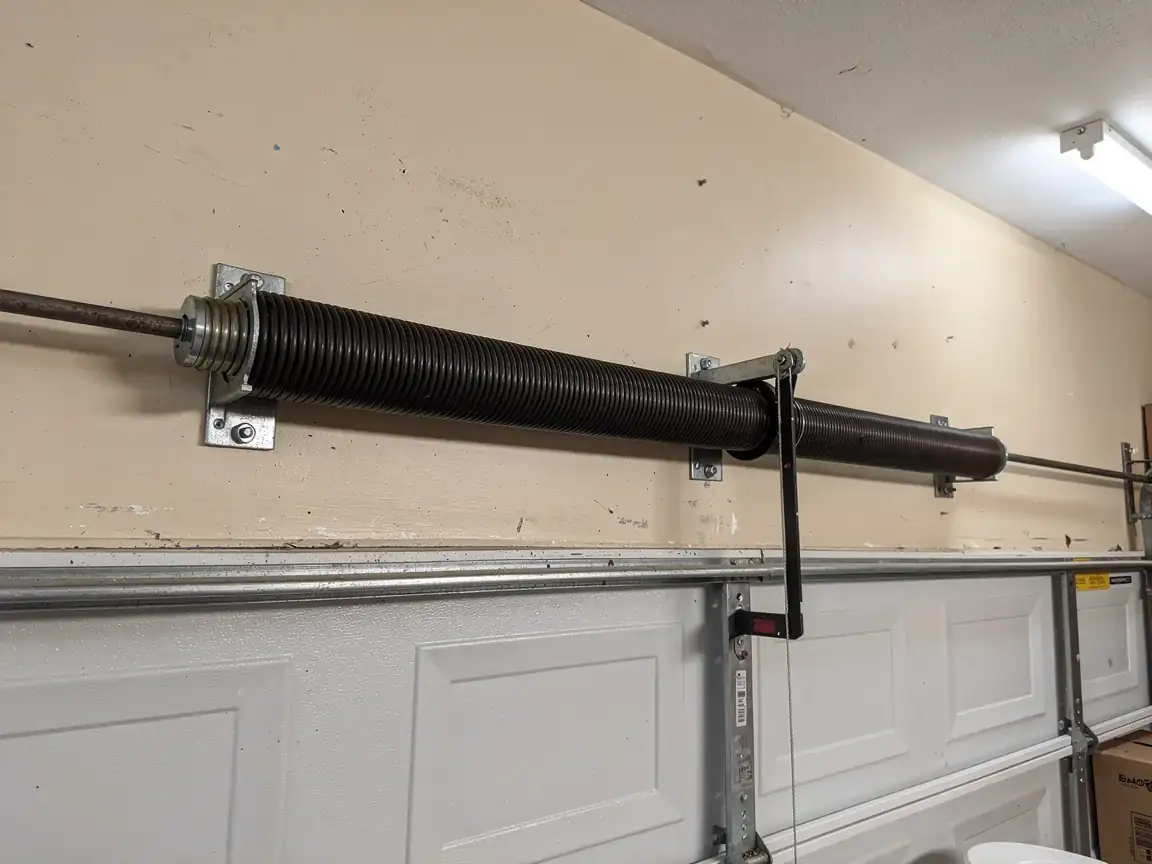
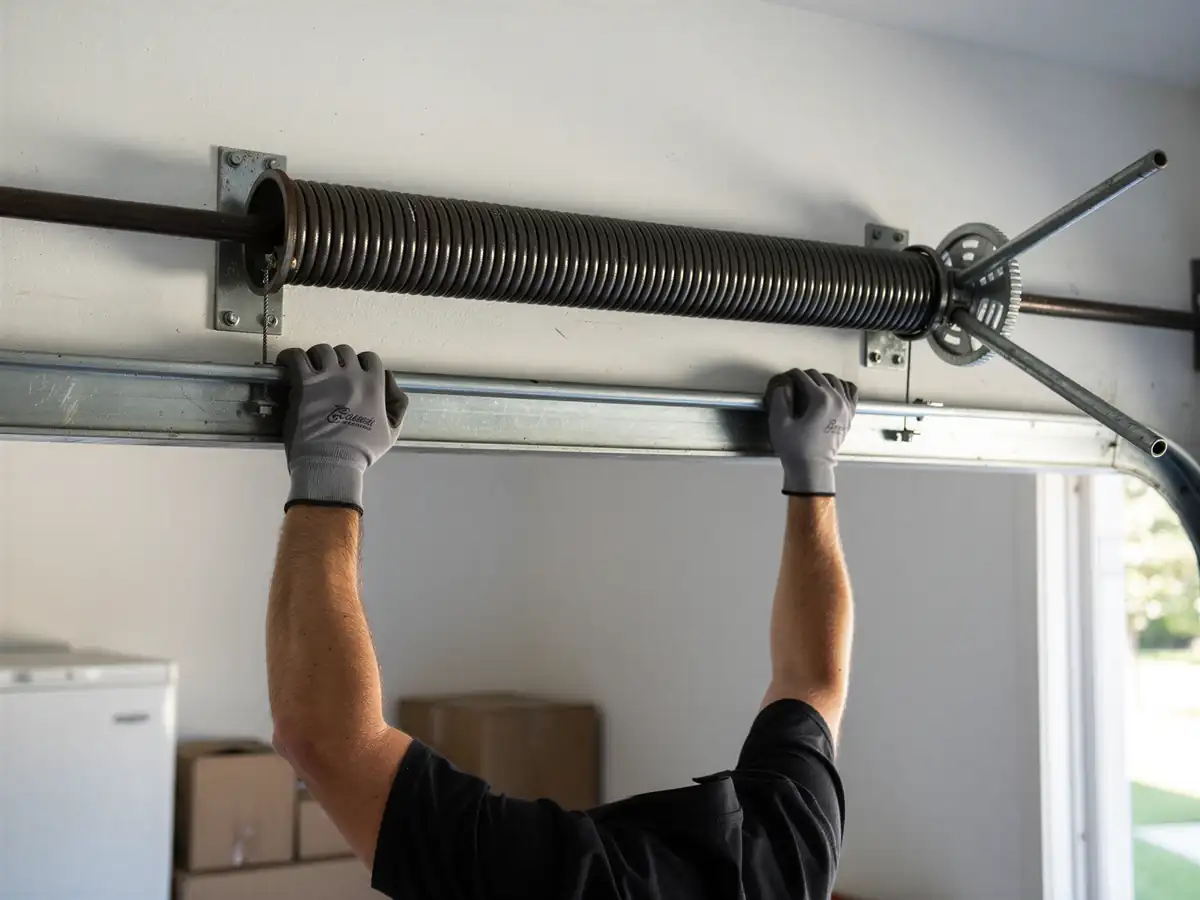
If you can still see the spring on the bar above the door, look for a visible gap in the coil - that's the giveaway. If you can't see a gap and the door is just heavy and slow, it's worth a call before the opener gear strips trying to compensate.
Why This Fails Locally
Housing in this area runs 1938 to 1996 with a median build year of 1982, and that matters for springs specifically. A door installed when the house was built in the early 80s has had three to four decades of daily cycles on its original torsion spring, and springs are rated in cycles, not years - most wear out well before the house needs a new roof.
The bigger factor is climate. This area sits in a cold-severe band, and torsion springs are steel under constant load. Repeated hard freezes followed by thaw cycles stress that steel in a way a mild climate never would, and the coil loses temper faster than the spec sheet assumes. Add a few decades of that cycling to a spring that was already near the end of its rated life, and the failure often lands in the first real cold stretch of the season rather than spread evenly through the year.
With a median household income of $125,774 across the service area, most owners here treat a dead spring as a repair to schedule promptly rather than a door to prop open with a two-by-four until spring thaw - which is the right call, since a door held up on anything but its spring is a hand or a bumper away from a bad accident.
What the Fix Involves
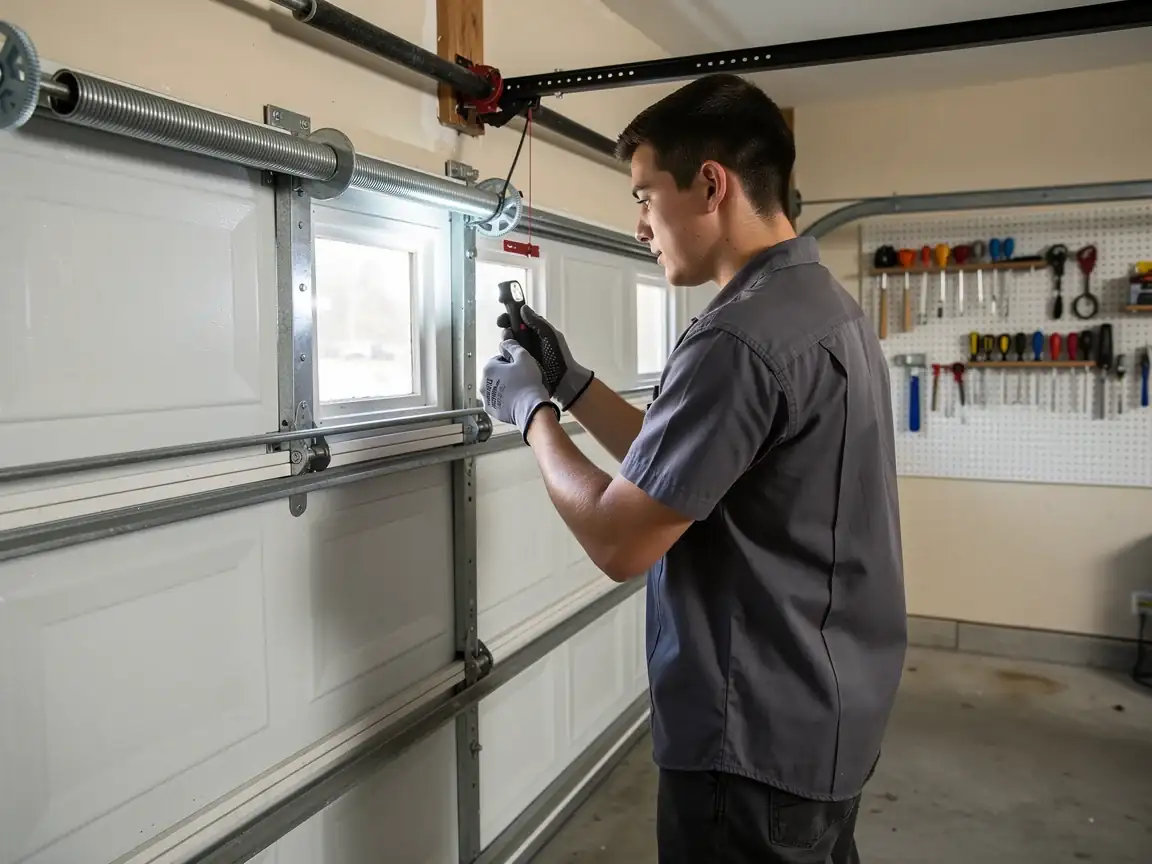
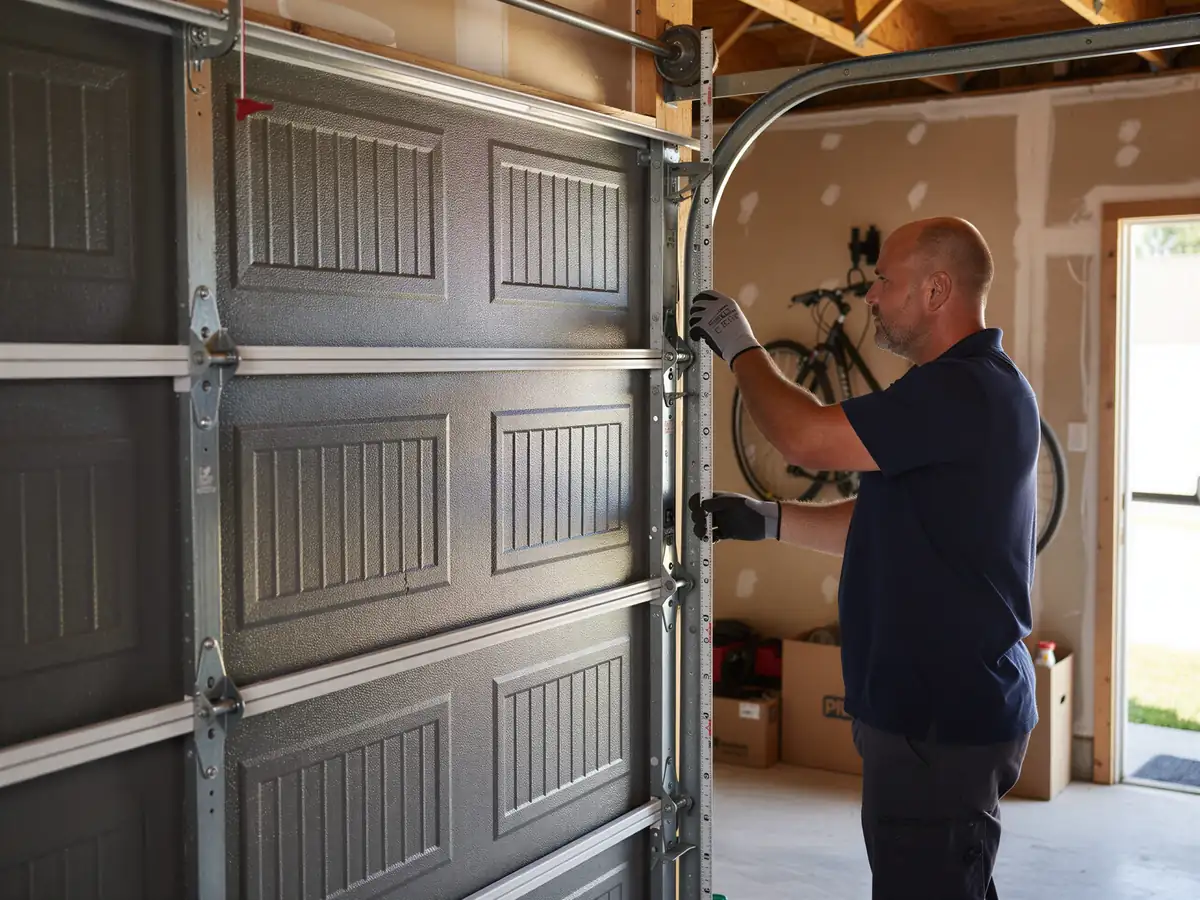
We start by measuring the door's actual weight with the opener disconnected
Not by reading a part number off the old spring, since a spring that's been cut or re-wound by a previous repair won't match its own label. From that weight we calculate the wire size, coil diameter, and wind length the door needs.
Both springs get replaced as a pair even when only one broke
The surviving spring is the same age and the same number of cycles, and it's close behind. We swap the cables at the same time if they show any fraying, since a cable failure right after a spring job is the callback nobody wants.
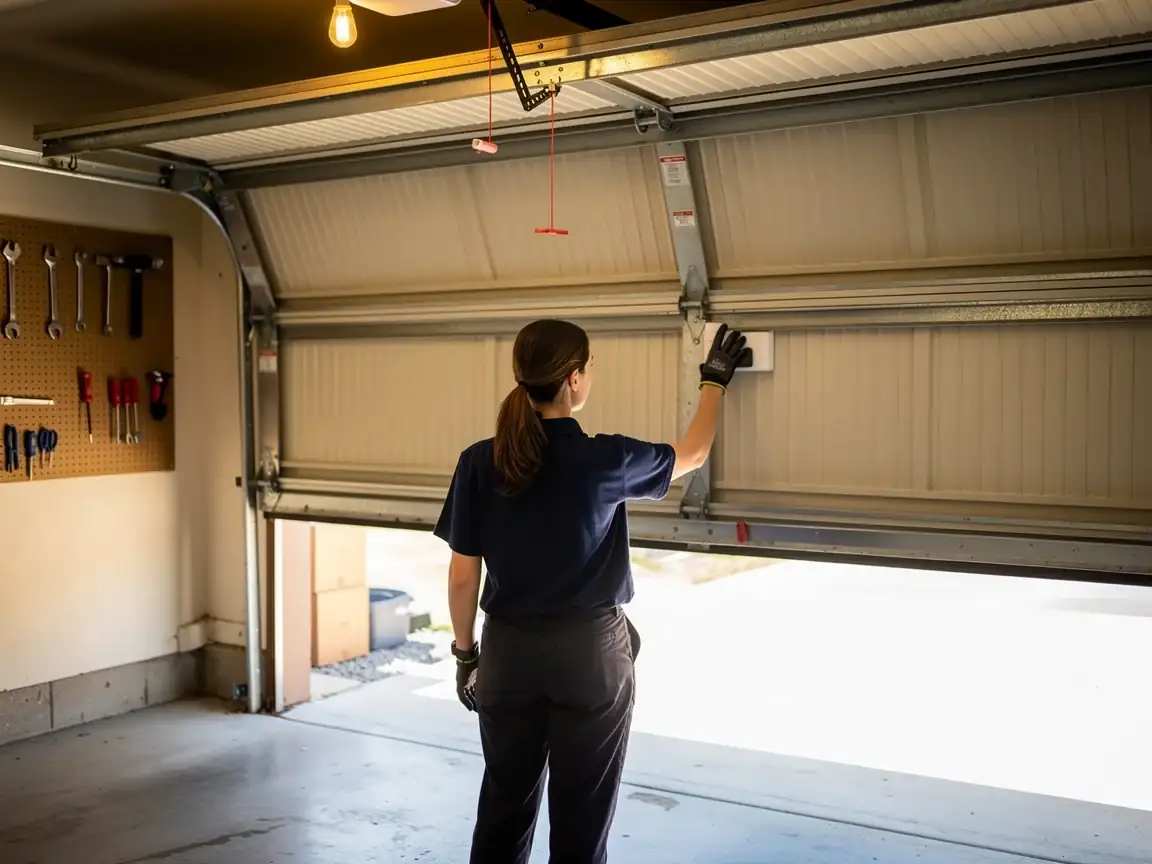
Once the new springs are wound and set to the door's balance point, we disconnect the opener
Run the door by hand to confirm it holds anywhere in the track without drifting up or down, then reconnect the opener and let it do a full open-close cycle under its own power. A door that's properly balanced should move with one hand and stay put when you let go - if it doesn't, the spring tension isn't set right yet, and we're not done.