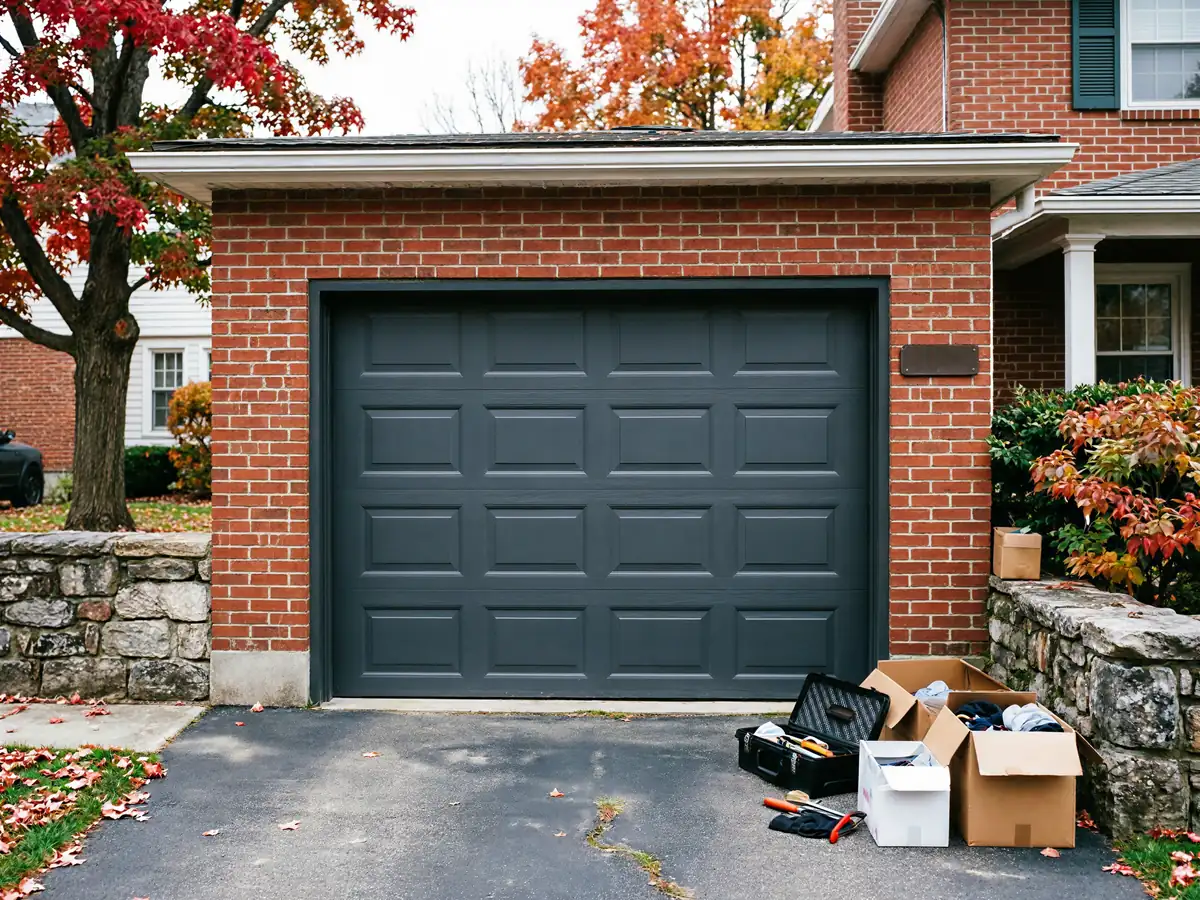
The DIY Question
Auburn runs about 1,998 households
Which is a small enough town that a garage door crew isn't driving past the same subdivision five times a week the way they might in a bigger suburb. That matters for the DIY question, because when a door on an Auburn house needs replacing, it's usually a one-off job on a house built close to 1983, not a cookie-cutter unit in a 400-house development with identical hardware next door.
- 1,998 households
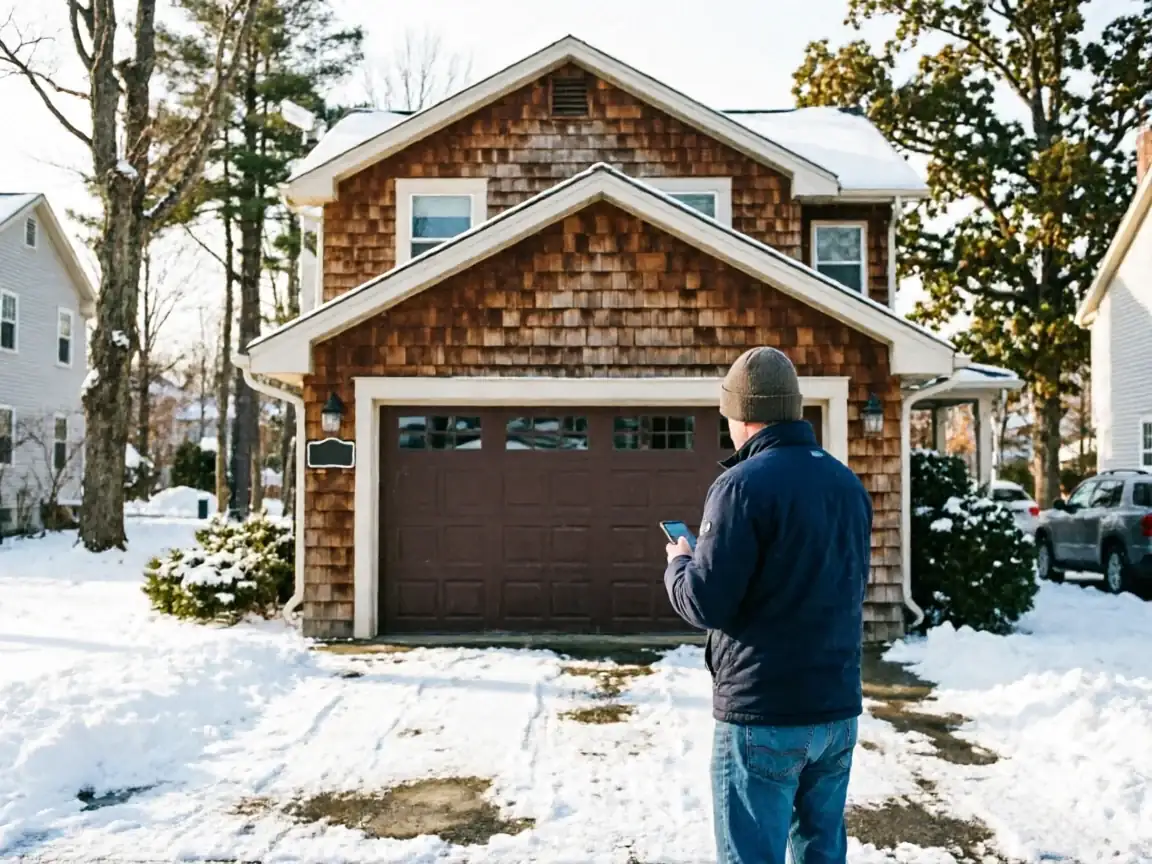
A lot of owners look at a new door kit from a box store and figure it's a weekend project
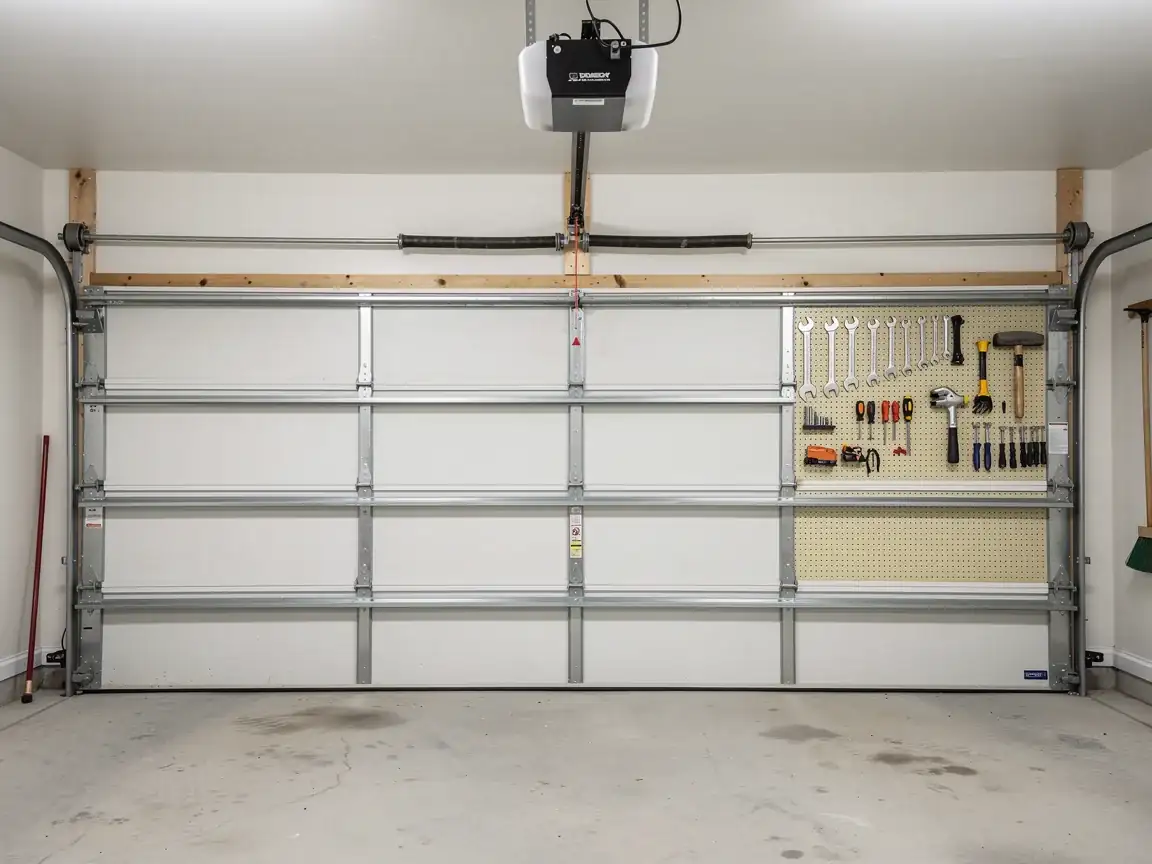
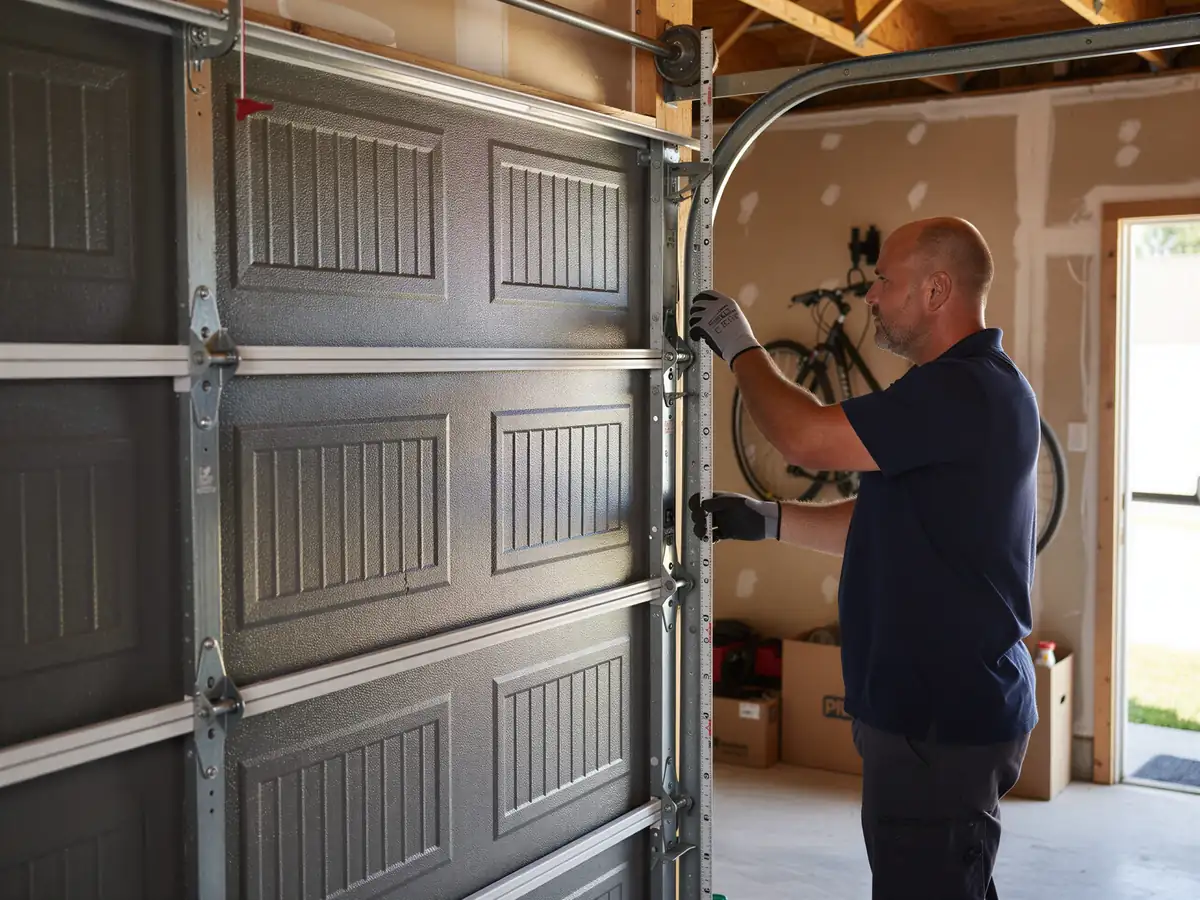
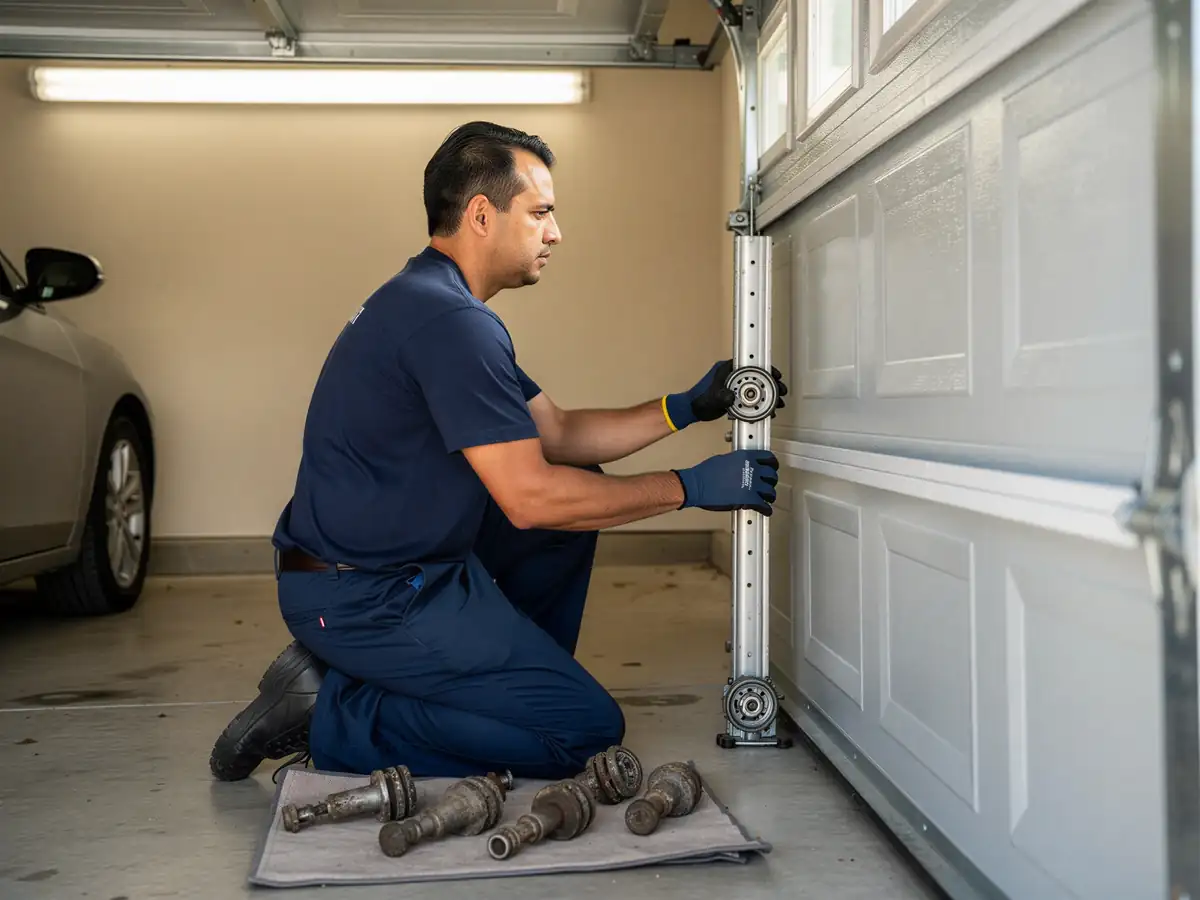
The box kit assumes a standard 7-foot opening, modern track spacing, and a wall that's square. Houses from Auburn's era don't always give you that. The header might be framed for a shorter door, the track bracket spacing might not match current kits, and the jamb can be out of plumb by enough that a DIY install binds the rollers within a season. None of that is visible until the old door is off the wall.
We're not going to tell you it can't be done
Some owners do it fine. But a door that doesn't seat square on day one is a door that strains the opener and wears the springs early, and on a house this age that's a real cost, not a hypothetical one.
Why This Fails Locally
The wider service area runs from houses built in 1938 up through 1996, with a median around 1982. Auburn sits right on top of that median at 1983, which means the town's housing stock is tighter and more uniform than a lot of the places we cover - fewer 1940s farmhouses, fewer 1990s builds, mostly a run of early-80s construction.
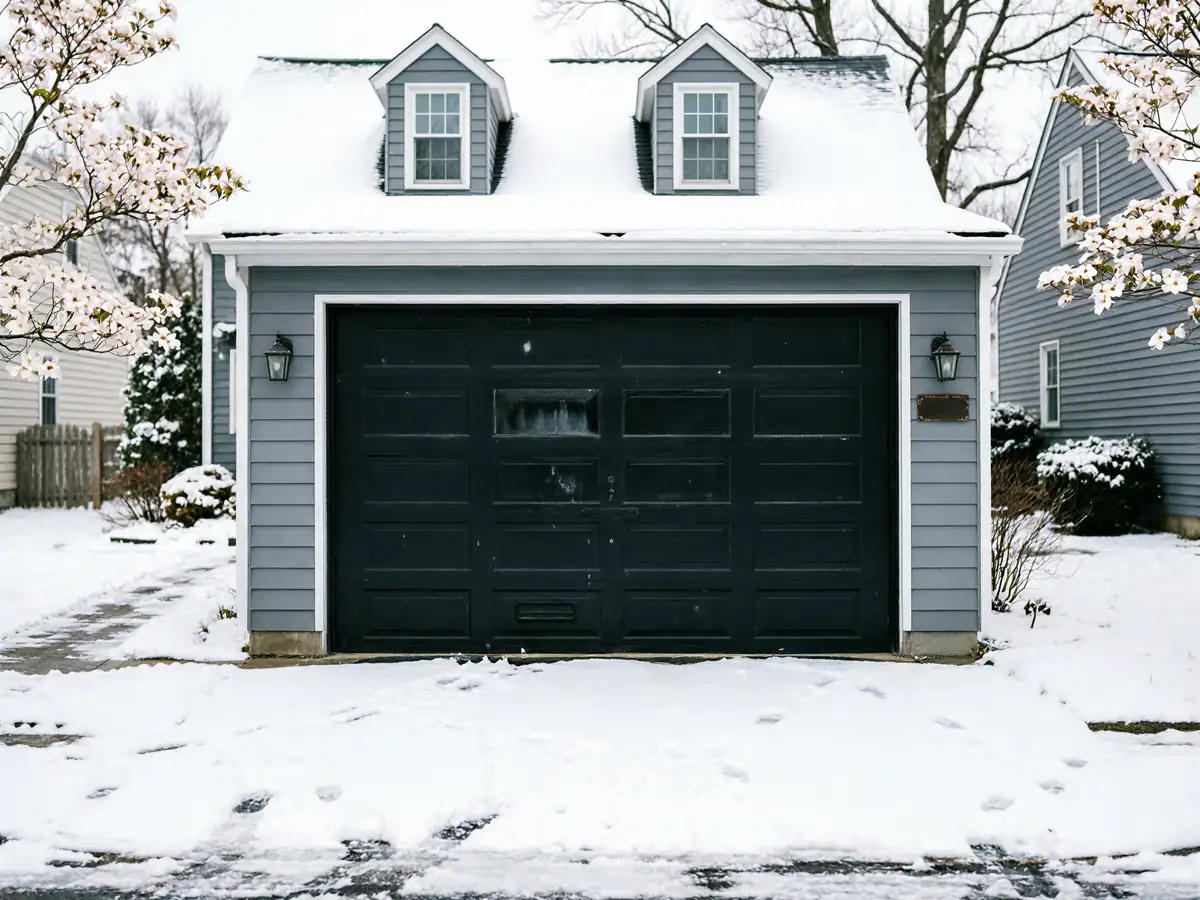
That uniformity cuts both ways. On one hand, a lot of Auburn garages were framed to similar rough opening sizes, so matching a door isn't guesswork. On the other, those openings were framed to the standards of 1983, not today's, and the region sits in a cold climate band with severe winter load on building components. A door and track system speced for a builder-grade install forty years ago wasn't built with today's insulation code or wind load numbers in mind.
Swap an off-the-shelf modern door into a 1983 opening without checking header clearance, track spacing, and the jamb's plumb, and you get a door that looks fine in the driveway and underperforms the first hard winter. The failure isn't the door - it's fitting a new door to an old opening without checking the parts that don't show.
The Symptom
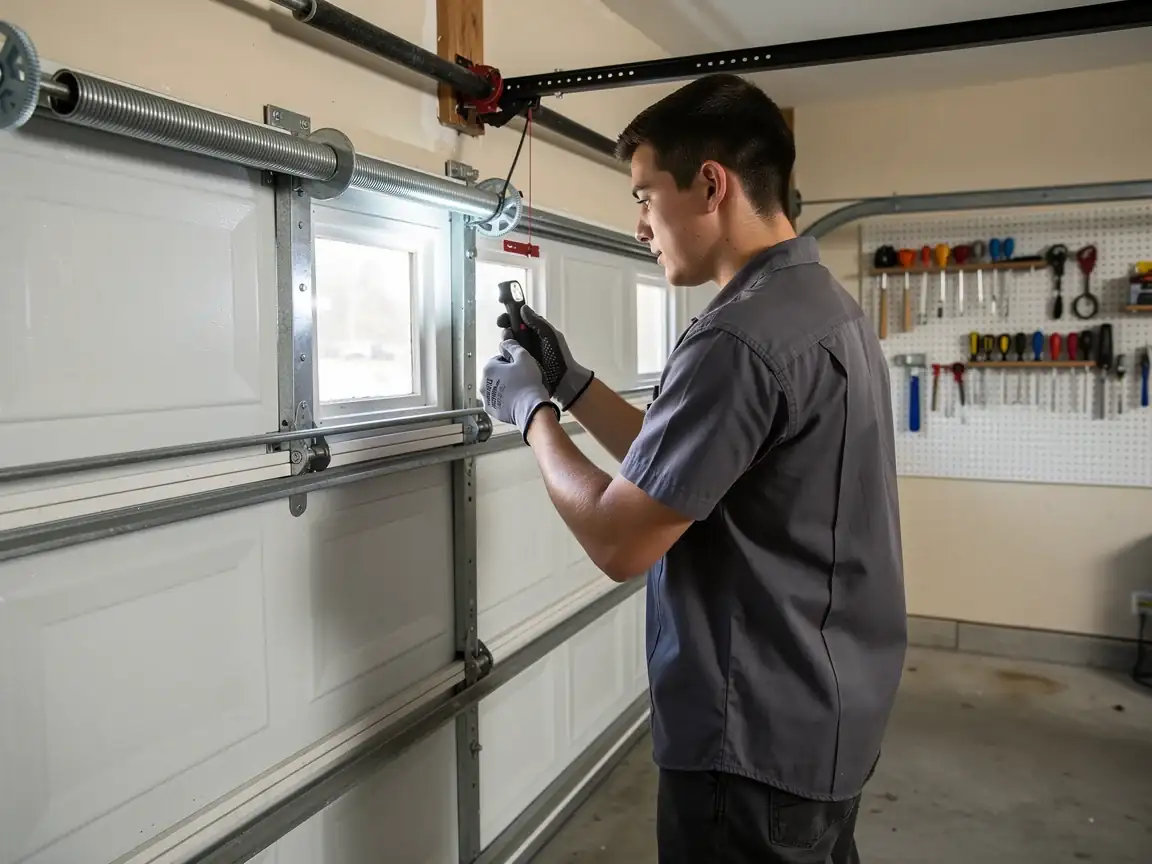
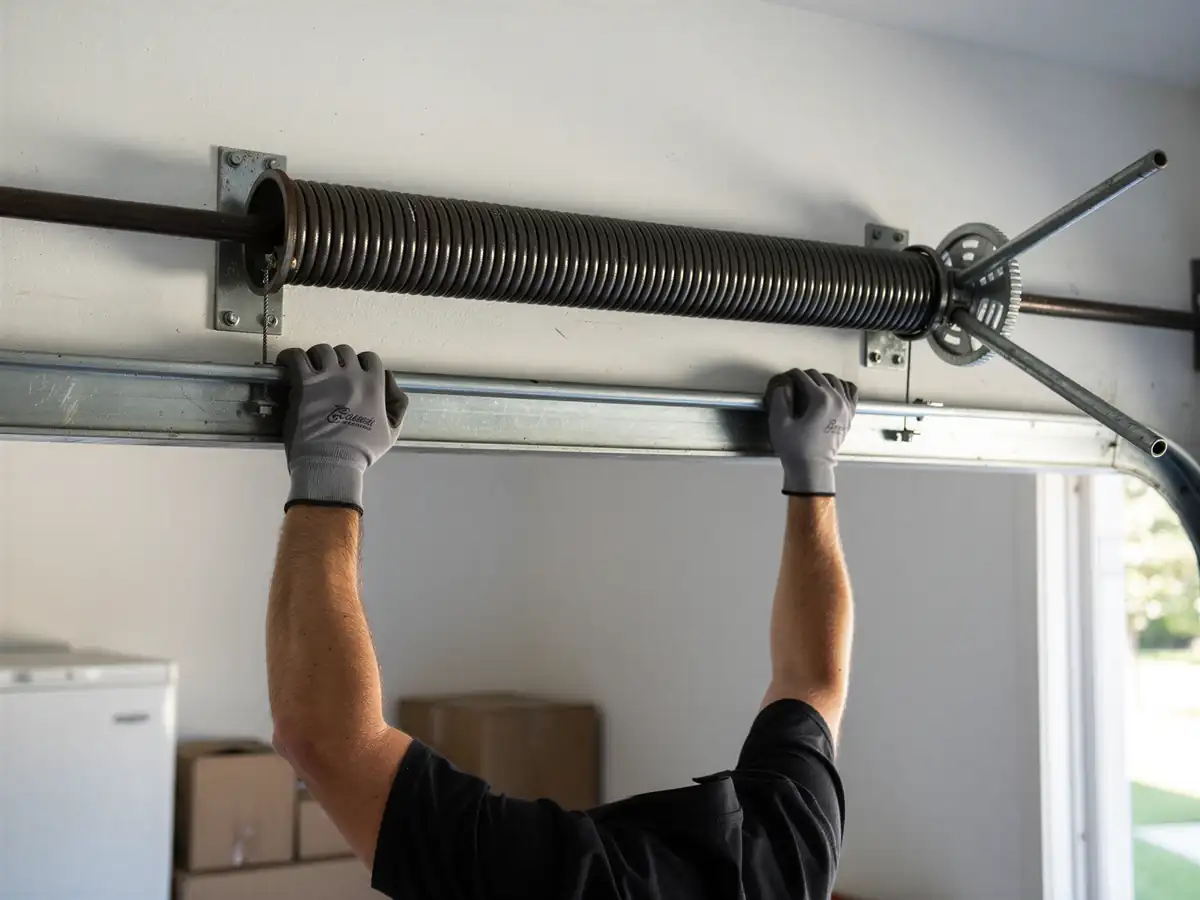
The call we get out of a house this age is usually one of two things. Either the door is original or close to it - a single-layer steel panel with no insulation, hanging on an extension spring setup that was standard builder-grade hardware in the early 80s - and it's finally failed after decades of cold-weather cycling. Or someone already replaced the door once, on the cheap, and it's the opener or the track fighting the original framing.
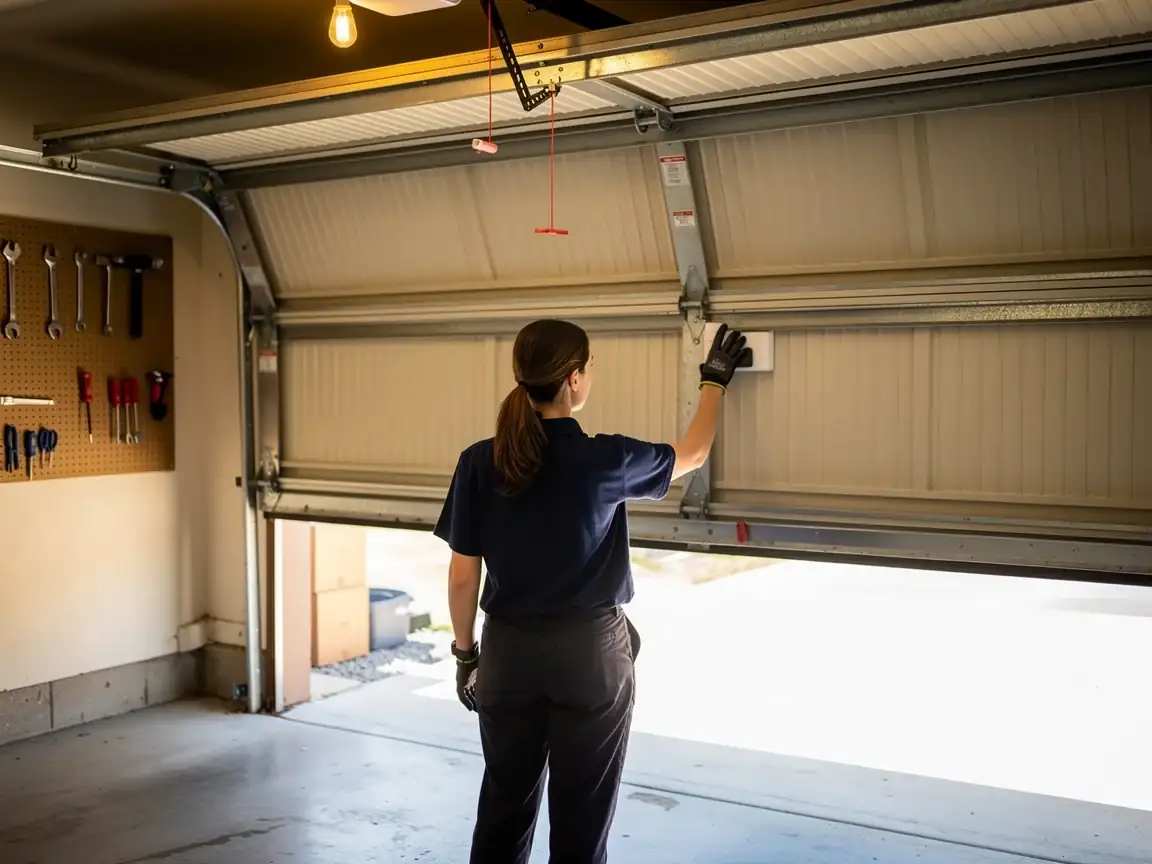
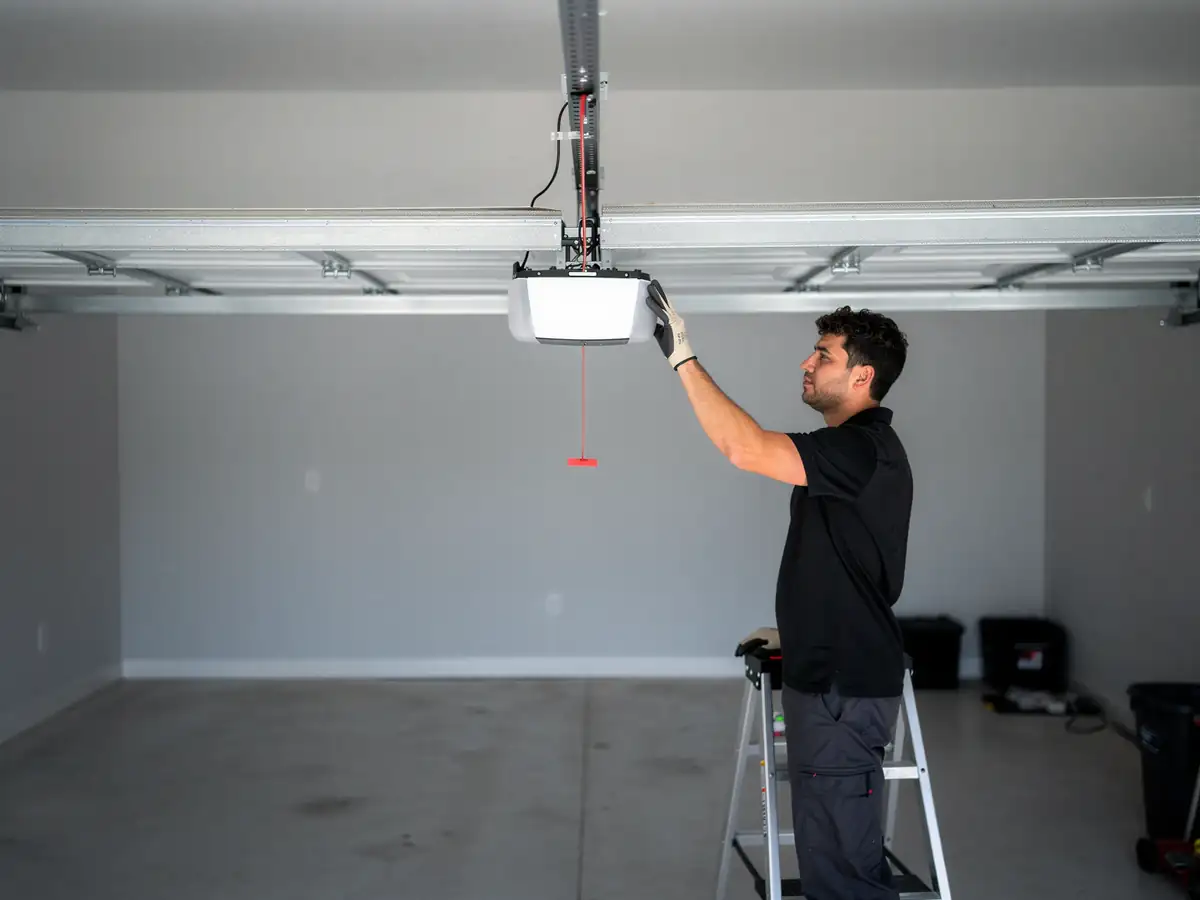
In the first case, the giveaway is a door that feels heavy to lift by hand and an opener straining audibly on cold mornings - the spring has lost tension faster than it should because it was never rated for the insulated panel someone added later, or it's just old. In the second, you get a door that closes unevenly, catching on one side, because the track was reset to a newer door without correcting for the original rough opening.
Either way, on a house built close to 1983, the fix usually isn't patching the symptom. It's replacing the door and matching the track and spring system to the actual opening, not the opening as drawn on a 2020s spec sheet.
What It Costs
We don't have a flat number to hand you here
And giving you one would be a guess dressed up as a fact. What we can tell you is what drives the number up or down on a job like this.
Auburn's median household income runs $146,290
Noticeably higher than the $125,774 median across the wider service area we cover. In practice, that shows up in the choices owners make, not in some different price list - more Auburn jobs end up spec'd with fuller insulation packages and heavier-gauge panels than the bare minimum, because the owner's budgeting for it, not because the town requires it.
The other driver is the opening itself
A standard single door on a house built to the 1983-era framing is a straightforward swap. A double-wide door, or an opening that's been altered once already by a previous owner, adds labor because the track and header work has to be redone to match, not just re-hung.
We'll give you a real number once we've measured the opening and talked through insulation and panel choice
Not before.
Stocked Parts
Here's the honest limitation: we don't keep a parts stock in Auburn. The trucks run out of Londonderry, about ten miles south, and what's on the truck is what's common across the houses we see most - standard torsion springs, common panel widths, the opener models that turn up again and again.
For a house built around 1983 with original or near-original hardware, that covers most of what comes up: extension springs in the sizes that were standard builder stock then, and the panel widths that match a typical single or double opening from that era. Those parts are usually on the truck the day we come out.
What isn't always on the truck is anything custom - a non-standard width from a prior remodel, a specialty insulated panel someone special-ordered once, or hardware from a one-off import door. If that's what's on your garage, we'll need to order it, and that adds time to the job. We'd rather tell you that up front than promise a same-day install we can't back up.
Time on the Job
Because the trucks run from Londonderry, about ten miles out, Auburn jobs aren't any slower to reach than most of the towns we cover at a similar distance - but we're not going to promise a response time we don't have, since there's no branch or depot sitting in Auburn itself.
Once we're on site, the install time itself comes down to the opening, same as anywhere. A straightforward single-door swap on a house with original 1983-era framing, using hardware we carry on the truck, is typically a one-visit job start to finish. A double-wide door, a reframed header, or a custom panel order changes that - the labor on site might still be a single visit, but if the part has to be ordered first, the calendar time between quote and install stretches out.
We'd rather walk the opening, tell you which category your job falls into, and give you a real timeline than quote a number that assumes every garage in town is the same. On a town built as tightly around one era as Auburn, most aren't - but a few always surprise us.