The DIY Question
A cracked or caved-in panel looks like a job you can handle with a kit from a big box store
Sometimes it is. But Auburn's housing stock centers on 1983, and doors from that era were built to sizes and panel profiles that have shifted twice since then. Buy the wrong panel width and you've got a mismatched section bolted to a door that now binds on the track or won't seal at the bottom.
If the damage is one panel on a door that's otherwise sound
No rust creeping along the seams, rollers still riding straight - a single-panel swap is a reasonable DIY attempt if you can find the exact match. The problem in a town built mostly in one decade is that a lot of these doors share a common steel gauge and panel height, but not every manufacturer kept that profile in production. We've opened jobs where the homeowner had already bought a panel that was close but not right, and it cost more to undo that fit than to have started with a measurement call.
Where DIY stops making sense
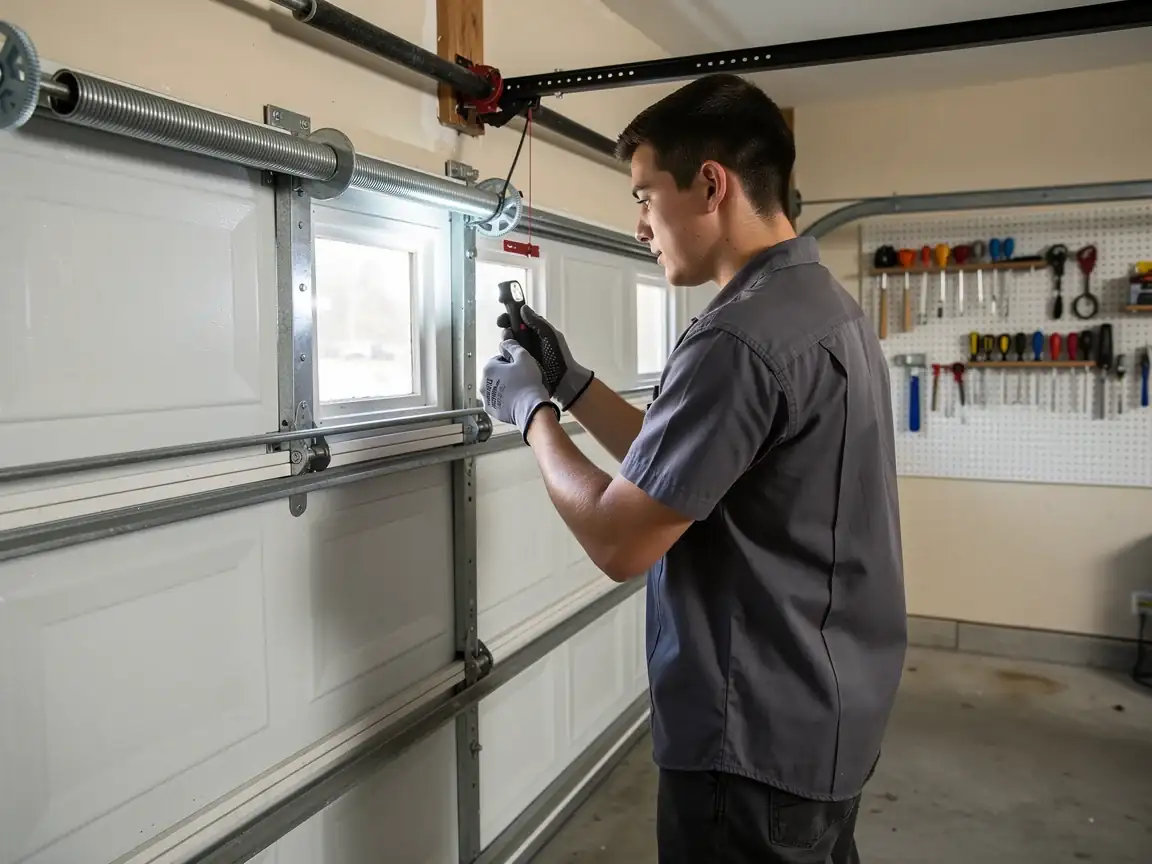
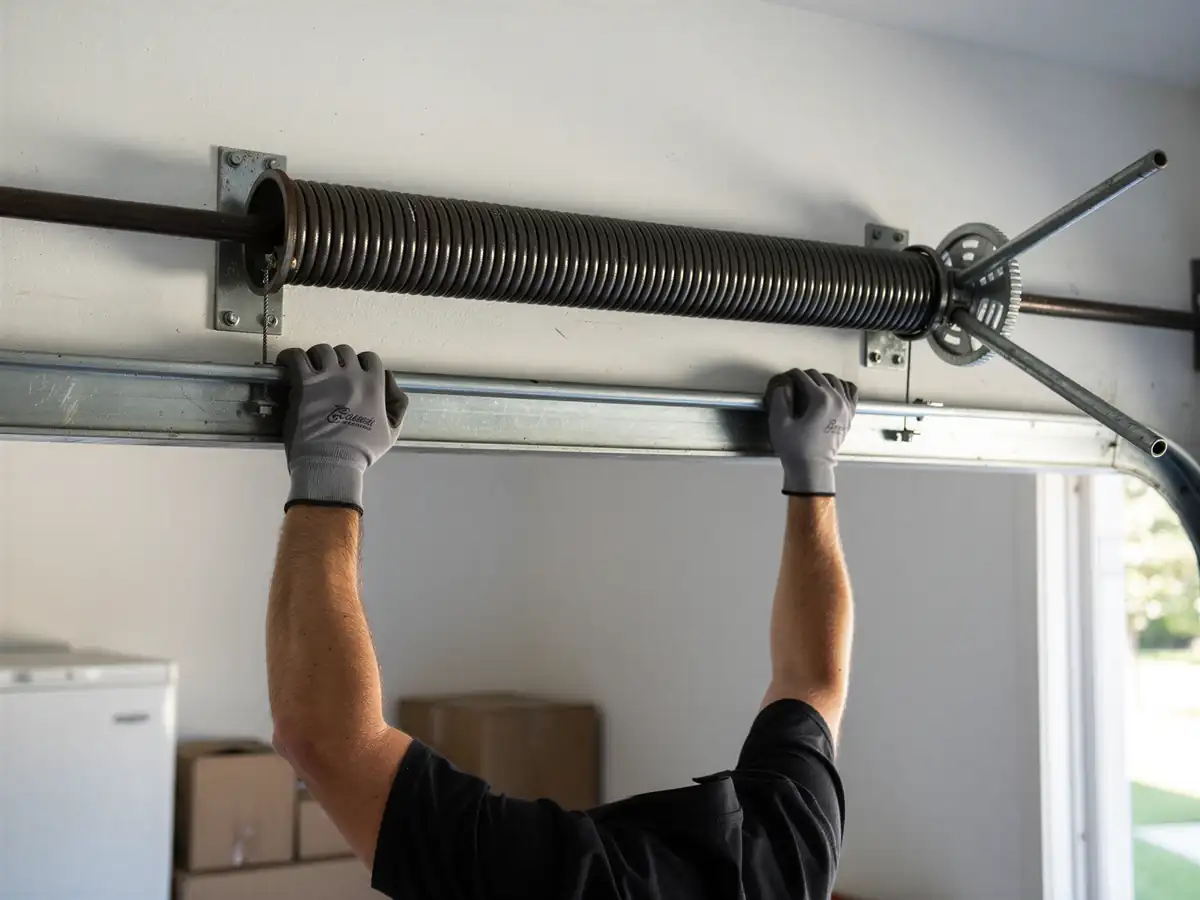
Insulated doors, anything with a window cutout, or a panel on the bottom section where the cable drum and bottom bracket tie in. Get that wrong and you're not just off by a quarter inch, you've got a door that won't hold tension evenly across the opening.
Why This Fails Locally
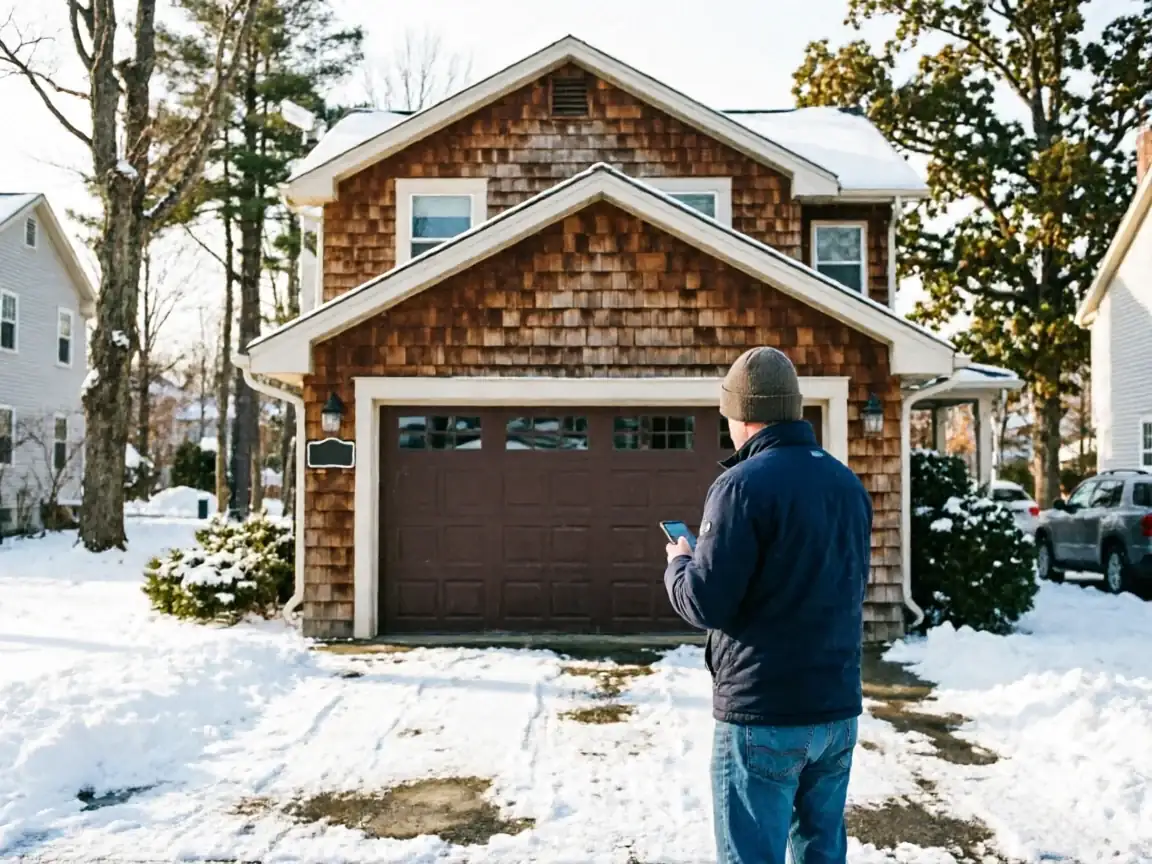
Auburn's median build year sits at 1983, which puts a large share of these garage doors on steel sections from a narrower window of manufacturing than you'd find in a town with a wider spread of ages. That consistency cuts two ways. It means we can usually identify the panel profile fast once we're on site. It also means when one homeowner's door fails from age, the house two doors down with the same build year is often not far behind.
New Hampshire's climate band is classified cold and severe, and a panel that's already dented or seam-cracked lets that cold straight into the garage. Steel contracts in the cold, and a section that was already stressed from an impact tends to show a wider gap at the seam by February than it did in October. That's when a homeowner notices daylight at the bottom corner and assumes it's a seal problem, when it's actually the panel itself that's no longer sitting flush.
This isn't a problem unique to any one street in Auburn - we don't have landmark-level detail for this town - but it is tied to the build era. A door original to a 1983 build has had four decades of New Hampshire winters to work on its steel, whether or not it's ever been hit.
The Symptom
The giveaway is usually visual before it's mechanical: a bowed or dented section, a seam that's pulled slightly apart, or a panel that doesn't sit flush with its neighbors when the door is down. Sometimes it's subtler - the door closes but light shows at one edge, or a panel face flexes when you press on it, which means the foam-filled or hollow-back section has lost its rigidity.
Don't confuse this with track misalignment, which shows up as a door that rubs or binds on one side but still shows flat panels. A true panel fault is isolated to that section - the rest of the door tracks fine, and the fix doesn't involve adjusting cables or tension unless the bottom panel is where the damage is.
If more than one panel shows wear at the same seam height across the door, that's less likely impact damage and more likely the whole door reaching the end of its service life - a different conversation than a single-panel swap.
What It Costs
We don't have a posted price list for Auburn specific to panel work
And job cost depends on the door's size, insulation, and whether the panel needs to be special-ordered to match an older profile. What we can tell you is what drives the number up or down: a single steel section on a standard-width door is the cheapest version of this job; an insulated panel with a window cutout, or a panel that has to be custom-matched because the original manufacturer discontinued that profile, runs higher.
Homeowners in Auburn's income range
Median household income here runs $146,290, noticeably above the wider Londonderry service area's $125,774 - more often ask us to match the original look exactly rather than accept a visible seam mismatch, which can add to the job if the exact panel isn't something we stock.
We'll give you a real number after we see the door and the damage, not before
Stocked Parts
We stock common panel sizes and the standard steel gauge that covers most doors from the 1980s and 90s building boom across our service area, which includes Auburn. Since Auburn's housing clusters tightly around 1983, a lot of the doors we see here fall inside that stocked range, which keeps a straightforward single-panel job from turning into a special order.
Where we don't carry stock: insulated panels with factory window inserts, discontinued widths from manufacturers that have since changed their section dimensions, and custom colors. Those get ordered once we've confirmed the exact match, and that's the honest limitation here - if your door needs one of those, the panel itself isn't a same-visit fix, even though the labor to install it once it arrives is quick.
We travel to Auburn from Londonderry, about 10 miles out, so we don't keep a local stock point in town - what's on the truck when we arrive is what's available that day, and anything outside that gets ordered before the second visit.
Time on the Job
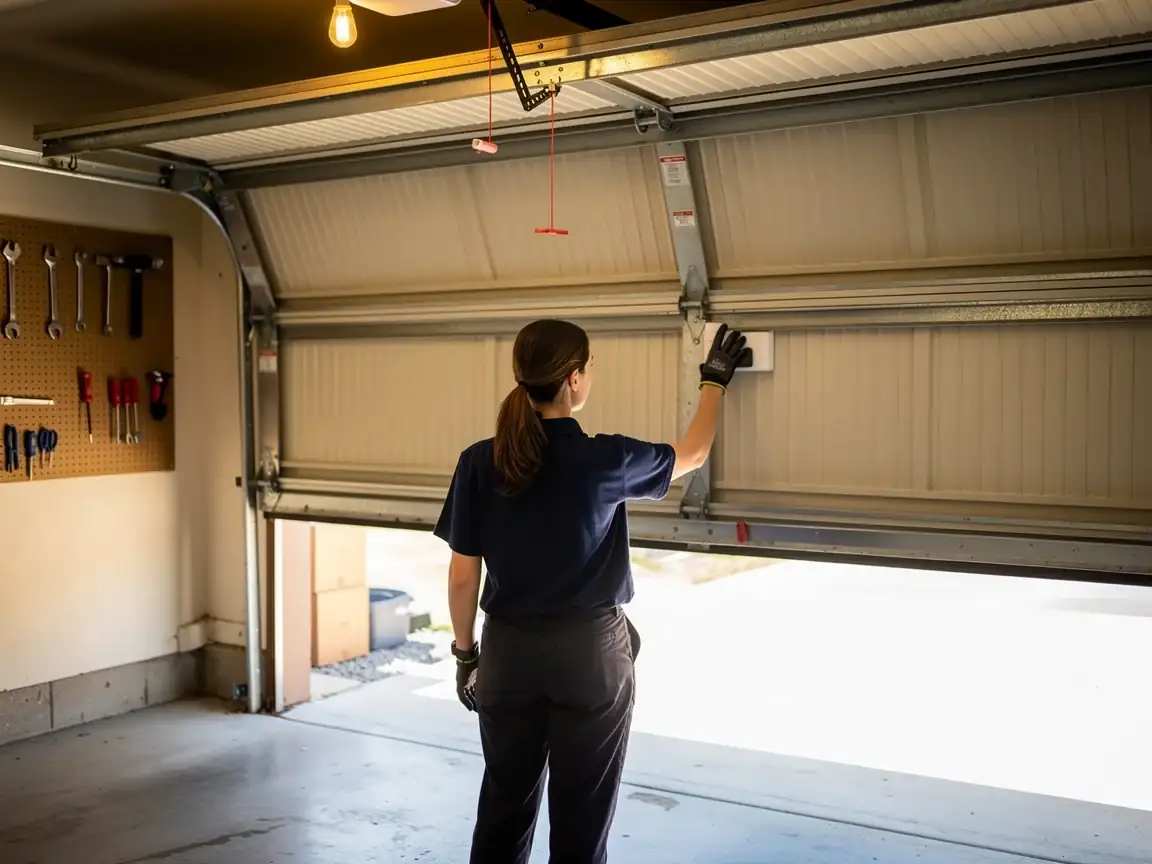
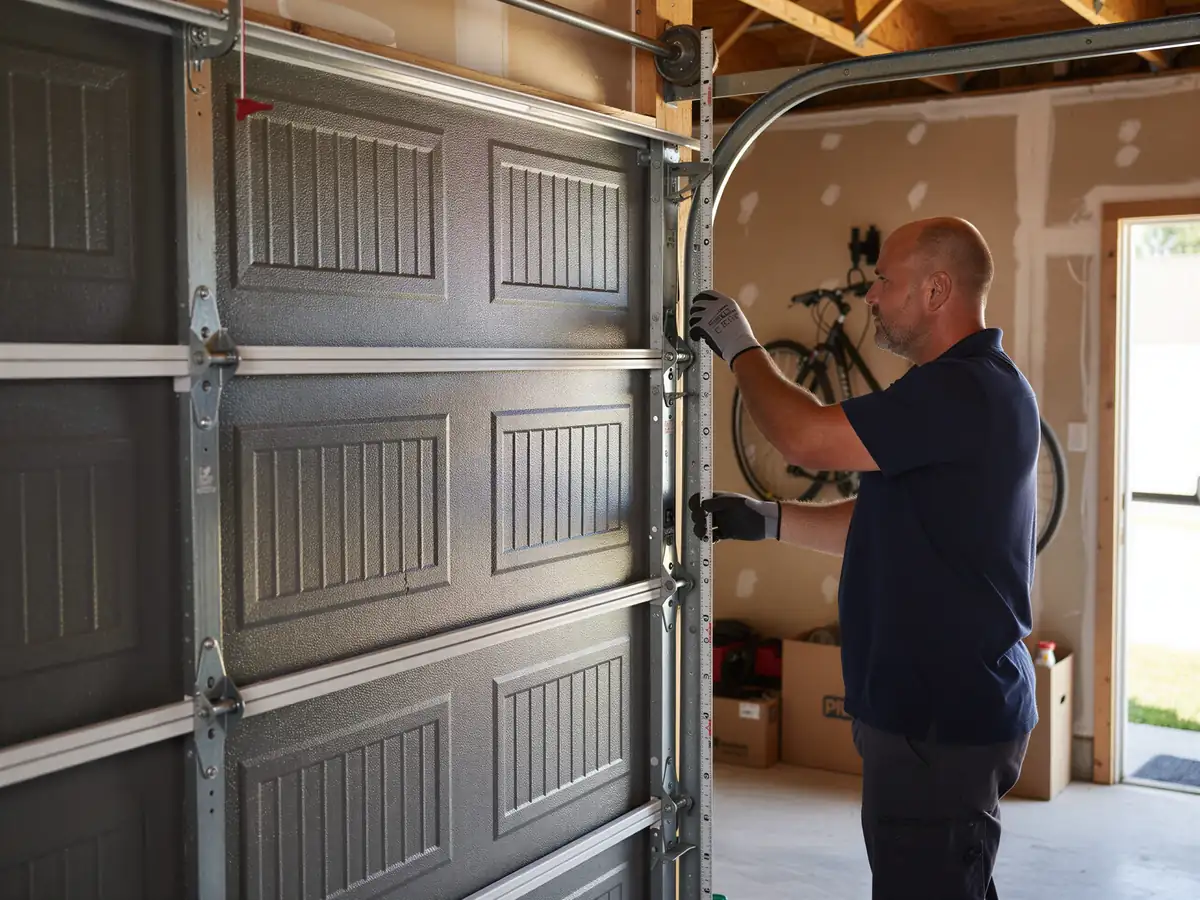
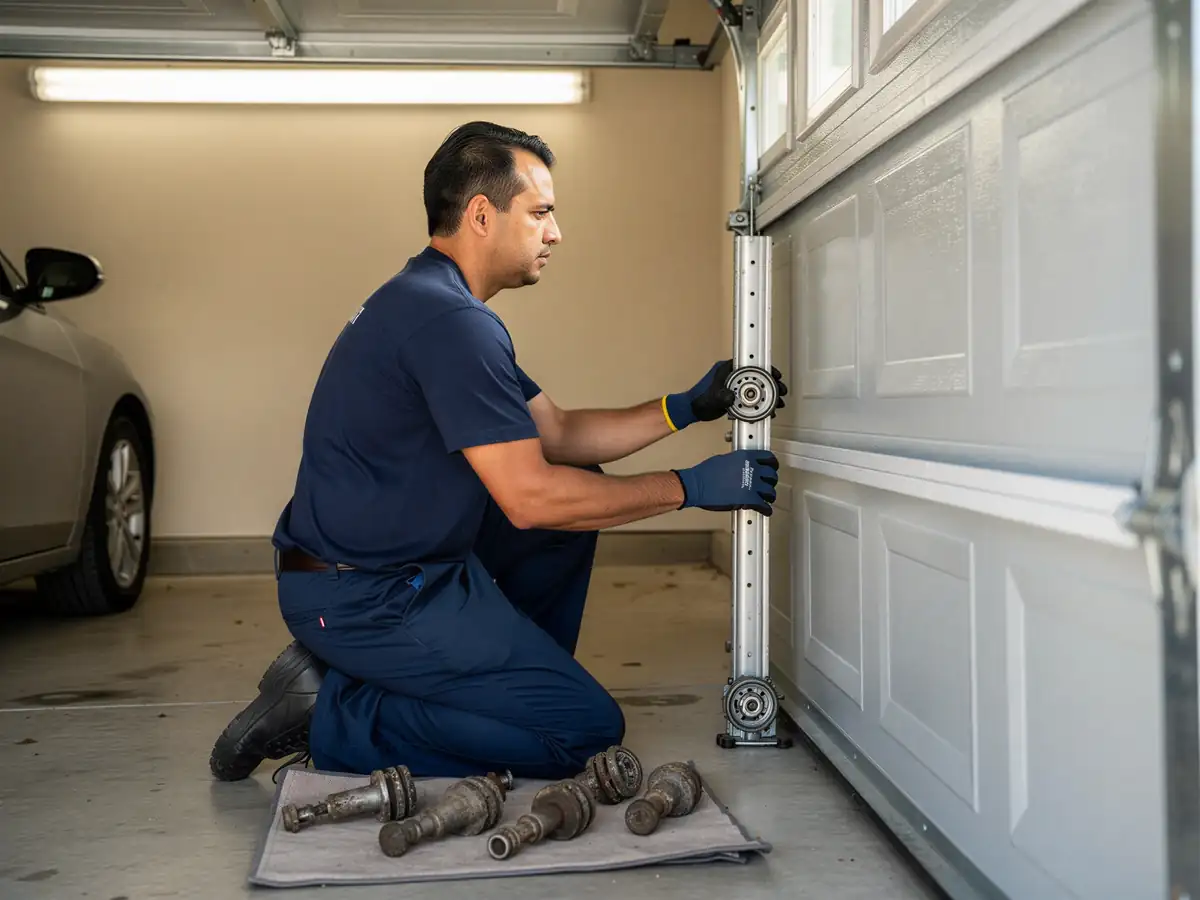
A single panel swap on a door we already stock the section for is usually the shortest version of this job - remove the damaged panel's hardware, slide it out, fit the replacement, re-hang the hinges and rollers, and check the door runs true. Insulated panels or anything needing a special-order section takes longer, not because the install is harder, but because the part has to be in hand first.
Across Auburn's roughly 1,998 households, most built in that same early-80s window, we're usually dealing with similar door weights and panel counts job to job, which keeps the work predictable once we know the make. It doesn't make it instant - the door still has to be checked under tension after the new section goes in, especially on a cold day when the steel is stiffer than it'll be in July.