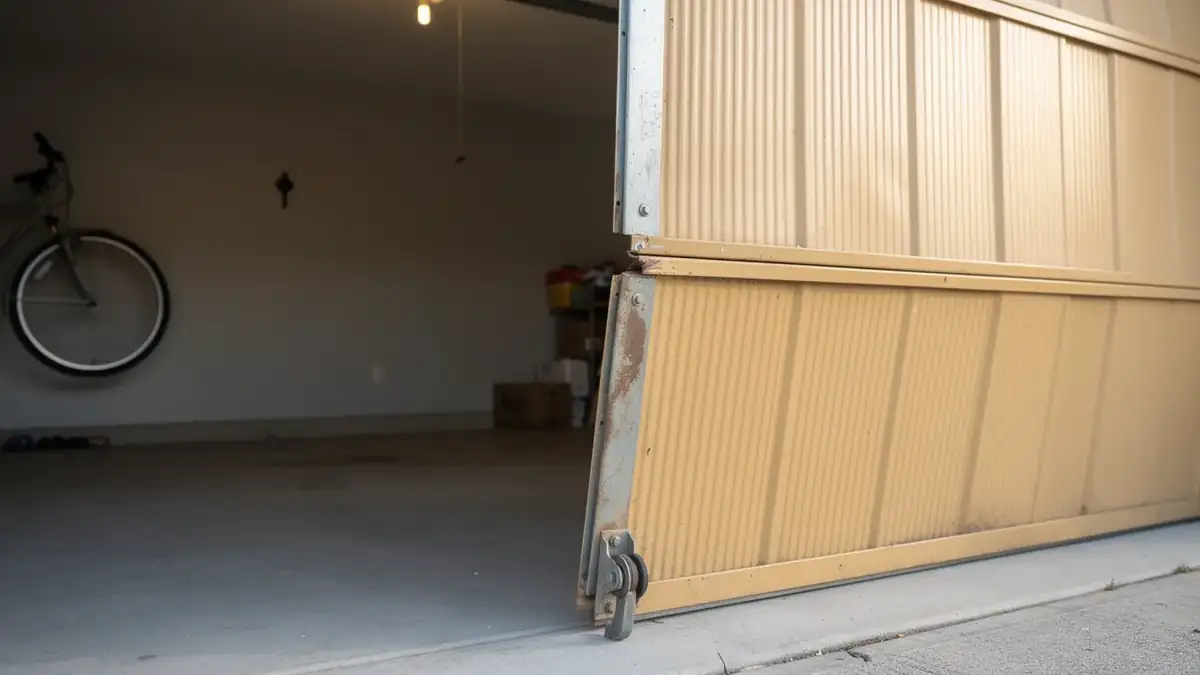
The Situation
A door comes off track for one of a handful of reasons
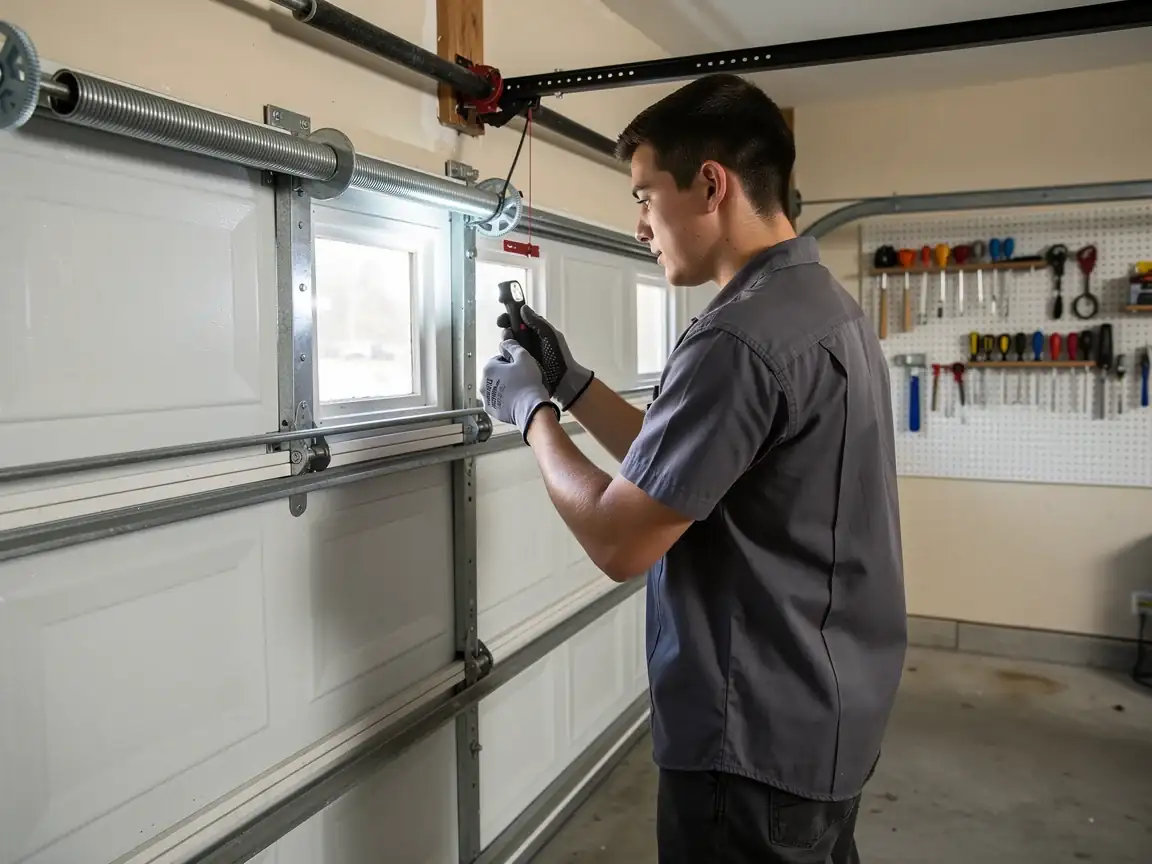
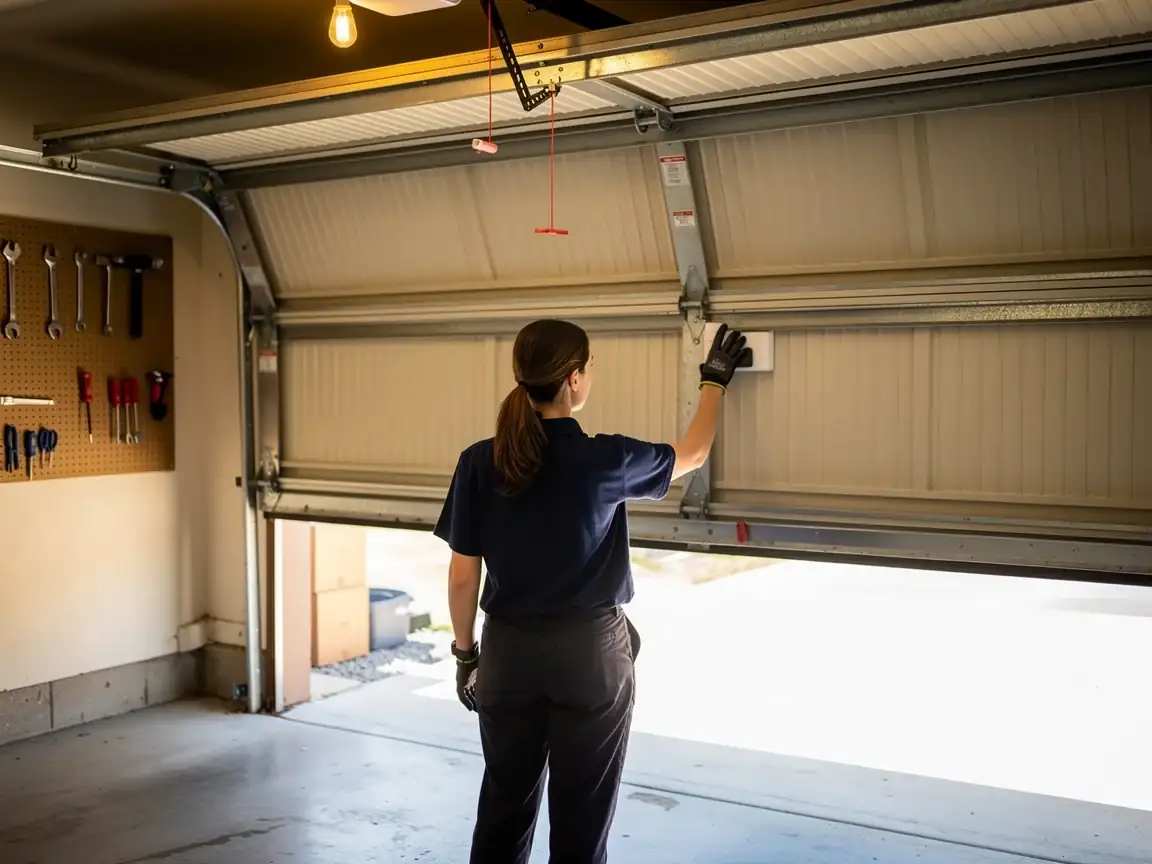
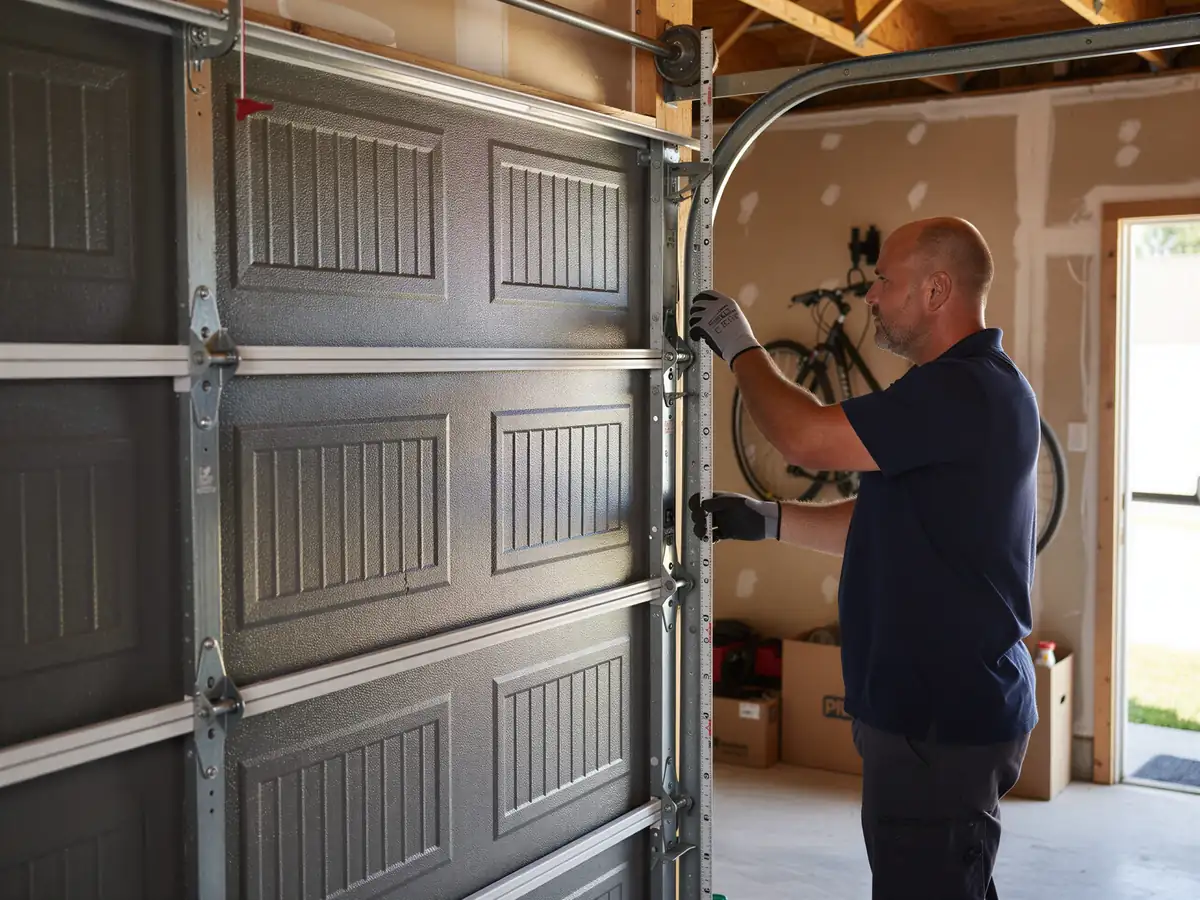
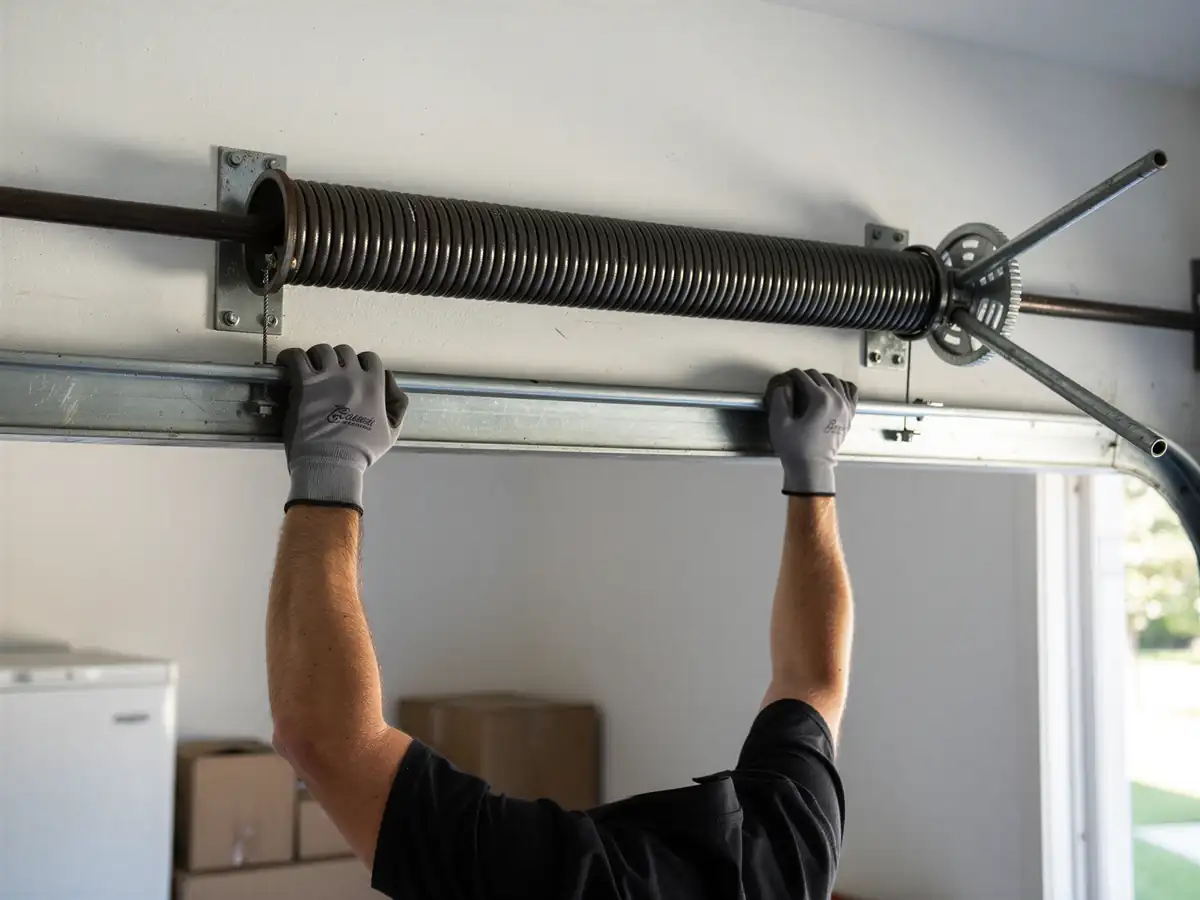
And in Londonderry the housing stock points straight at most of them. Homes here were built between 1938 and 1996, with the typical house going up around 1982, which means a lot of doors are still riding on original track brackets and rollers from that build era. Steel track bends or pulls away from the jamb when a roller wears down to the point of binding, or when a bracket screw works loose in framing that's now 40-plus years old. The door doesn't jump the track on its own - something upstream of it fails first, usually a roller, a bent section of track, or a bracket that's no longer biting into solid wood.
On a lot of the 1980s-90s builds across this service area, the original hardware was never upgraded
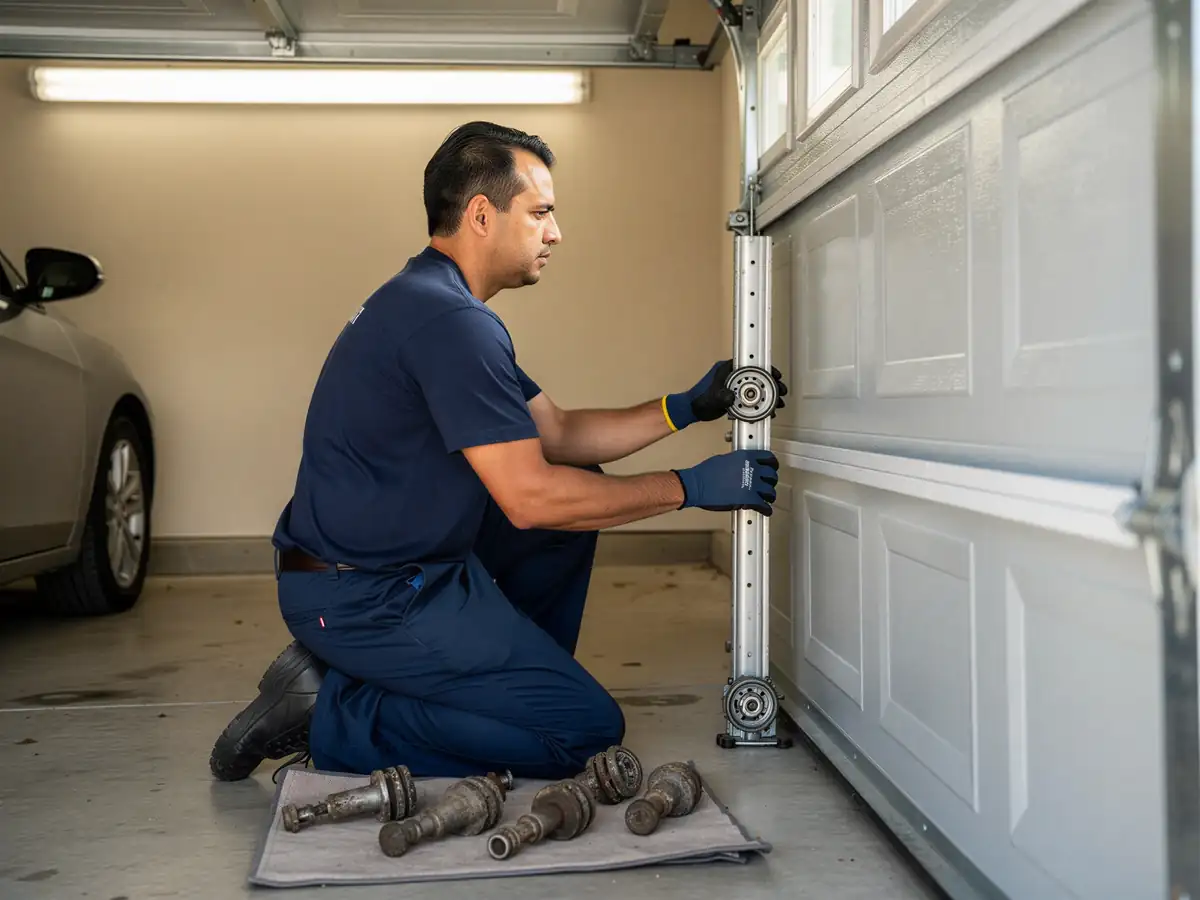
So when one roller finally gives out, the door can walk sideways on the next cycle and catch the edge of the track. That's the moment a homeowner notices it - the door hangs cockeyed, or it jerks and stops partway up. By then the fix isn't just re-seating the door; it's finding out why the roller failed and whether the track itself got bent in the process.
How Local Conditions Play In
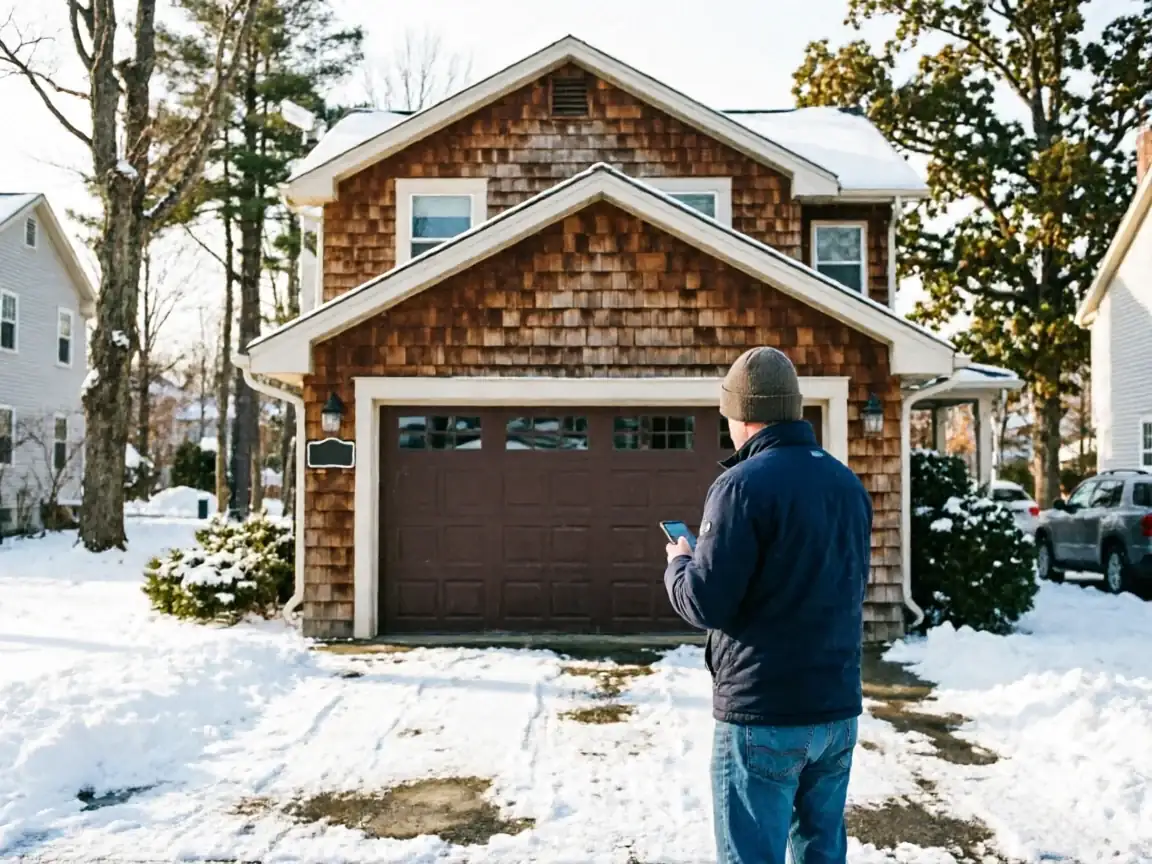
Londonderry sits in a climate zone the federal data classes as cold, and severe cold does specific things to a garage door's moving parts. Grease inside roller bearings thickens in a hard freeze, which makes the roller drag instead of spin freely inside the track. A dragging roller doesn't glide - it chatters and, over enough cycles, it can walk the door off the rail. Cold also shrinks steel track slightly, which is usually not enough to cause trouble on its own, but on a bracket that's already loose from age, it's often the difference between holding and letting go.
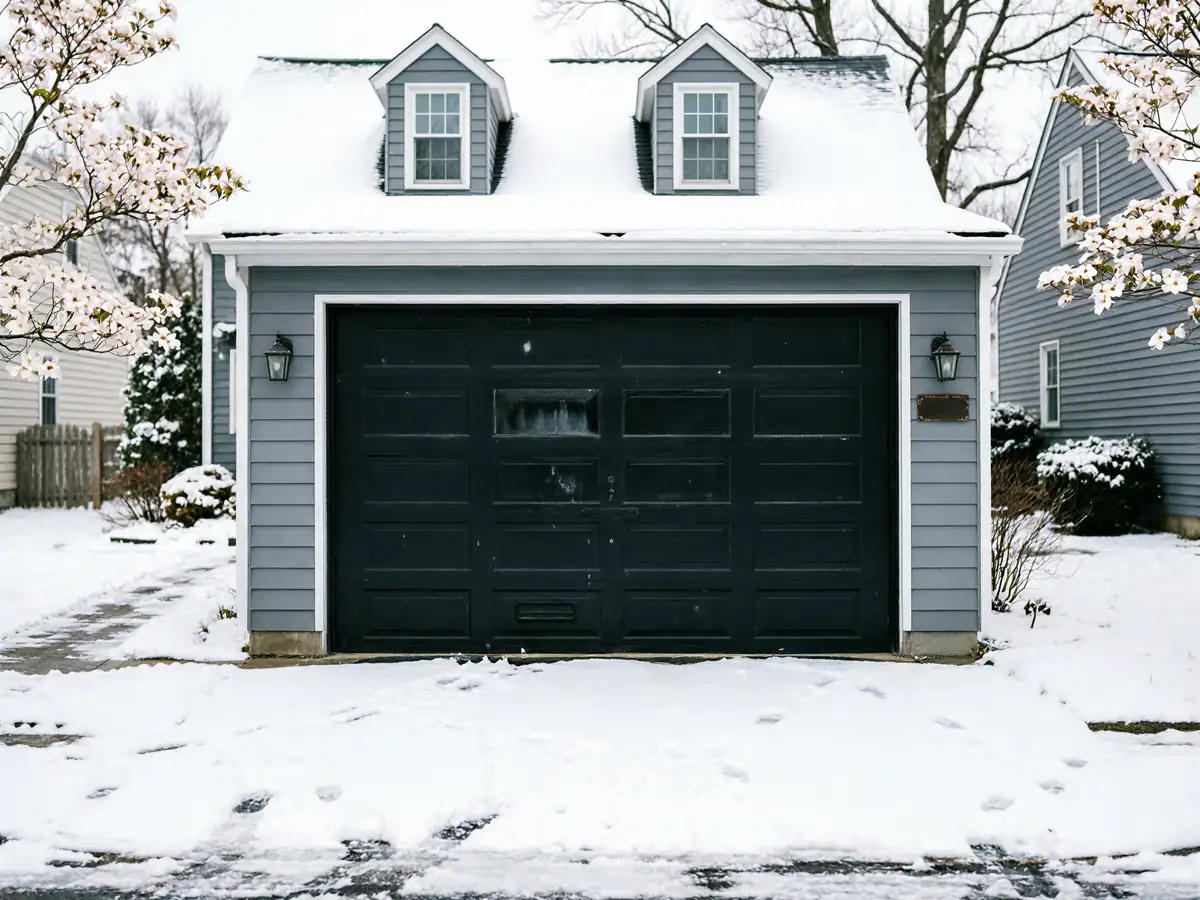
This matters more here than it would somewhere with a mild winter, because the stock of houses built in that 1938-1996 window is old enough that hardware has had decades of freeze-thaw cycles to work loose. A new door on new track in a heated garage shrugs this off. An original-era door on original brackets, cycling through a Londonderry winter, is the one that ends up off track in January.
What It Costs
I'm not going to put a number here that I can't back up - repair cost on an off-track door depends entirely on what actually failed, and I don't have pricing data I can state as fact for this page. What I can tell you is what drives the cost up or down. A single bent roller bracket and a re-seated door is a short job. A bent track section usually means replacing that length of track rather than trying to hammer it straight, because a straightened track rarely runs true afterward. If the door came off track hard enough to crack a stile or pop a panel, now you're pricing panel or door replacement, not a repair.
Given the median household income in this area runs well above the state average, a lot of homeowners here opt to replace an original-era door outright once it's shown one failure, rather than keep patching 1980s hardware piece by piece. That's a reasonable call on a door that's already 35-plus years old, but it's not required - plenty of these doors run fine for years after a proper track and roller repair.
The Seasonal Bit
The calls change with the season
And in a cold-climate town like this, late fall and midwinter are when off-track doors show up most. A door that's been dragging all autumn on a worn roller usually picks the first hard freeze to finally let go, because that's when the grease stiffens and the roller stops compensating. If your door has been making a new noise, or hesitating partway through its cycle, that's worth a look before the real cold sets in - not after.
One honest limitation
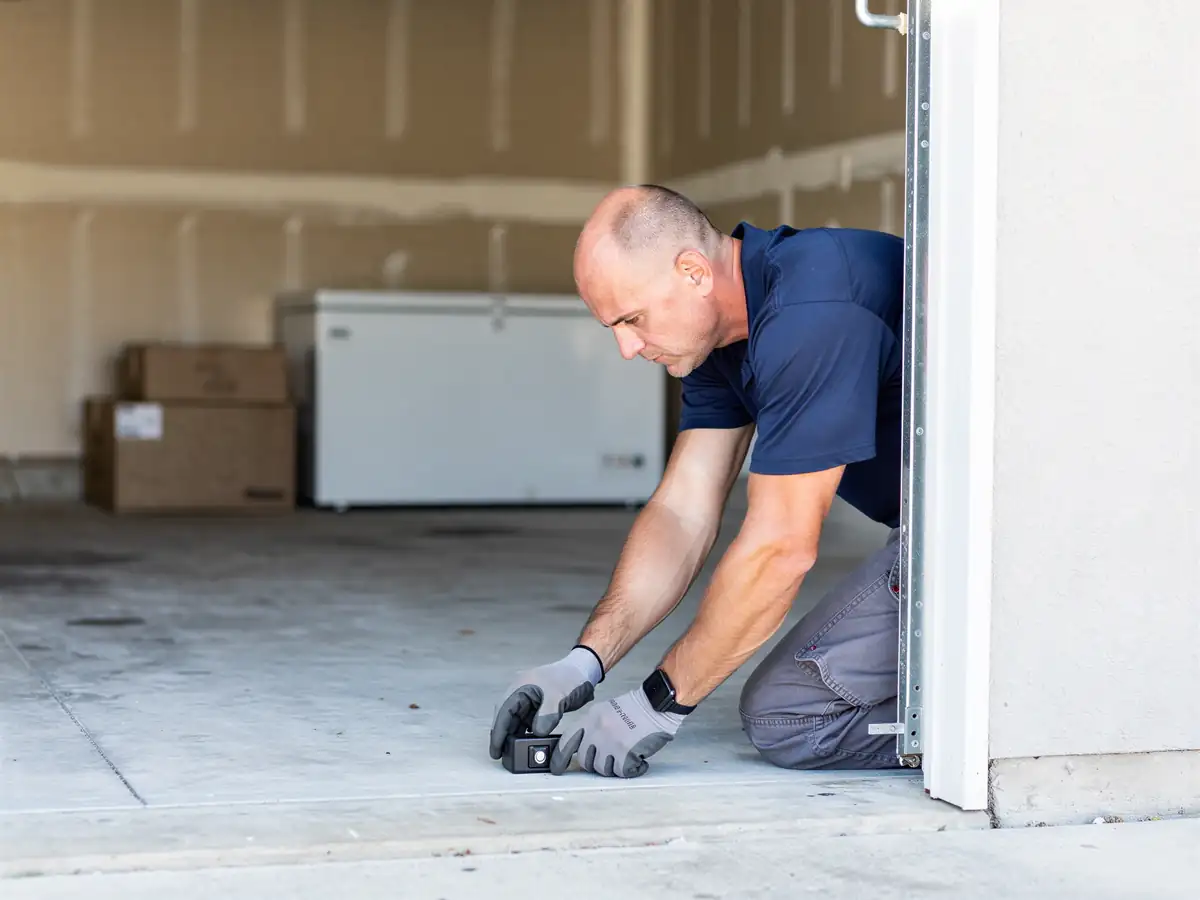
If a track is bent in more than one spot, or the door's wood has swelled and warped from decades of seasonal moisture, re-aligning it isn't always worth the labor compared to replacing the section outright. I'll tell you which one you're looking at rather than charge you for a repair that won't hold through next winter.