
Why This Fails Locally
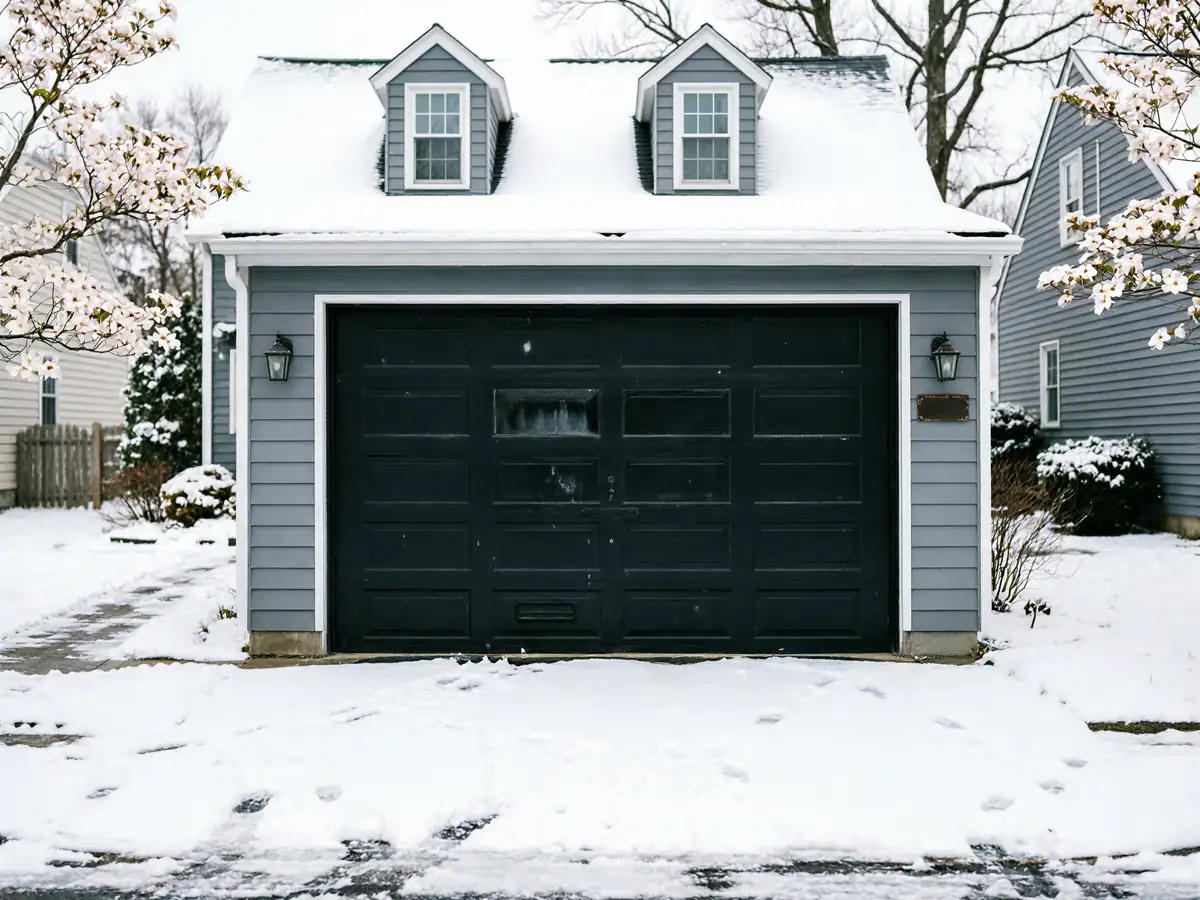
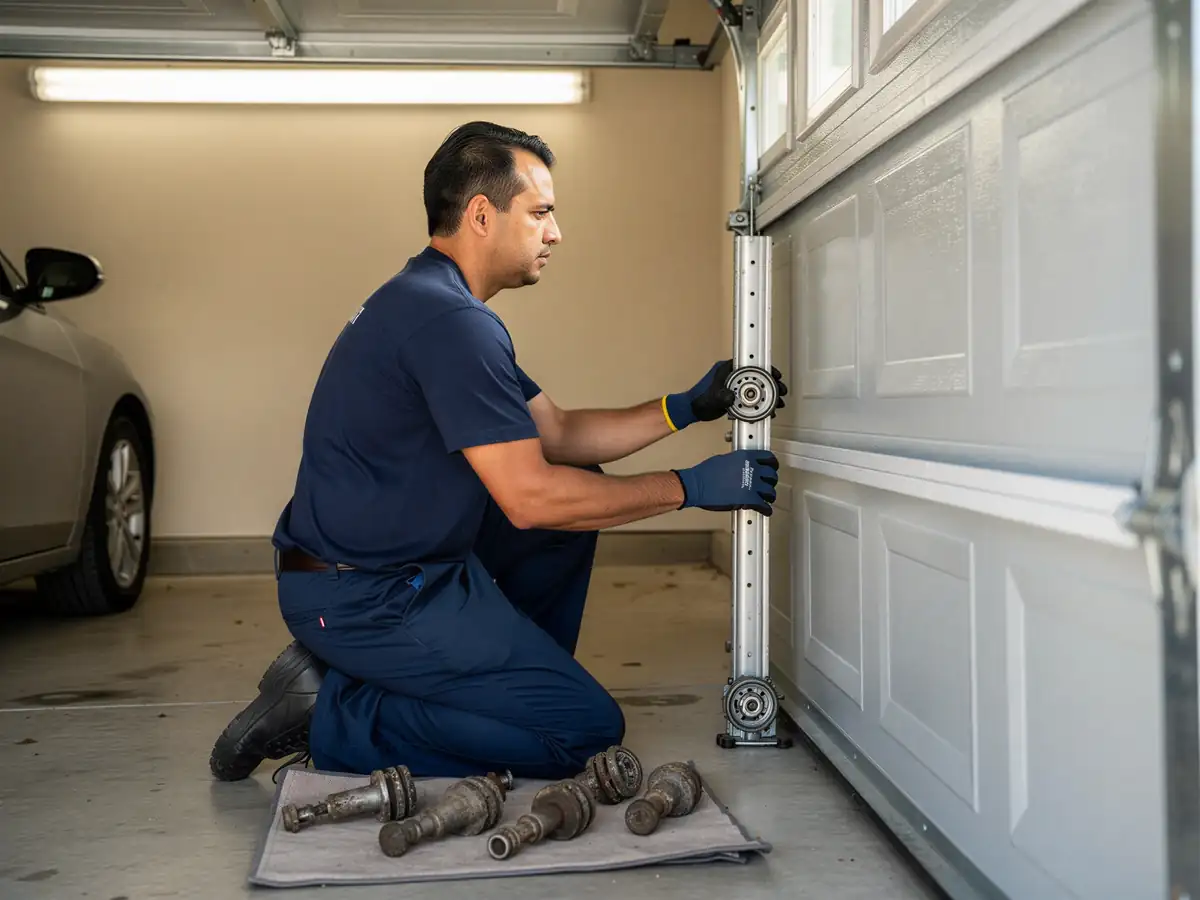
Auburn's housing stock centers on 1983, which puts most garage doors and openers here into their third decade or later of New Hampshire winters. That matters because the service area falls in a severe cold climate band, and repeated freeze-thaw cycles work on steel differently than they do in milder states - galvanized cable strands corrode from the inside out, and nylon rollers from that era go brittle and crack rather than just wearing smooth. A door that looked fine in October can bind hard the first week of a real cold snap, because the grease inside the roller bearings has stiffened and the opener is suddenly pulling against resistance it wasn't built to fight. This isn't a problem unique to any one house in town; it's a function of when Auburn was built and what parts were standard then. Newer subdivisions elsewhere in the service area with 1990s-era doors see less of this because the hardware is a different generation.
The Symptom
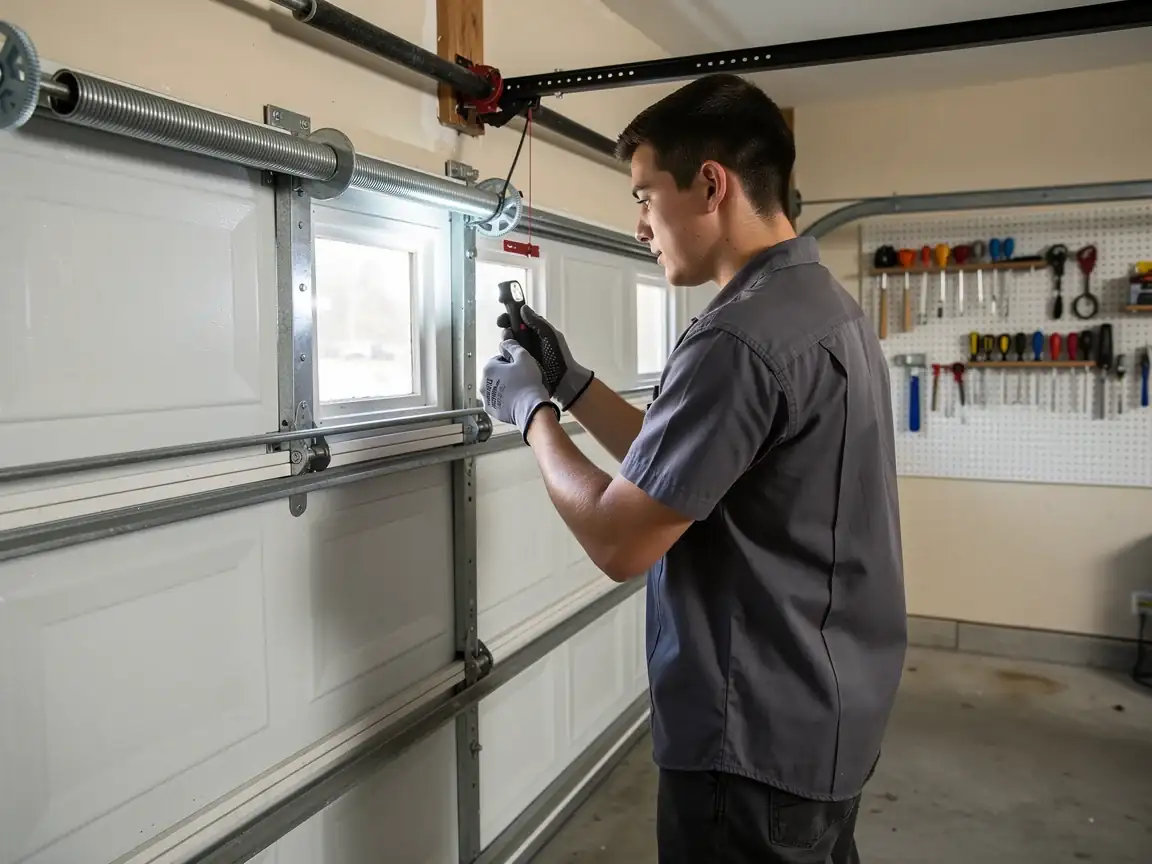
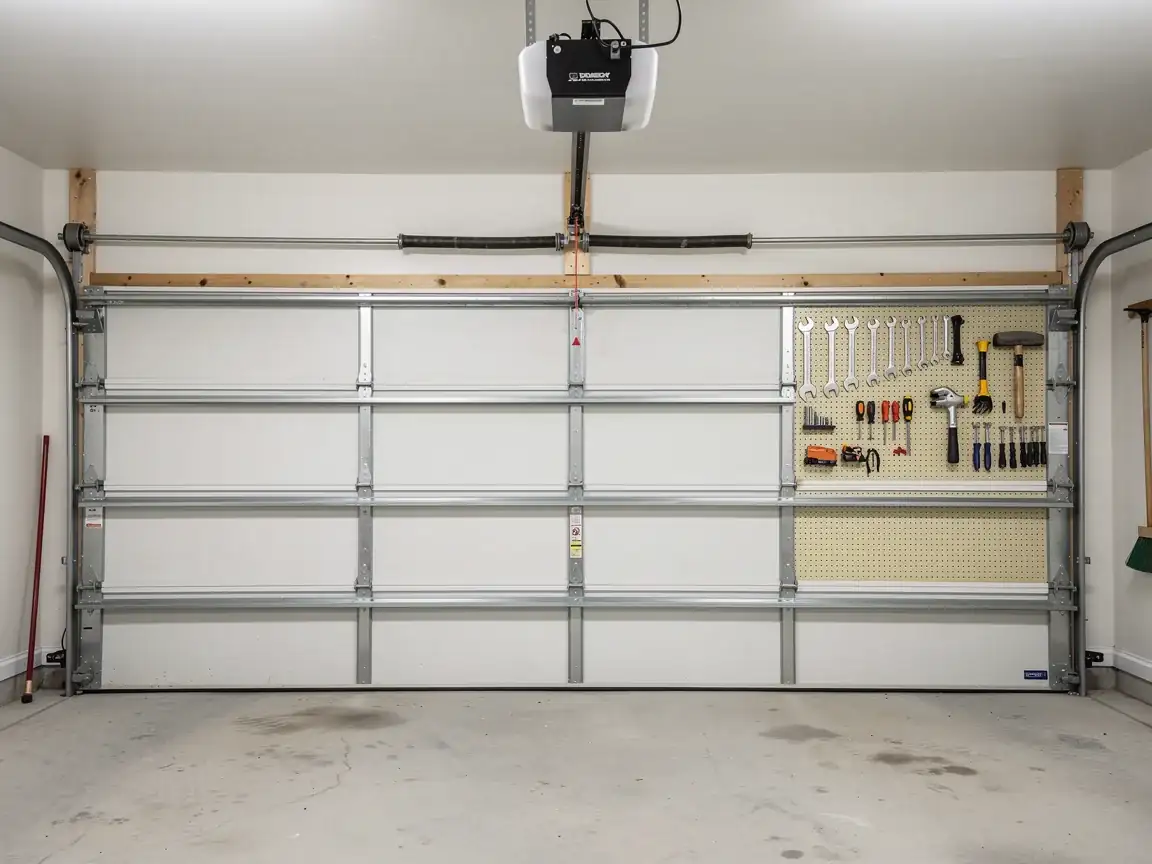
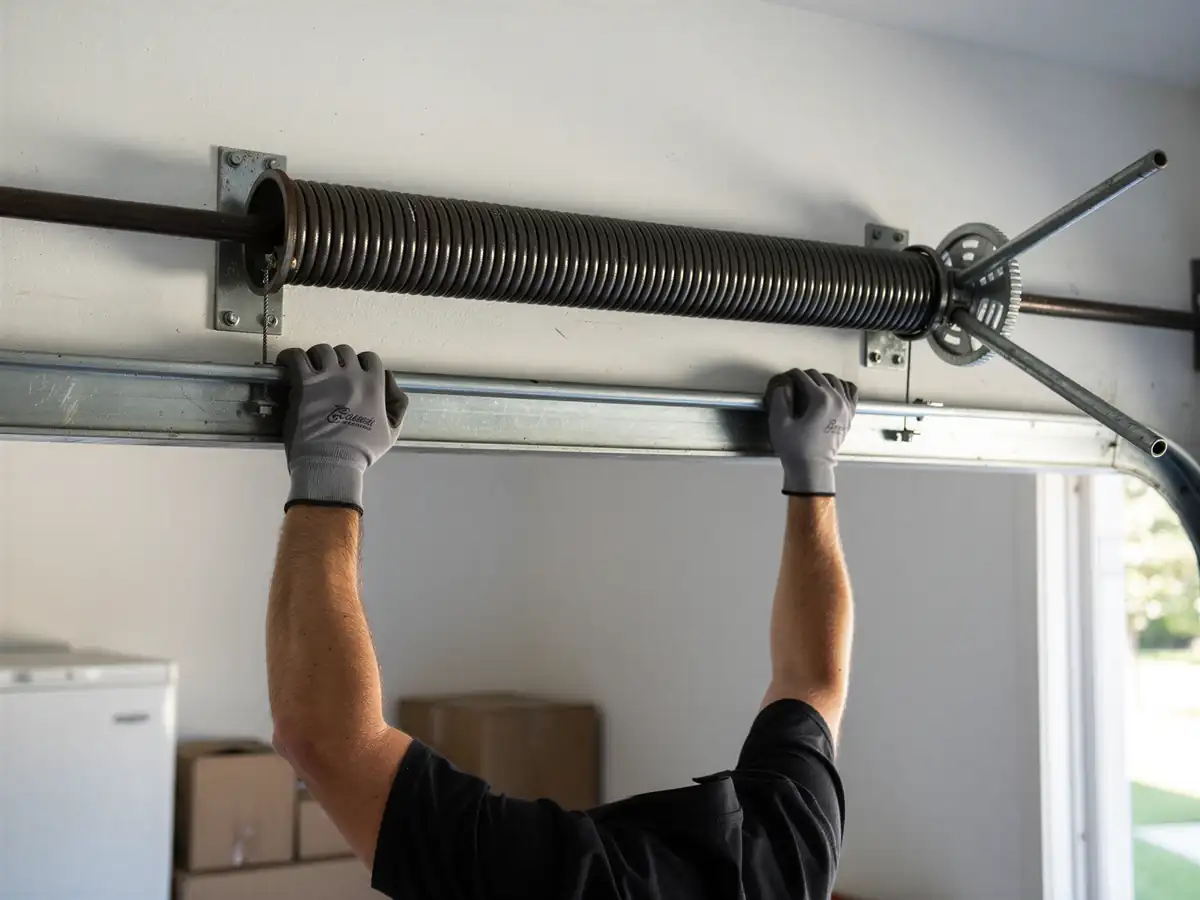
The complaint we hear most from this stretch of the service area is a door that opens fine in the morning and groans or hangs up by evening, once the temperature has dropped again. That's a torsion spring losing tension as cold steel contracts, paired with an opener that's compensating by drawing more power than it should. Another common one on 1983-vintage doors: a track that's slightly out of plumb after decades of seasonal ground movement, which shows up as a roller popping loose on one side only. Neither of these is an emergency the first time it happens. Both get worse fast if ignored through a full winter, because the extra strain transfers to the opener's gears and drive belt, and that's a more expensive repair than the spring or track adjustment would have been.
Stocked Parts
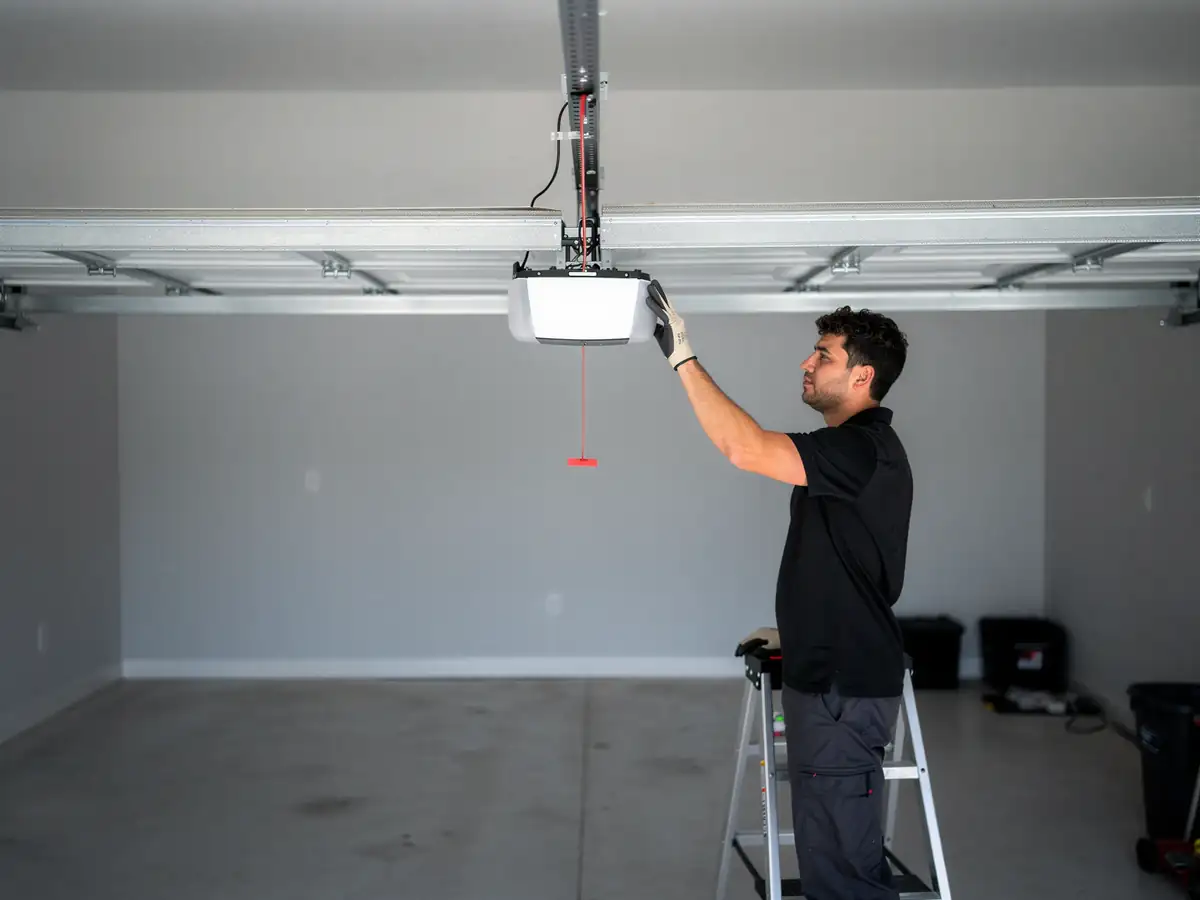
Because so much of this town's housing clusters tightly around 1983, the openers and torsion hardware we pull for Auburn jobs tend to be a narrower range than you'd guess - older chain-drive units, steel torsion springs sized for the lighter doors common in that era, and the specific roller and hinge sizes that match. That consistency across the town's roughly 1,998 households means a tech can often carry the right spring size on the truck rather than special-ordering it, which isn't something we can promise for a mixed-era neighborhood. What we don't stock on the truck is anything for a fully custom or architectural door - those parts have to be ordered regardless of which town the house is in.
Time on the Job
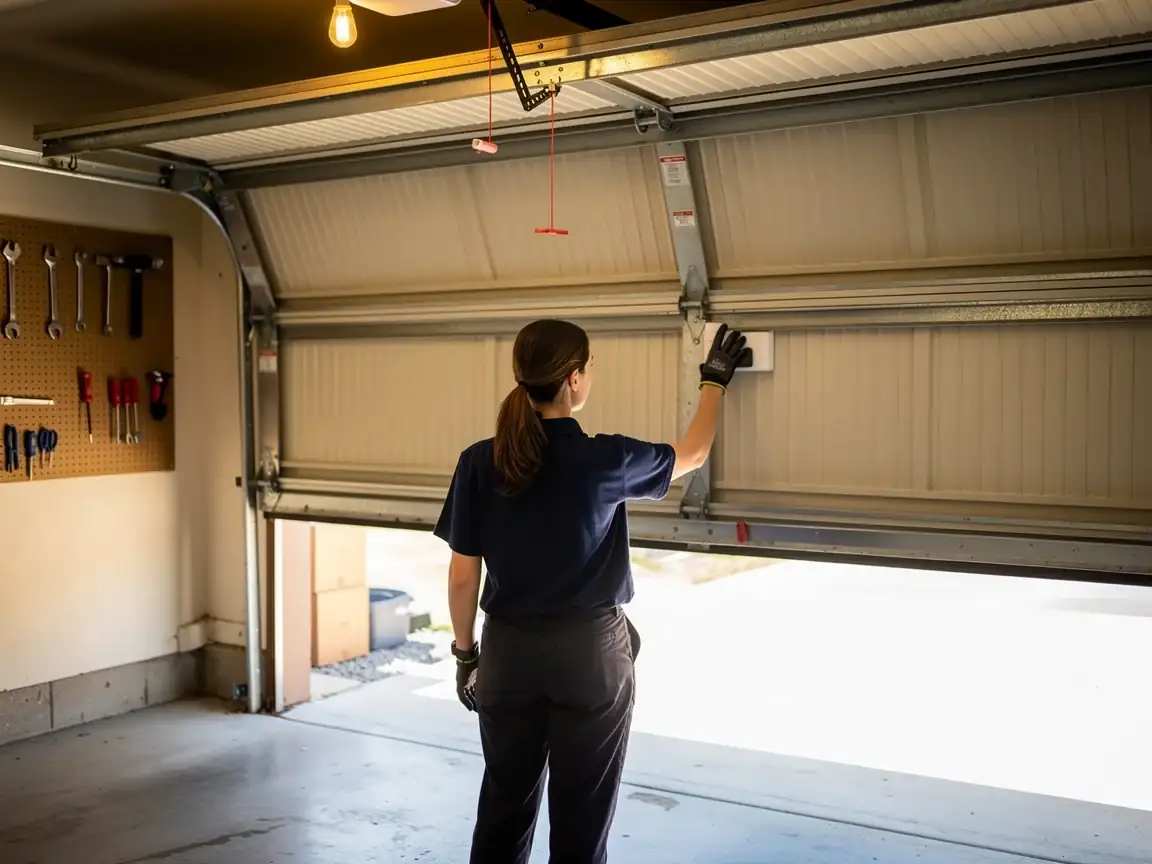
Auburn is a 10-mile drive from our Londonderry base, which we mention only so you know the travel time is baked into scheduling rather than promised as a fixed window - we don't claim a set response time for calls out this far, and we'd rather say that plainly than guess. Once on site, a standard tune-up or spring adjustment on a door from the 1983 median build year runs comparable to any job on hardware that age: checking balance, tightening loose fasteners that have worked free over thirty-plus years of door cycles, and replacing worn rollers before they fail outright. If the door needs a part we don't carry on the truck for something unusual, that adds a return trip, and we'd rather tell you that up front than let it surprise you.