Stocked Parts
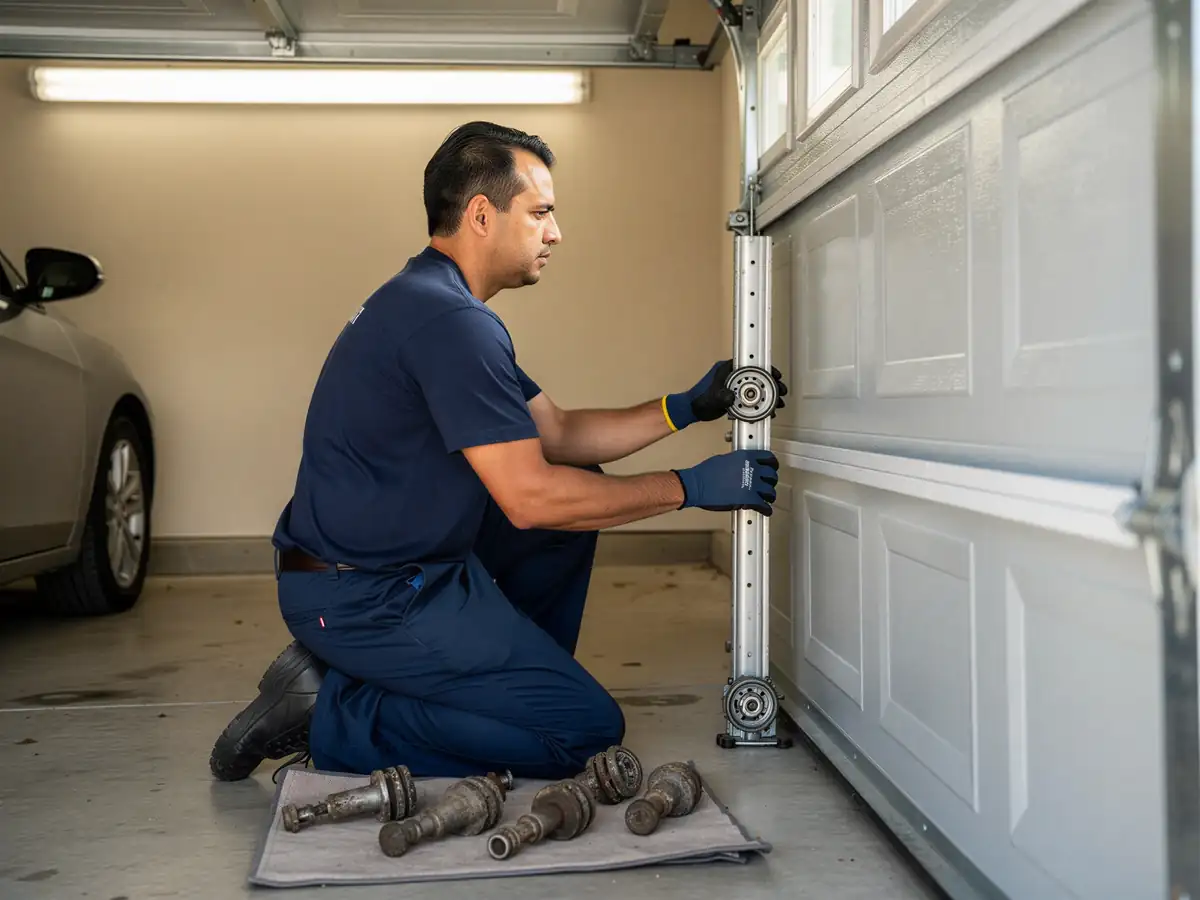
We carry both 7-ball steel rollers and sealed nylon rollers on the truck, in 2-inch and 4-inch stem lengths
Because the service area we cover runs from houses built as early as 1938 up through 1990s construction, and the roller size that fits a 1982-median-era track isn't always what fits a newer build. Across the 28 named areas we work in, the stock is mostly 1980s-90s, so the bulk of what we carry matches that track gauge and bracket spacing. We also keep a smaller run of steel rollers with sealed bearings for owners who've had nylon fail twice already and want to stop replacing the same part.
What we don't stock on the truck
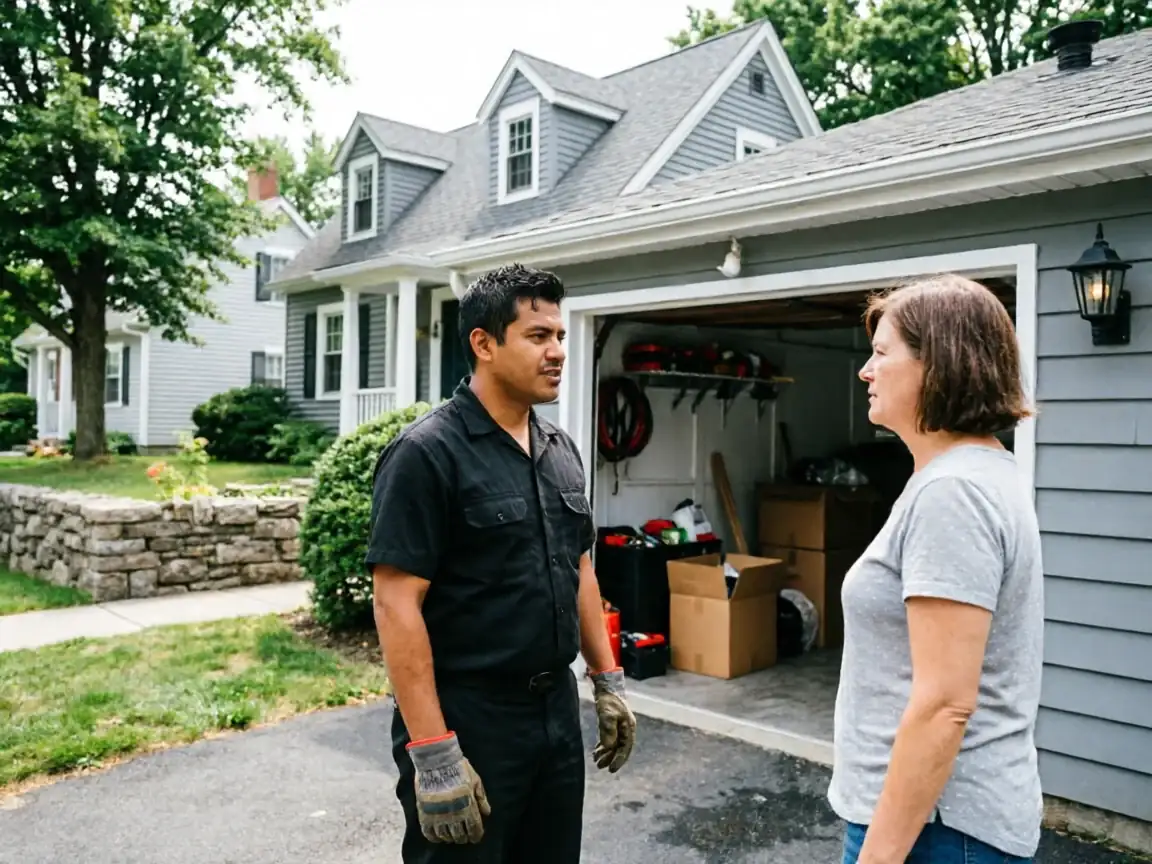
Oddball rollers for custom or imported doors outside the usual production runs. If your door is a specialty import, we may need a day to source the right stem length rather than force a near-match that'll wear the track early. We'd rather tell you that up front than install something that strips out in six months.
For most calls in this area
Though, it's a standard swap - old rollers out, correctly sized ones in, track checked for the wear pattern that put you in this spot.
The Symptom
The door jerks instead of rolling smooth, usually worse at the top or bottom of the travel where the track curves. You might hear a grinding or clicking as each roller hits a certain spot, or see the door hang up and need a shove from the opener to clear it. Sometimes a roller has worked loose from its bracket and you can see metal shavings or chipped nylon pieces sitting in the track.
On older doors - and a fair number of the houses we see here date back to the 1938-1996 build range - the rollers are original steel with no bearing seal, so the grinding sound shows up well before the roller actually fails outright. On a newer door from the 1980s-90s stock that's more common in this area, you're more likely dealing with nylon rollers that have gone brittle and started chipping instead.
Either way, a bad roller doesn't usually strand the door shut on its own, but it does accelerate wear on the track and the opener's drive system, which turns a cheap part into a bigger bill if it sits too long.
Why This Fails Locally
This region sits in a cold, severe climate band, and that matters more for rollers than people expect. Steel rollers with open bearings pick up moisture through the winter, the bearing grease stiffens in the cold, and the roller starts grinding instead of turning freely - which is exactly the wear pattern we see on doors from the older end of the local housing stock, built as far back as 1938. Nylon rollers have the opposite problem: cold makes the nylon more brittle, so a roller that's already a few years old is more likely to crack or chip a tooth when the temperature drops hard, rather than just wearing evenly.
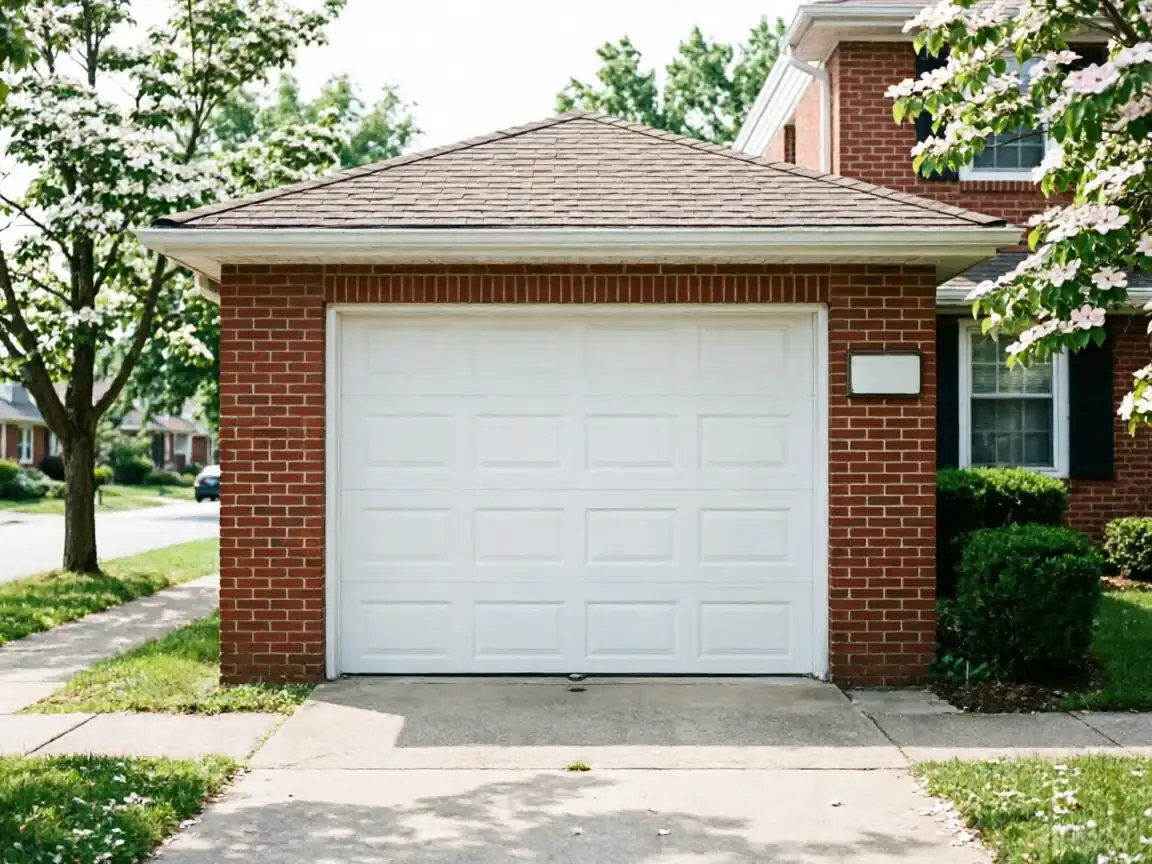
Because most of the houses across this service area were built between 1938 and 1996 with a median around 1982, a lot of doors are running original or first-generation rollers that were never upgraded. That's a long stretch of freeze-thaw cycles on hardware that wasn't designed with sealed bearings. It's not a defect in any one door - it's what happens to roller hardware in this climate over four, five, six decades of winters.
What the Fix Involves
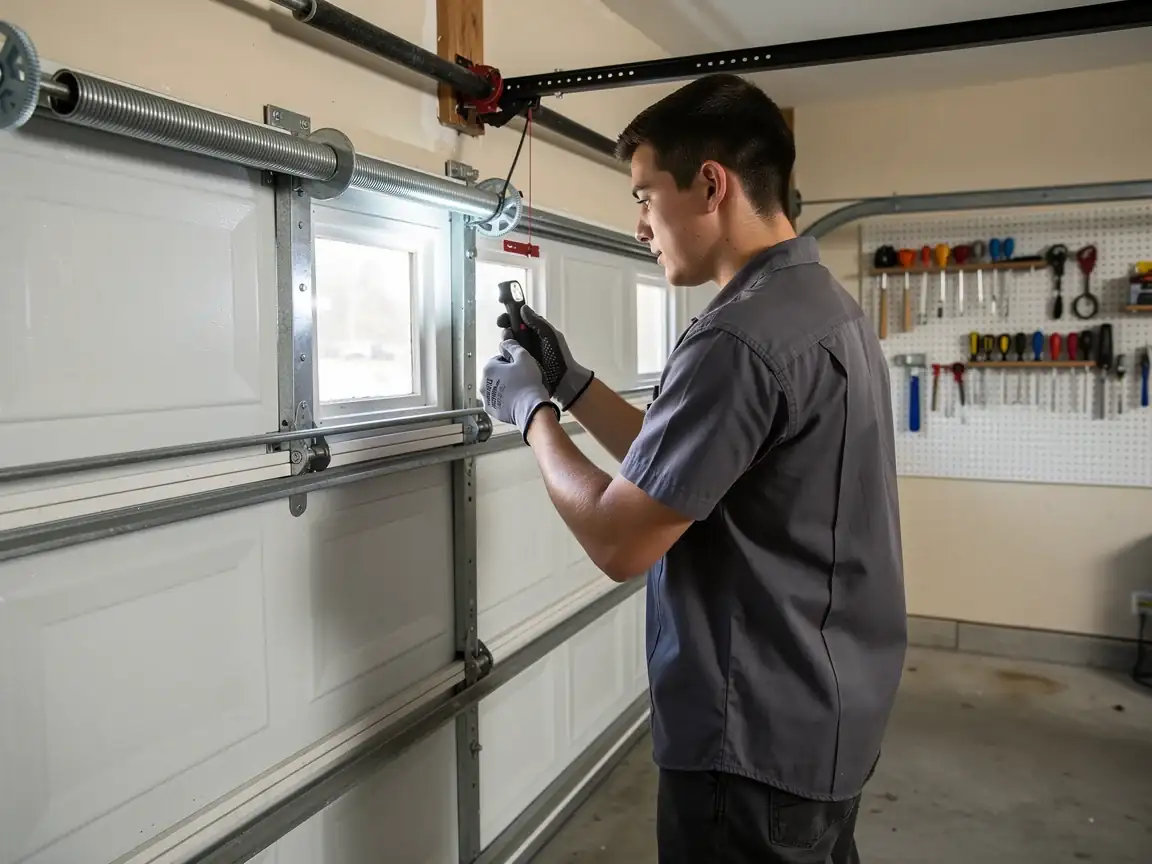
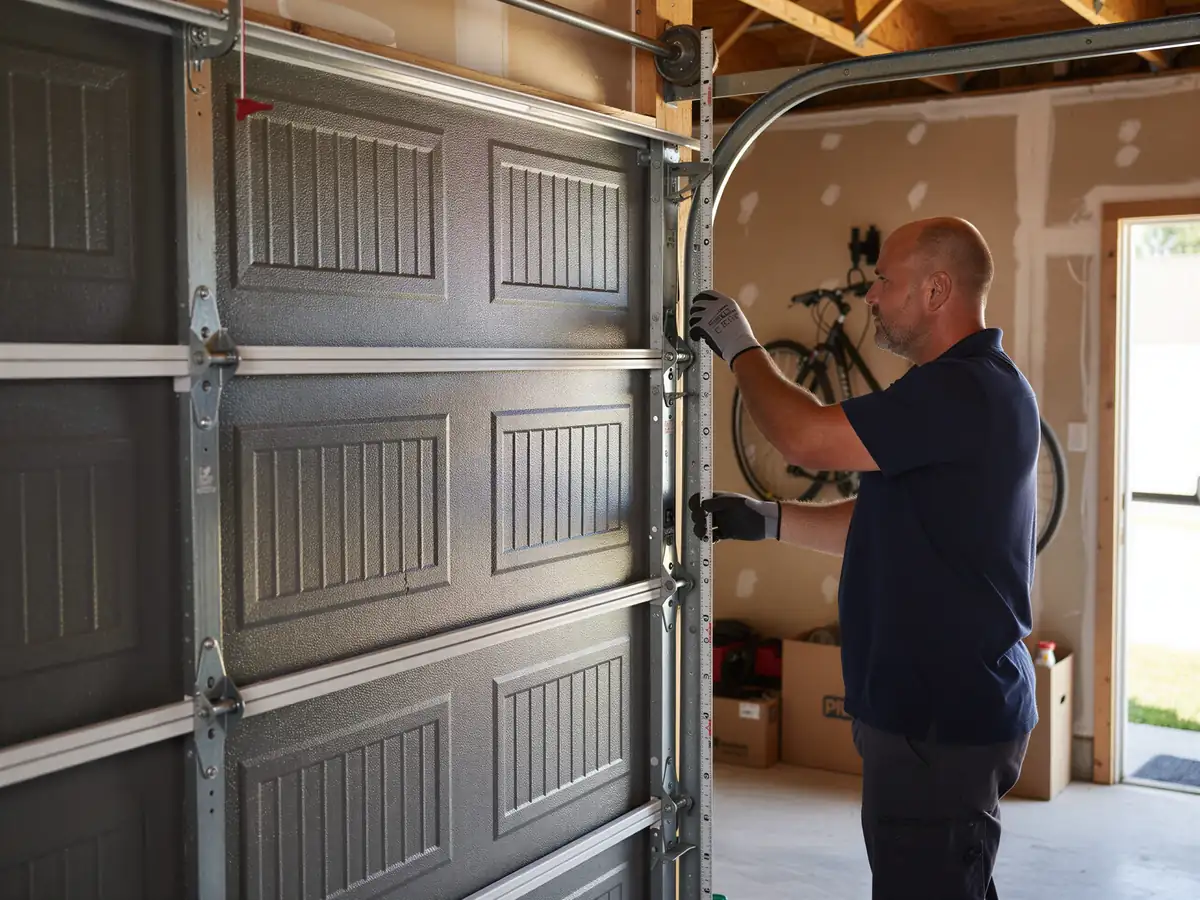
We open the door manually first, roll it through a full cycle
And watch each roller to see which ones are grinding, chipped, or loose in the bracket - you don't always need to replace all of them, but if one side's gone, the other side is usually close behind from matched wear. We check the track for any gouging or bent sections the bad rollers may have caused, since a new roller in a damaged track will just wear out again.
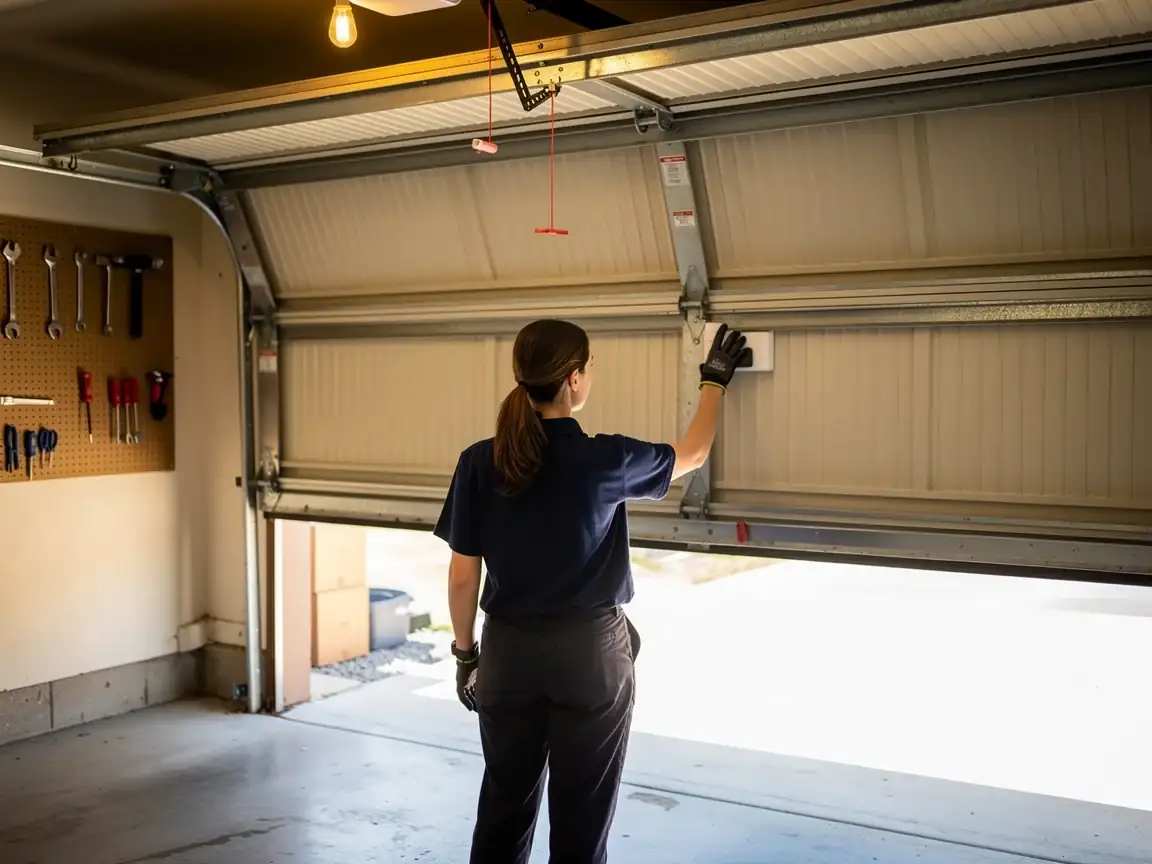
Rollers come out one at a time with the door supported
So the cables and springs stay under control the whole time - this is not a job to do with the door hanging half-open. New rollers go in matched to the bracket spacing already on your door, torque-checked, then run through several full cycles to confirm smooth travel before we call it done.
If the track itself is bent or the brackets are stripped out, that's a separate repair
And we'll say so rather than bolt new rollers onto a frame that won't hold them. A straightforward roller swap is usually a same-visit job; a bent track adds time.