Stocked Parts
Most of the calls we get in Londonderry trace back to a short list of parts
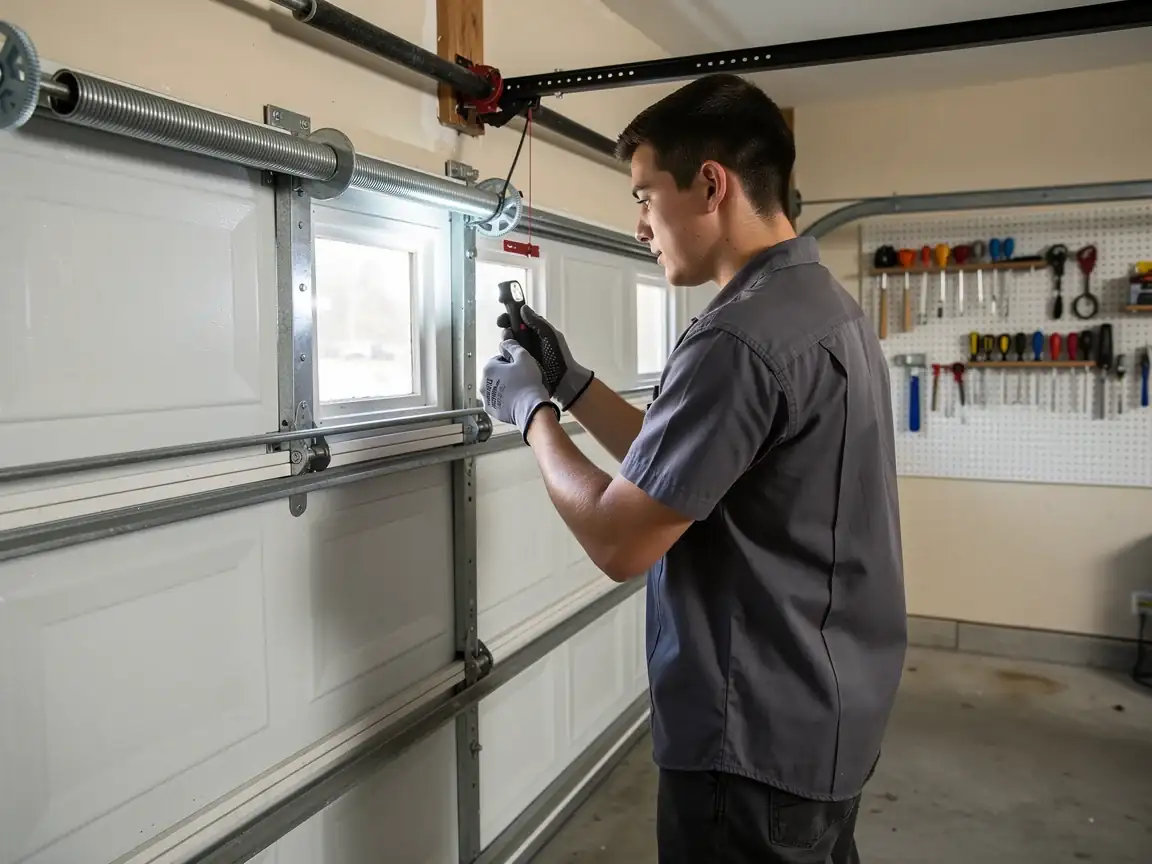
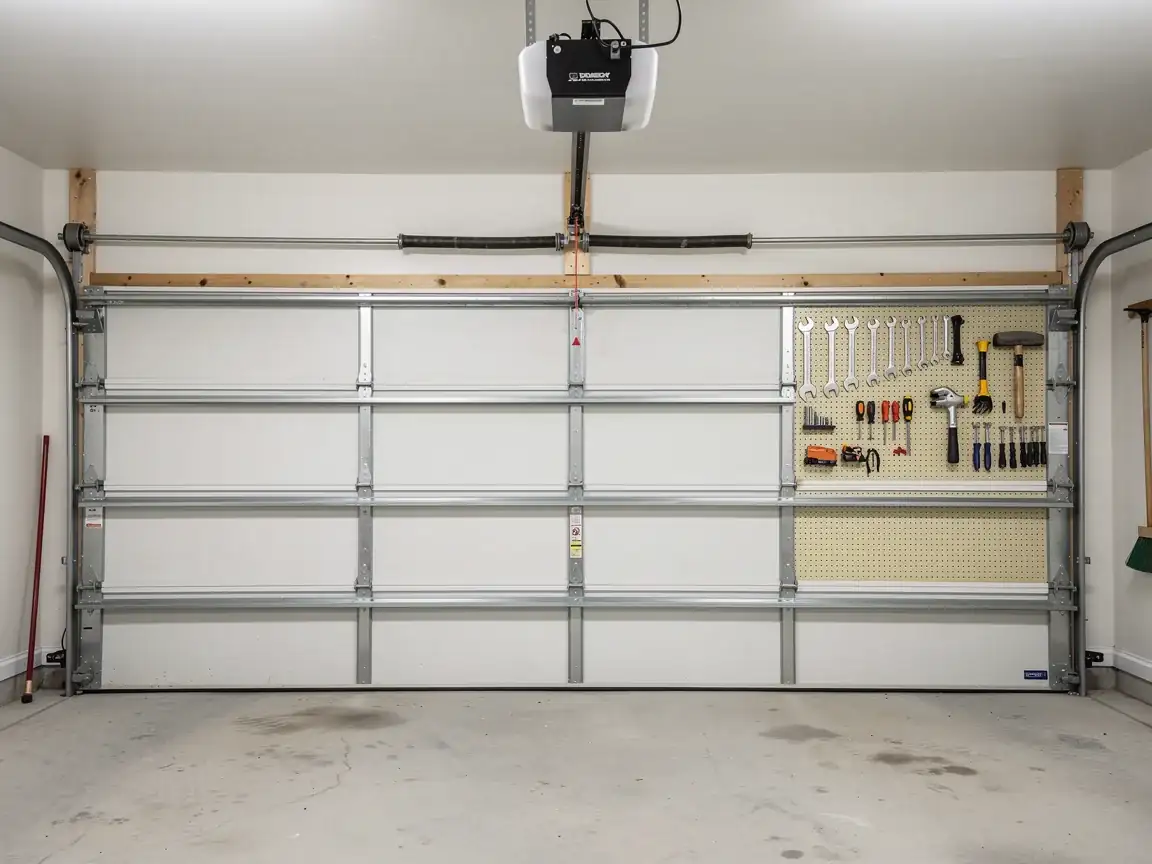
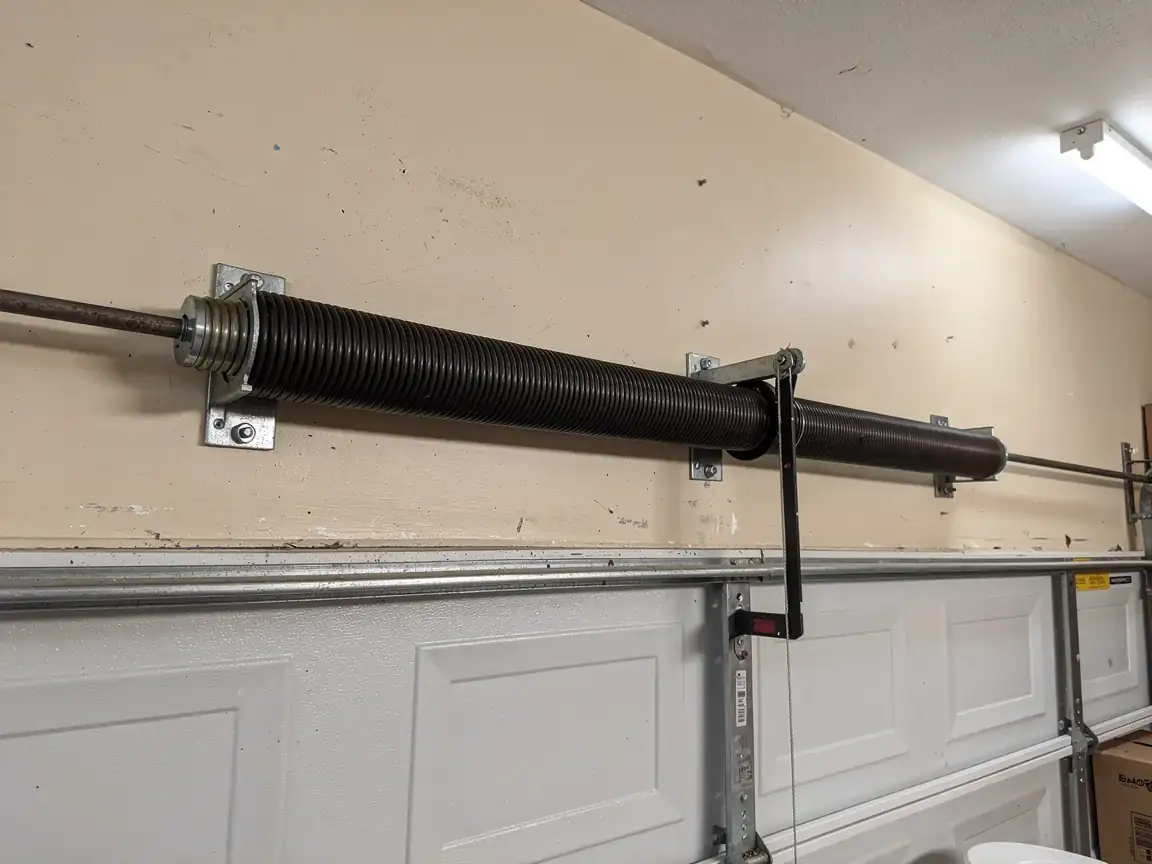
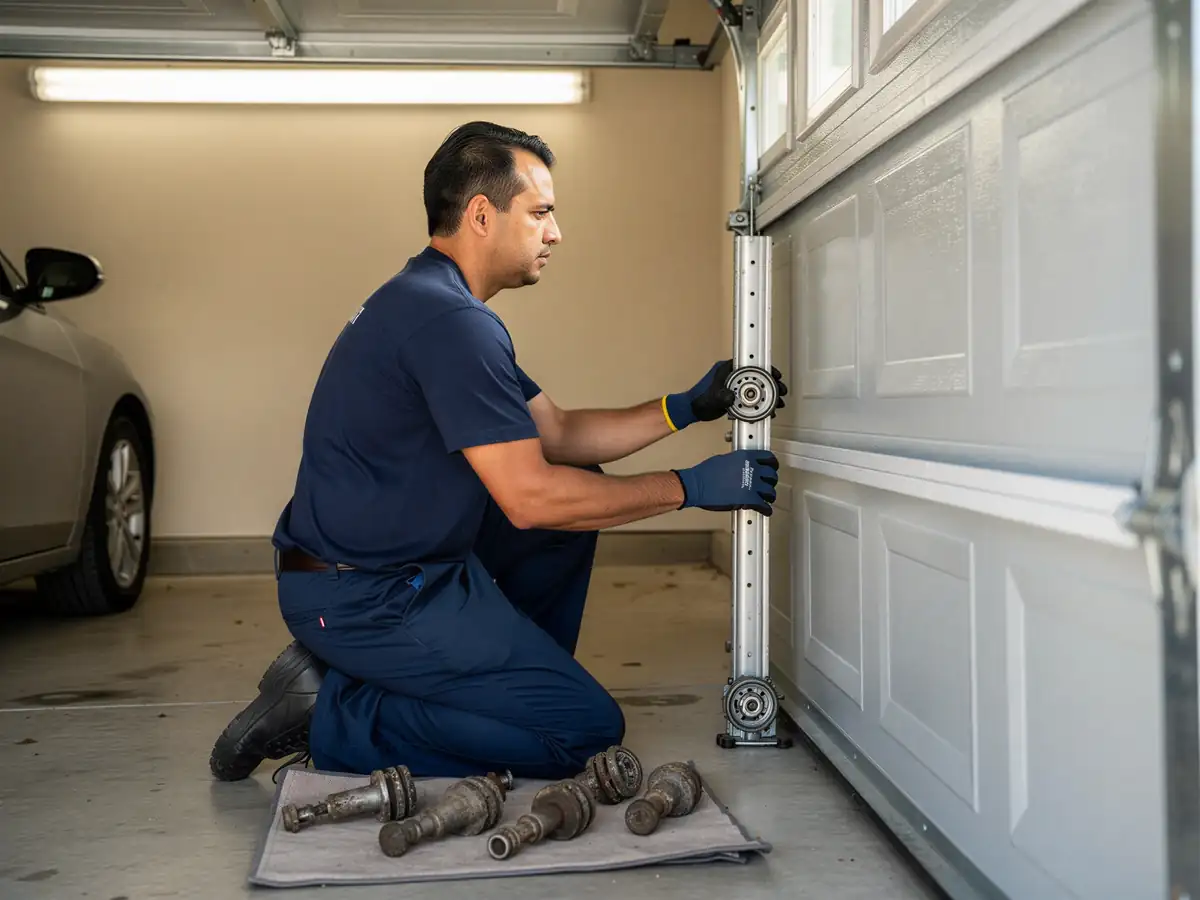
And we keep those on the truck instead of ordering them after we've already diagnosed the job. Torsion springs sized for the heavier steel doors that went into this area's 1970s and 80s builds, standard-lift cables, nylon and steel rollers, and the galvanized track sections that corrode faster here than in milder climates. We also carry the safety cables and bottom brackets that get skipped on older installs because they weren't code-required when the door went in.
What we don't stock on the truck are obsolete wood-panel sections for doors from the late 1930s through 1950s part of our housing stock
Those sometimes need a special order, and we'll tell you that up front rather than promise a same-day panel swap we can't deliver. If your door is one of the handful of original installs still running from that era, expect a short wait on cosmetic parts even if the spring or opener gets fixed same visit.
We price springs and cables by size and door weight, not by a flat number
Because a single door built in 1985 and a double built in 1995 pull different hardware. That's also why a quick phone estimate on spring replacement is never exact until we've got a tape measure on the door.
The Symptom
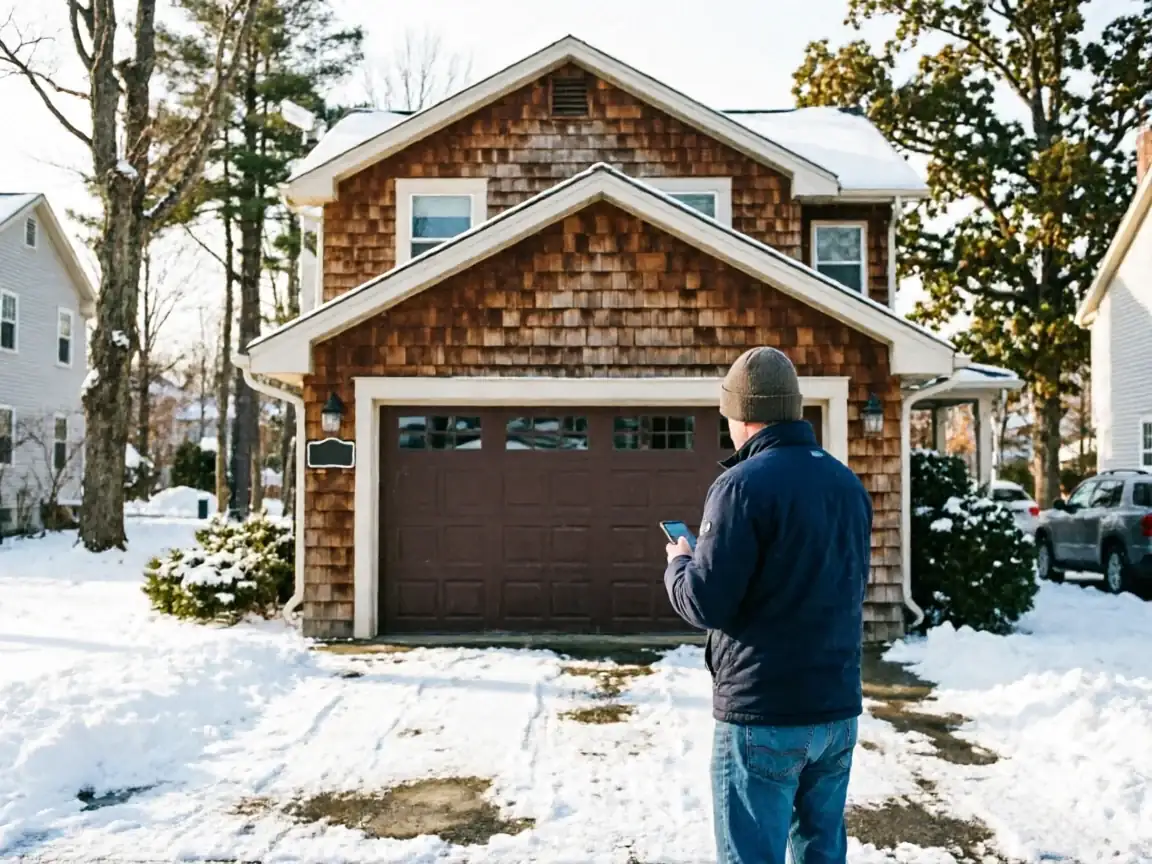
The call usually starts the same way: the door won't open, or it opens a few inches and stops, or it slams down faster than it used to. Sometimes it's a loud bang from the garage followed by a door that won't budge - that's almost always a torsion spring letting go. Other times it's a door that runs rough on one side, grinding or popping as it travels, which points to a track that's pulled away from the frame or a roller that's worn through its bearing.
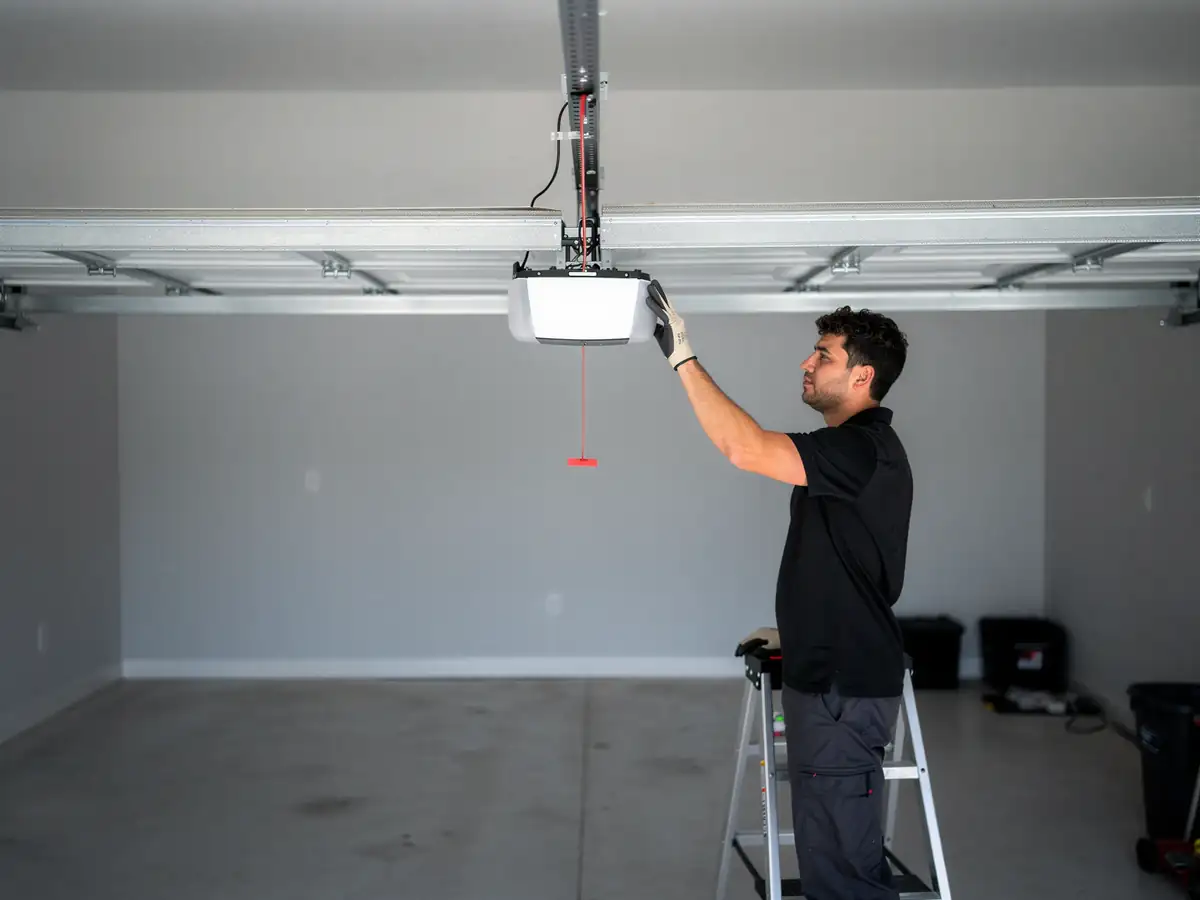
Less dramatic but just as common: an opener that hums but doesn't move the door, or a remote that works some days and not others. Those point to the opener's gears or the wall switch wiring, not the door itself, and it's worth sorting out which one you've got before a tech shows up, because the fix and the parts are completely different.
In Londonderry specifically, we see a cluster of these symptoms spike with temperature swings - a door that worked fine in October and seizes up in January hasn't broken on its own, something in the hardware was already marginal and the cold finished it off.
Why This Fails Locally
Londonderry's housing stock runs 1938 to 1996 with a median build year of 1982, and across the 28 named areas in this service territory most of that stock dates to the 1980s and 90s. That matters because a torsion spring has a rated cycle life, and a door installed in 1982 has been through four decades of temperature swings by now - it's not a question of if the spring fatigues, it's when, and we're well past when for a lot of these doors.
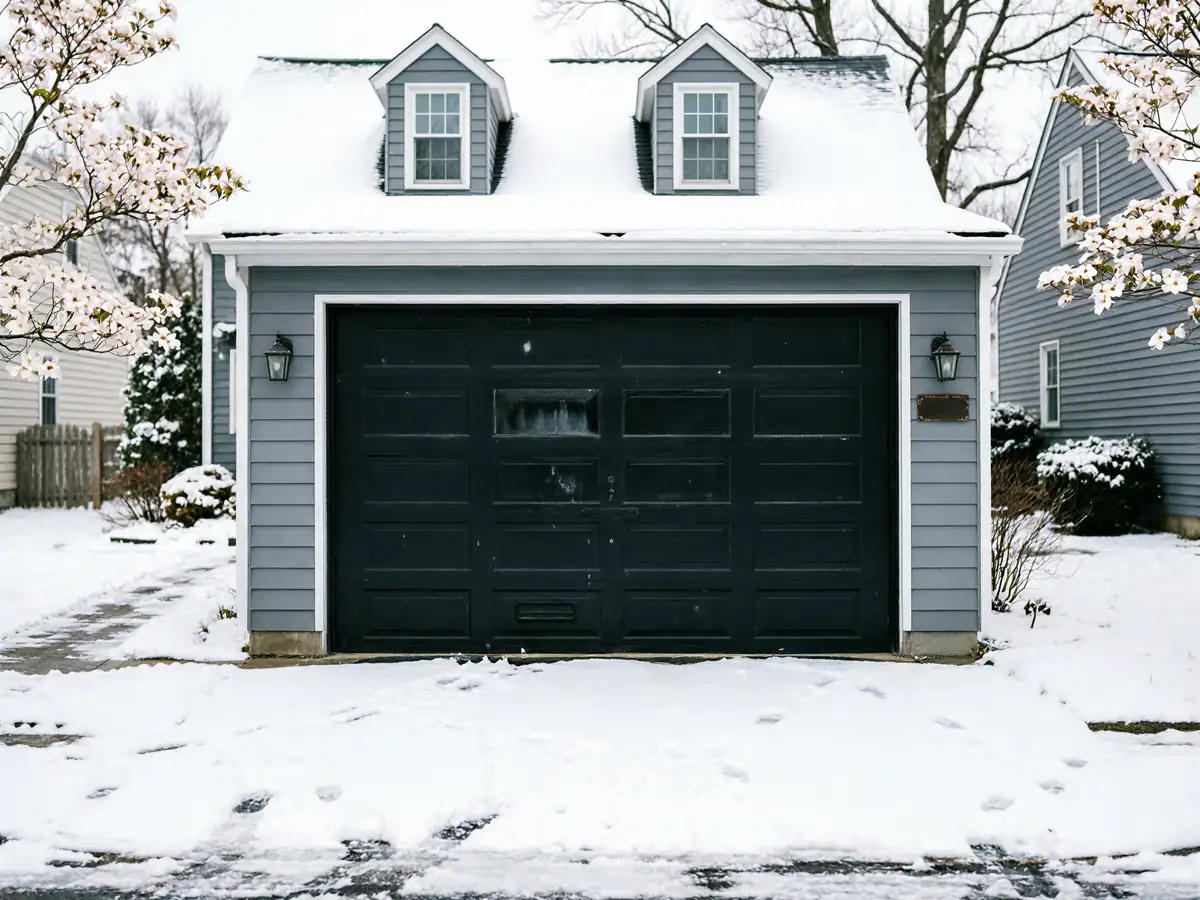
The climate side makes it worse. This is a severe cold band, and steel contracts in the cold - tracks that were aligned in July can be a sixteenth of an inch out of true by February, which is enough to make a roller bind or a cable walk off its drum. Lubricant that was fine in summer thickens in an unheated garage, so an opener that was already working a little hard now has to fight friction on top of spring wear.
Put those two together - original-era hardware plus a real winter - and you get the pattern we actually see on service calls: spring failures cluster in the first hard cold stretch of the season, not randomly through the year. A house in a warmer climate with the same spring age wouldn't see that same clustering.
What the Fix Involves
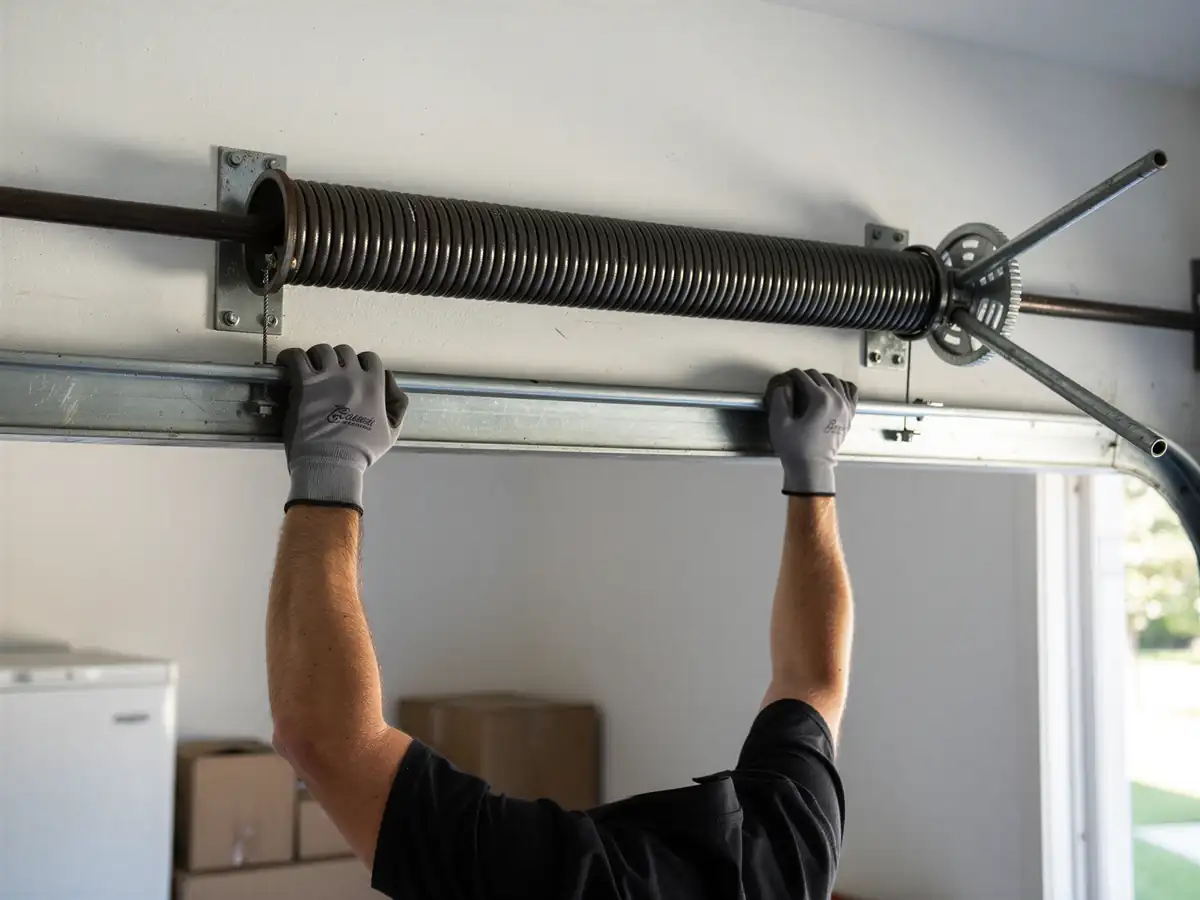
For a broken torsion spring, the job is a full spring replacement on both sides of the door if one side went
Since the other side is carrying the same age and cycle count and tends to follow within a season or two - we'll tell you this on site rather than let you pay for a second truck visit later. We recheck cable tension and the drum alignment at the same time, since a spring failure often takes a cable partway out of its groove on the way down.
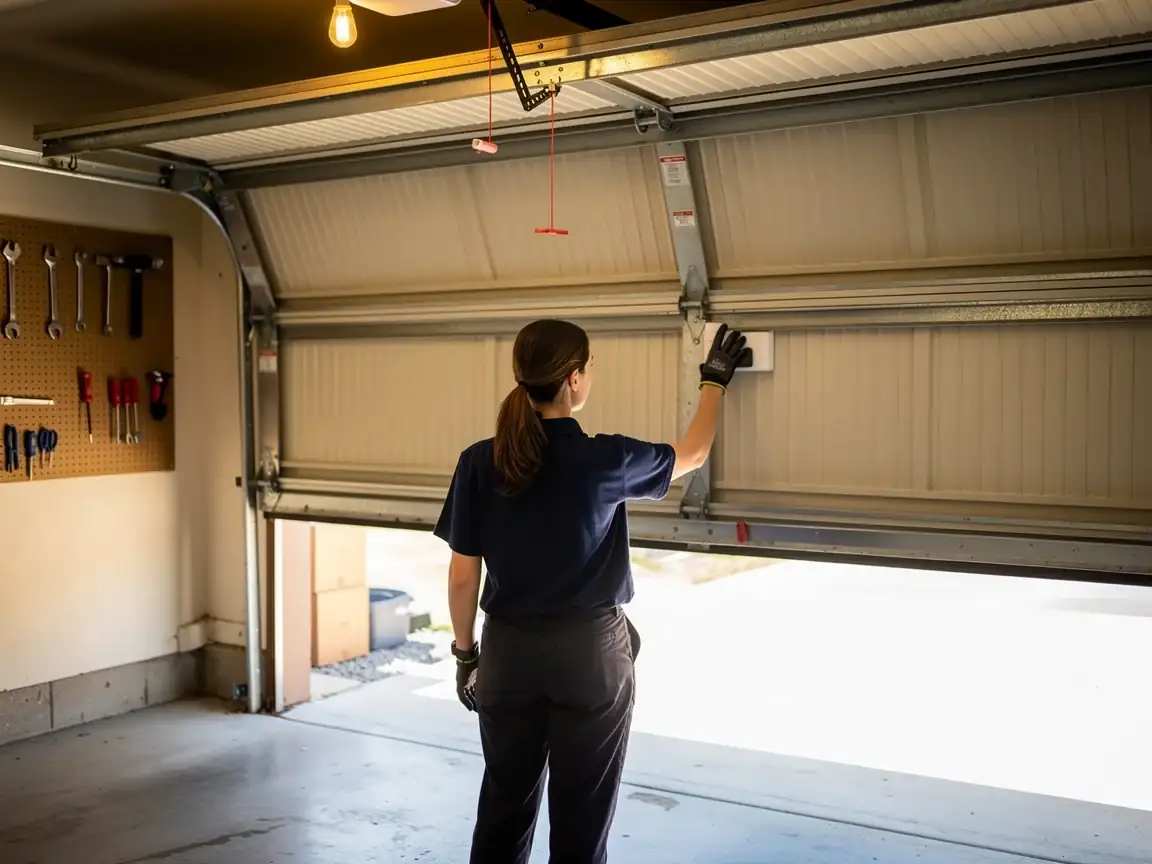
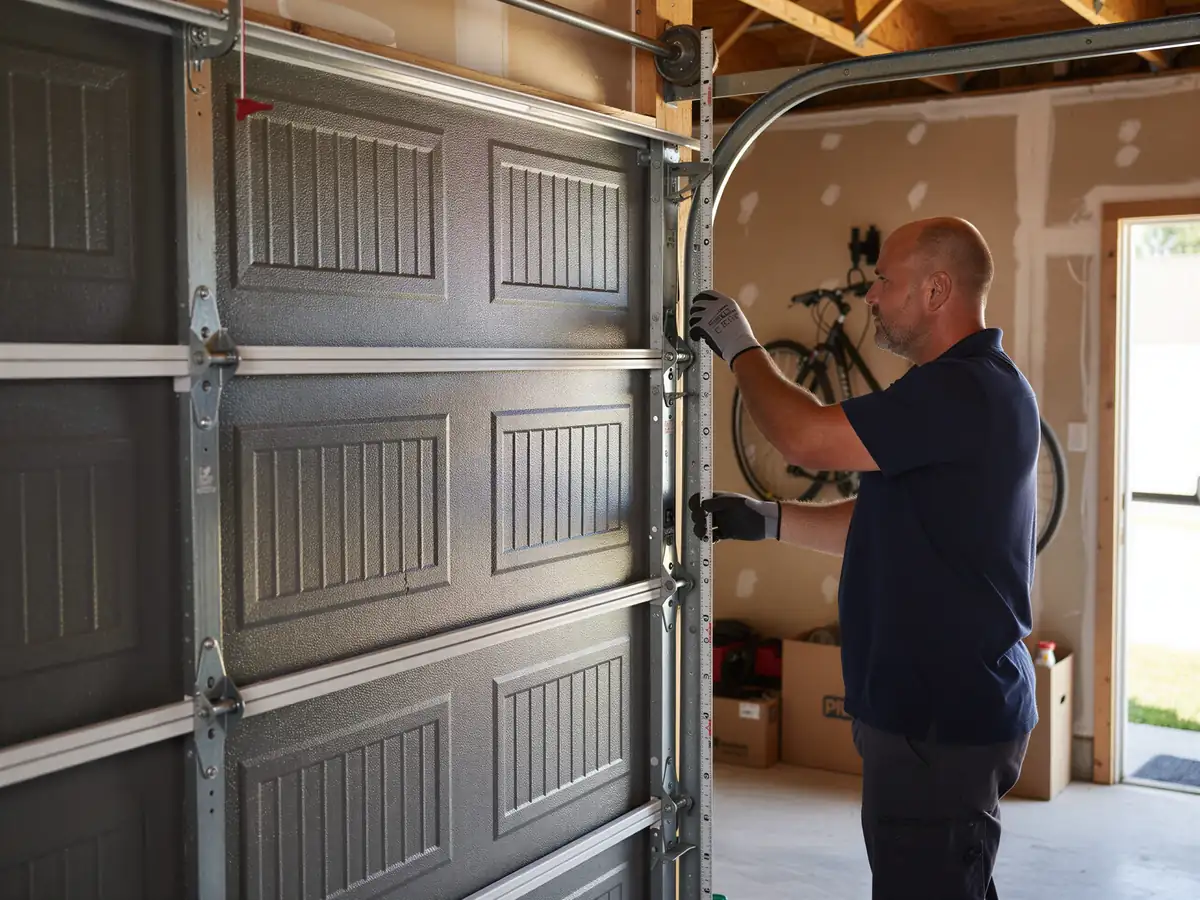
For a binding or off-track door, we pull the door off the track enough to check the frame is still square, reset the track spacing, and swap any roller that's worn oval instead of round - a round roller that's lost its bearing grease will seize in cold weather faster than a worn-out one that's still lubricated, so we check both
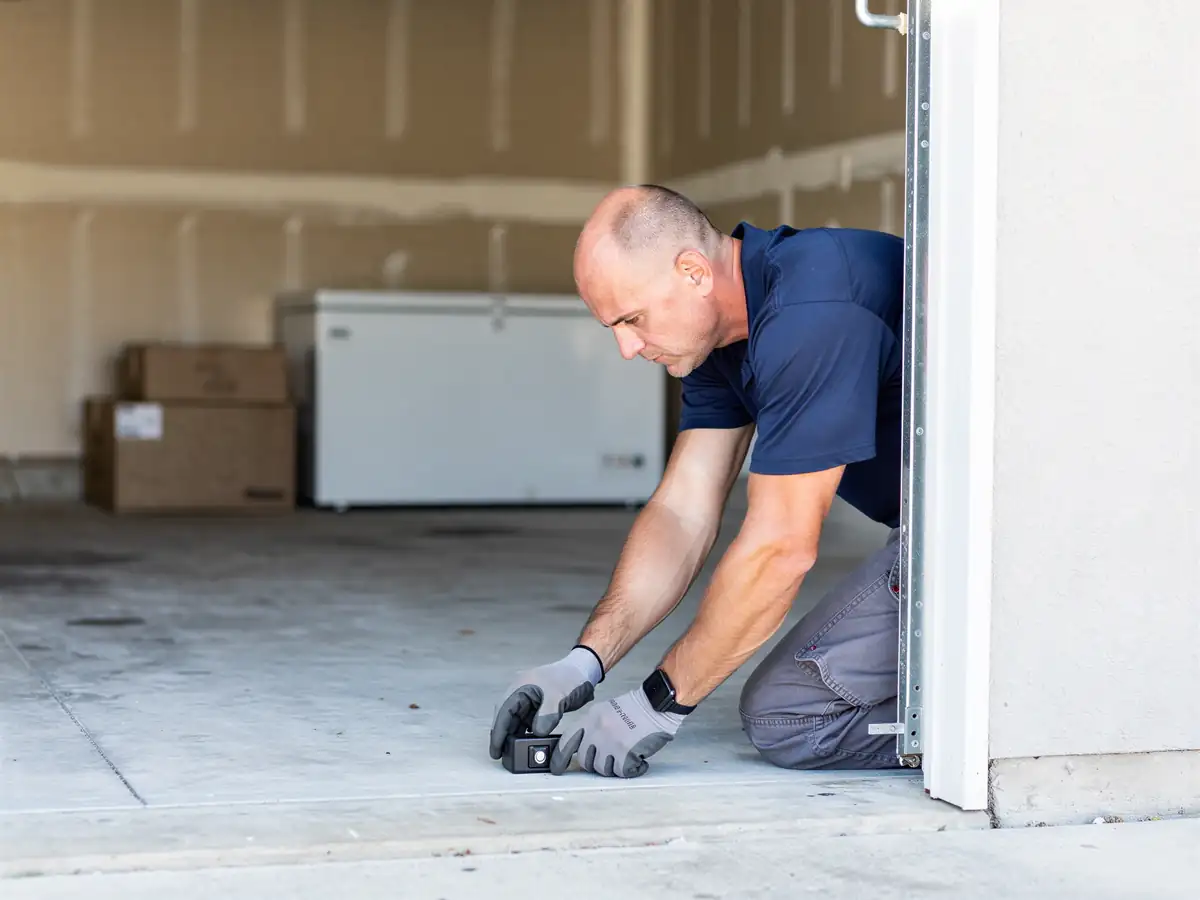
Opener issues get diagnosed before any part gets ordered
Gear-and-sprocket kits for a motor that runs but doesn't pull the door, or logic board and wiring checks for a unit that won't respond to the wall switch at all. We don't replace an opener outright just because it's acting up - if the motor and gears test fine, it's usually cheaper and faster to fix the part that failed than swap the whole unit.