How Local Conditions Play In
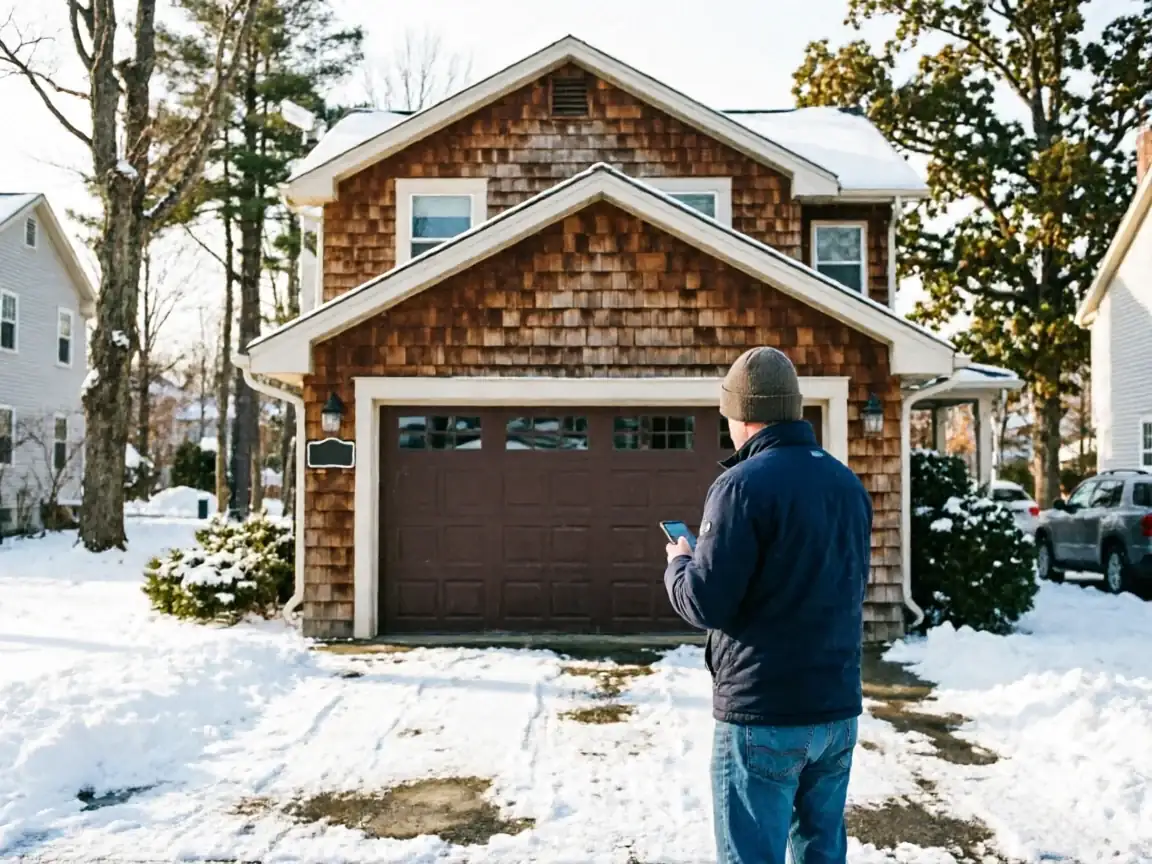
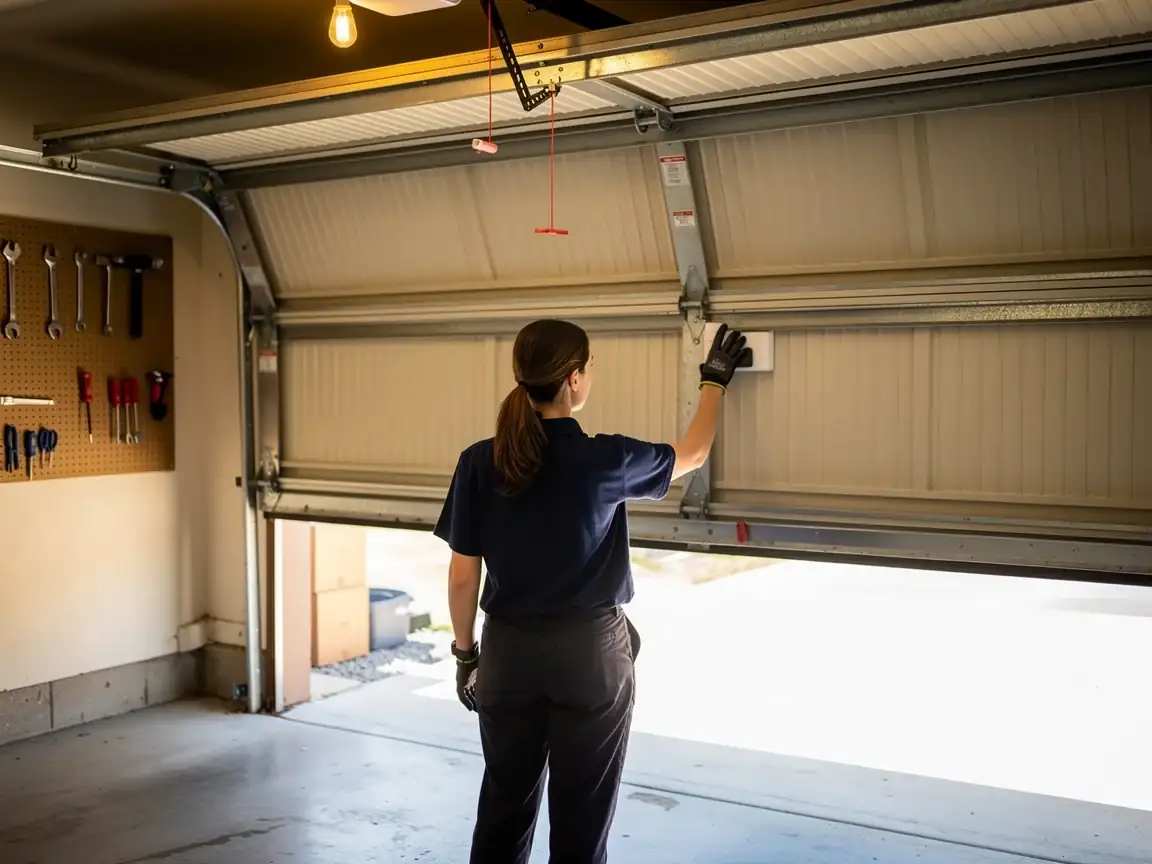
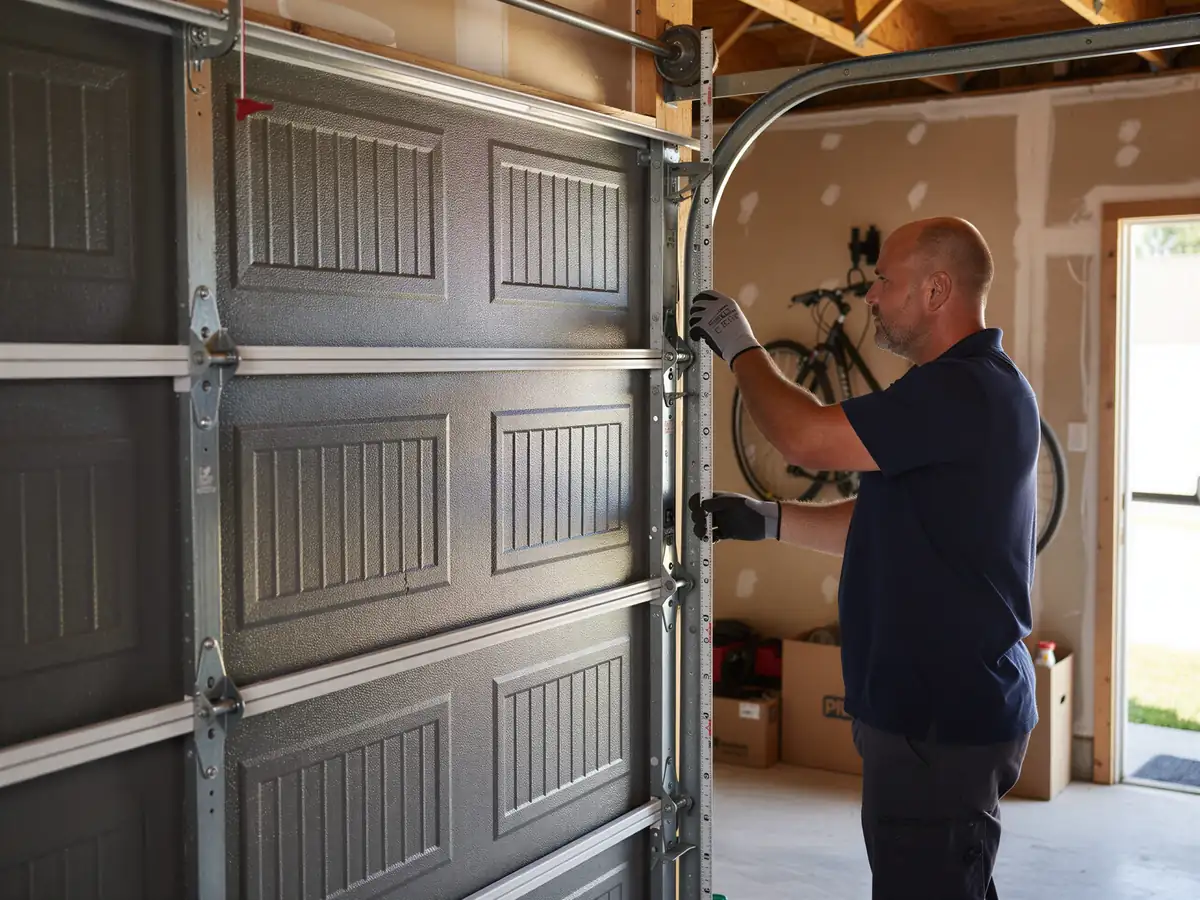
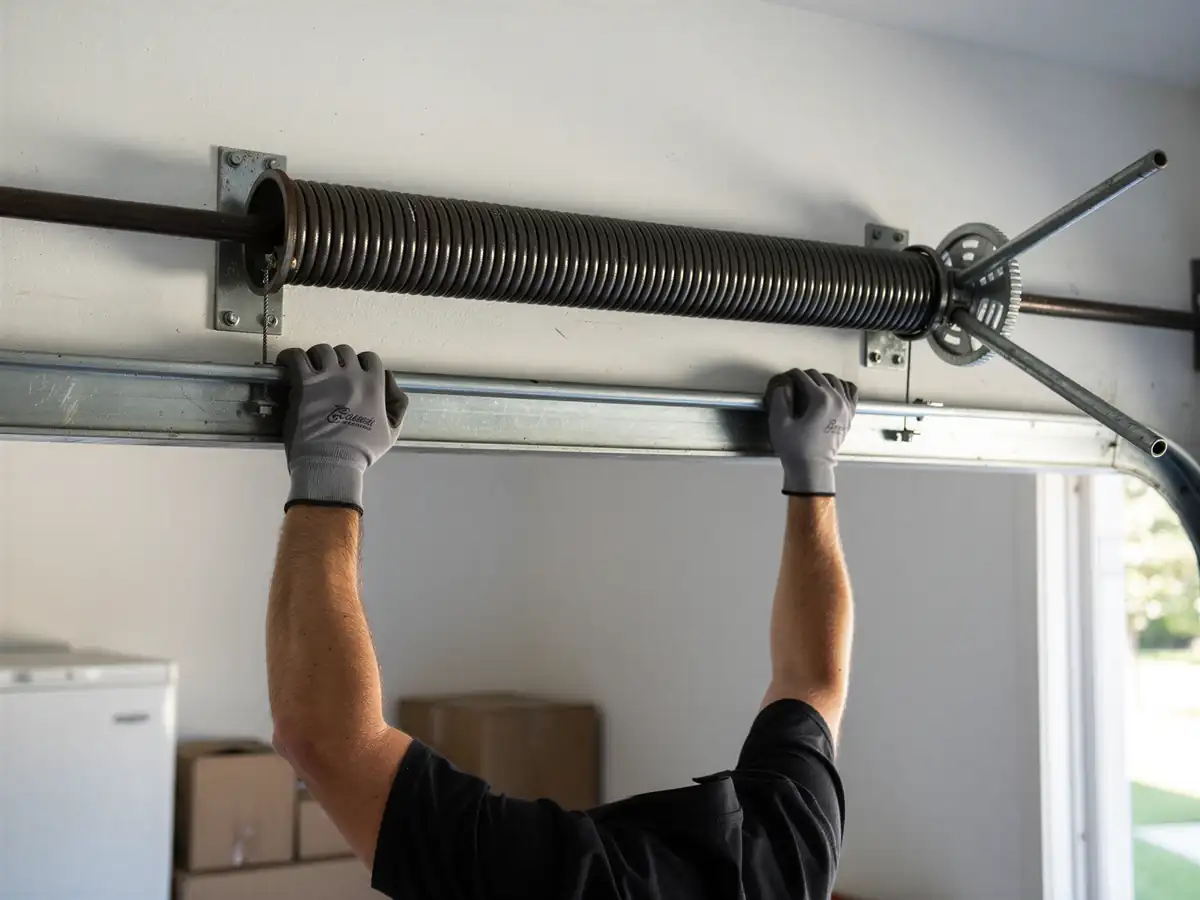
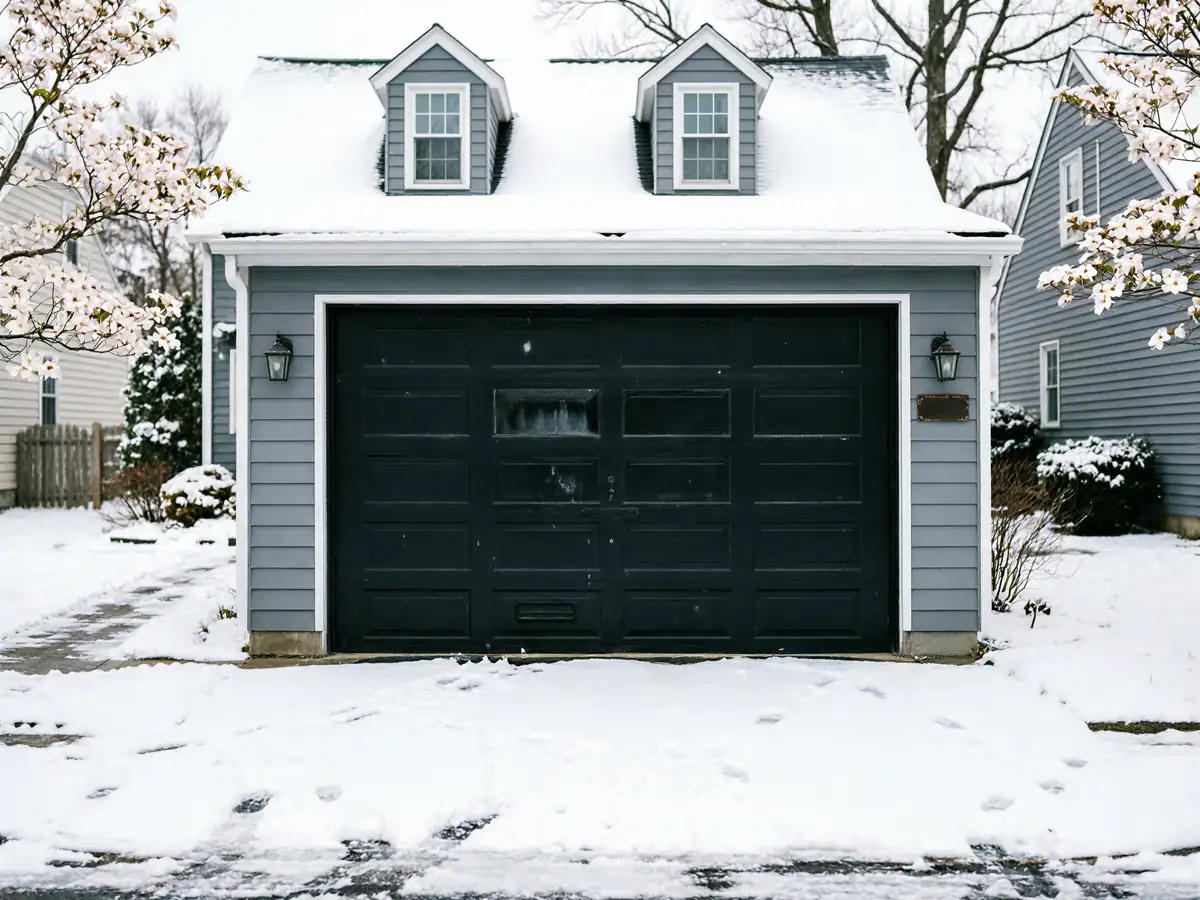
This area sits in a cold climate band with severe winter conditions, and that changes which noises show up first. Steel contracts in the cold, which tightens tolerances on track alignment that were already borderline on a door built to 1980s-90s specs. A squeal that only happens on winter mornings is usually grease that's gone stiff in a spring coil - it loosens up as the garage warms, which is why owners often dismiss it as nothing. It isn't nothing; stiff lubricant means more load on the spring every cold cycle, and springs on original hardware from this era are already closer to the end of their rated cycles than most people think. A new metallic scrape that appears only in freezing weather often means a track bracket has pulled slightly from the jamb as the framing shrinks in the cold - common on houses from the 1938-1996 build range where the original fasteners were never upgraded. Humidity swings between seasons also loosen hinges on sectional doors, which shows up as a rattle at the panel joints before anything else fails.
What It Costs
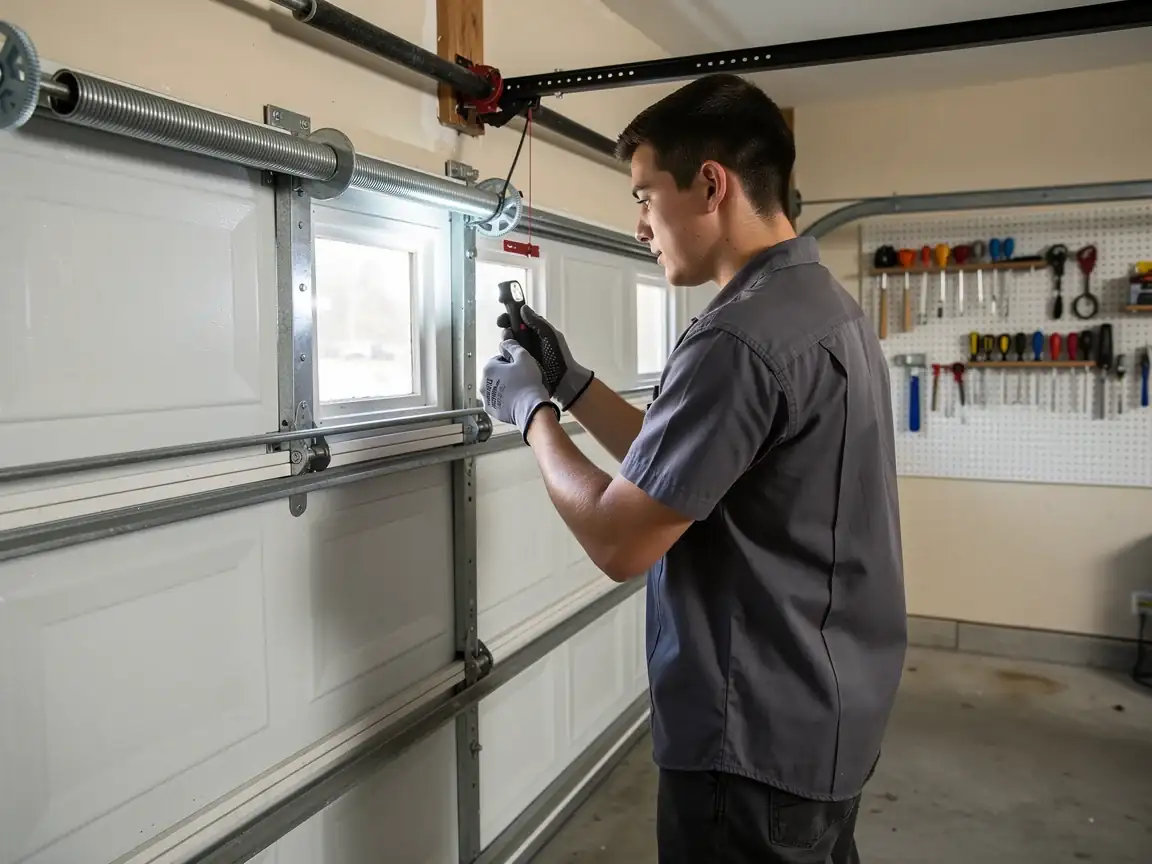
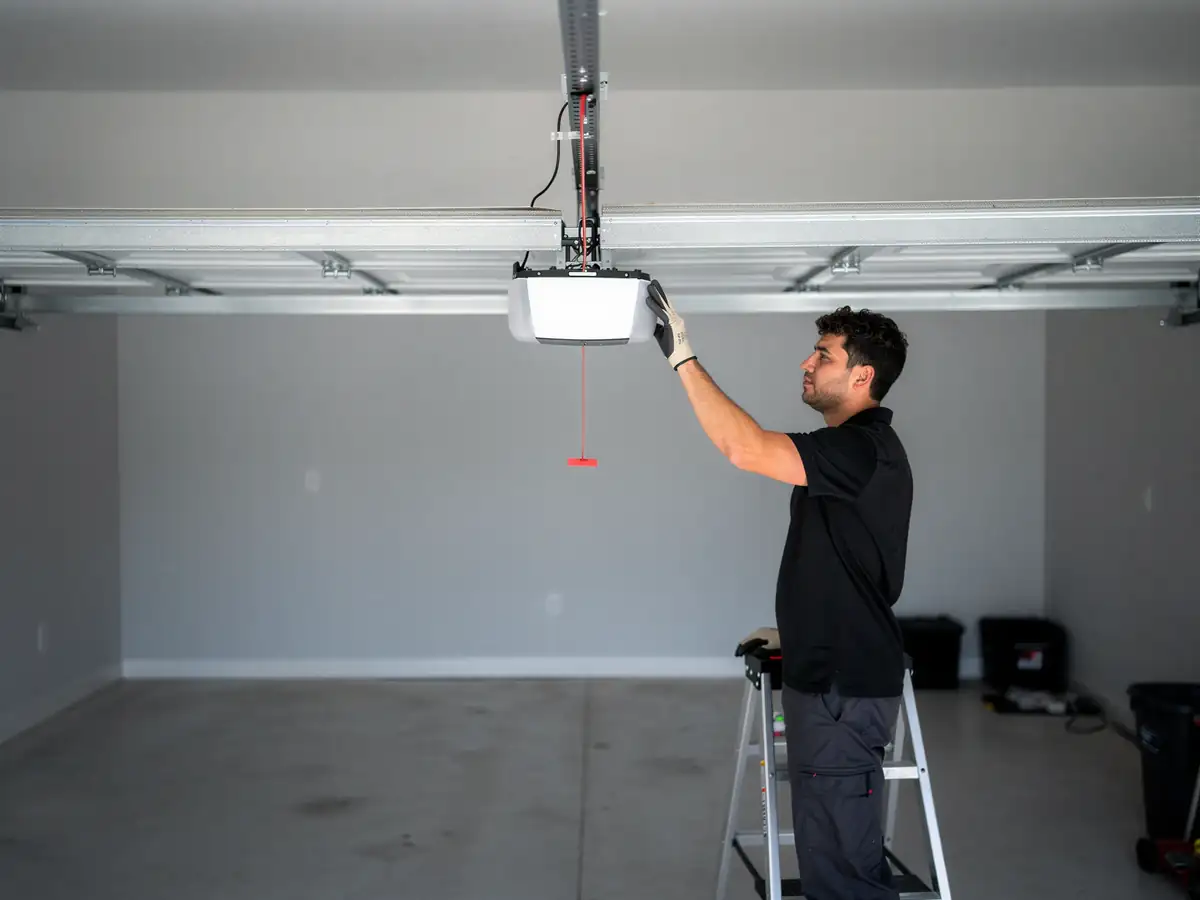
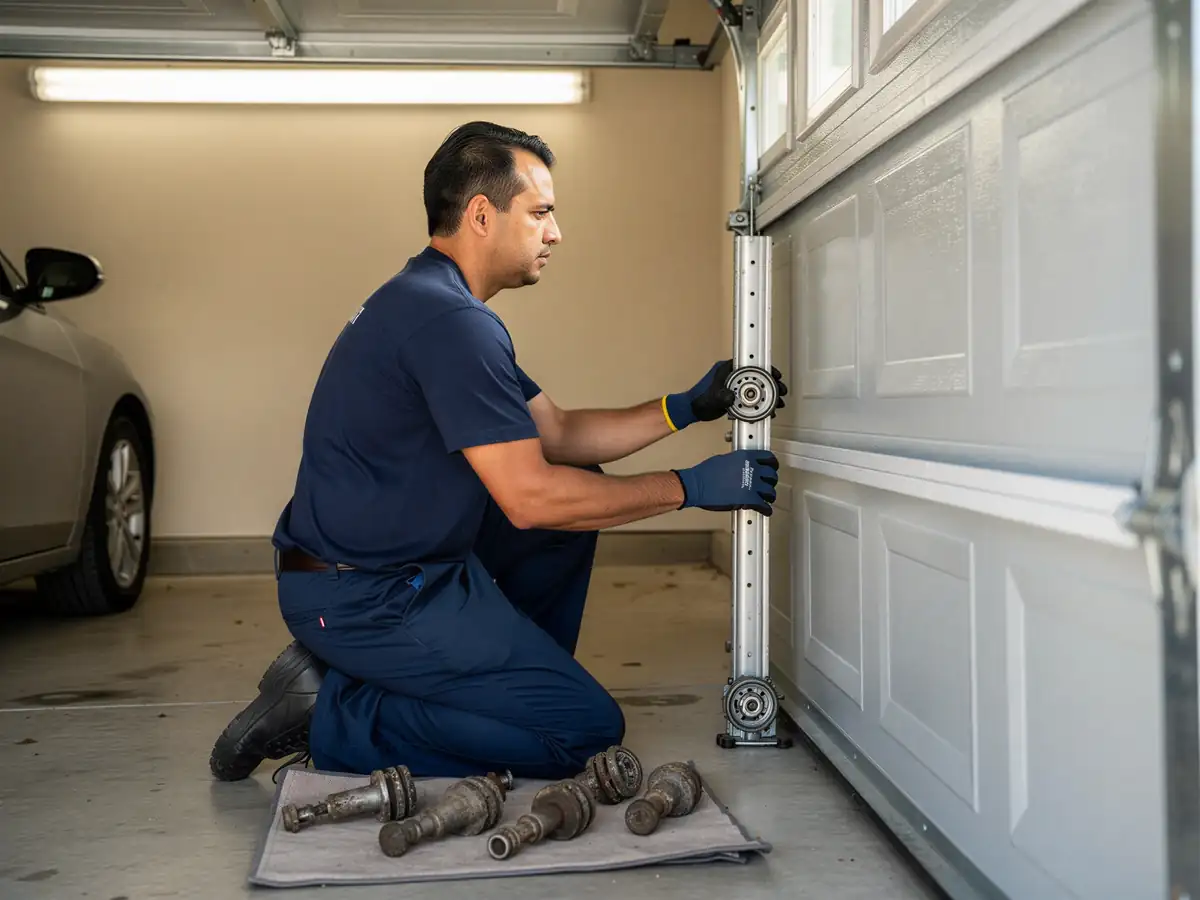
We don't publish a flat number here because the fix depends entirely on what's making the noise, and on a door built in the 1980s-90s range that's rarely just one thing. A worn roller job is a small call. A cable off its drum needs a tech on site the same day, because a door can drop. Spring replacement costs more on older torsion setups, since some original hardware from this era doesn't match current spring sizing and needs to be reworked rather than swapped part-for-part. We'll tell you on the call what we expect once you describe the sound, and confirm it in person before anything gets fixed. One honest limit: if your door is original from the 1938-1996 build era and multiple systems are failing at once, repair cost can approach replacement cost, and we'll say so rather than patch it three separate times.