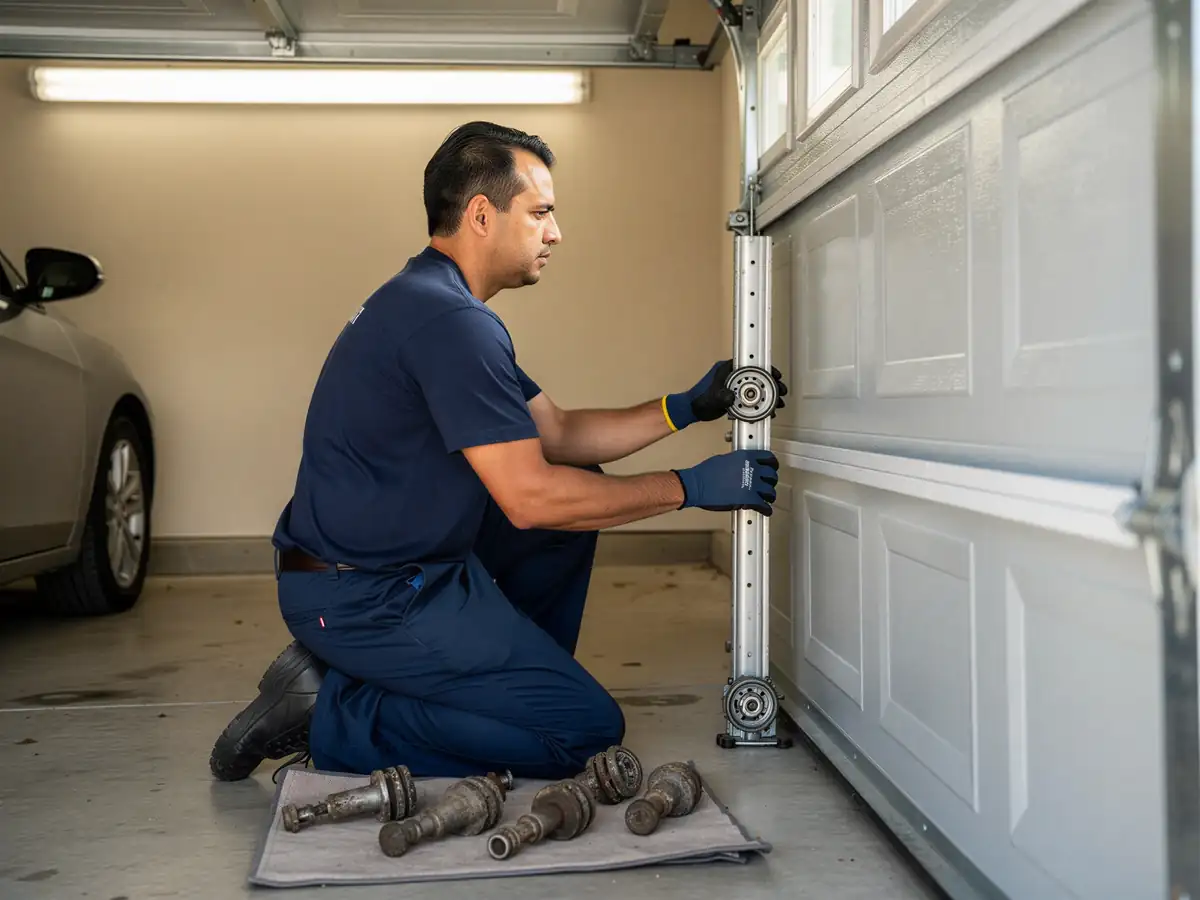
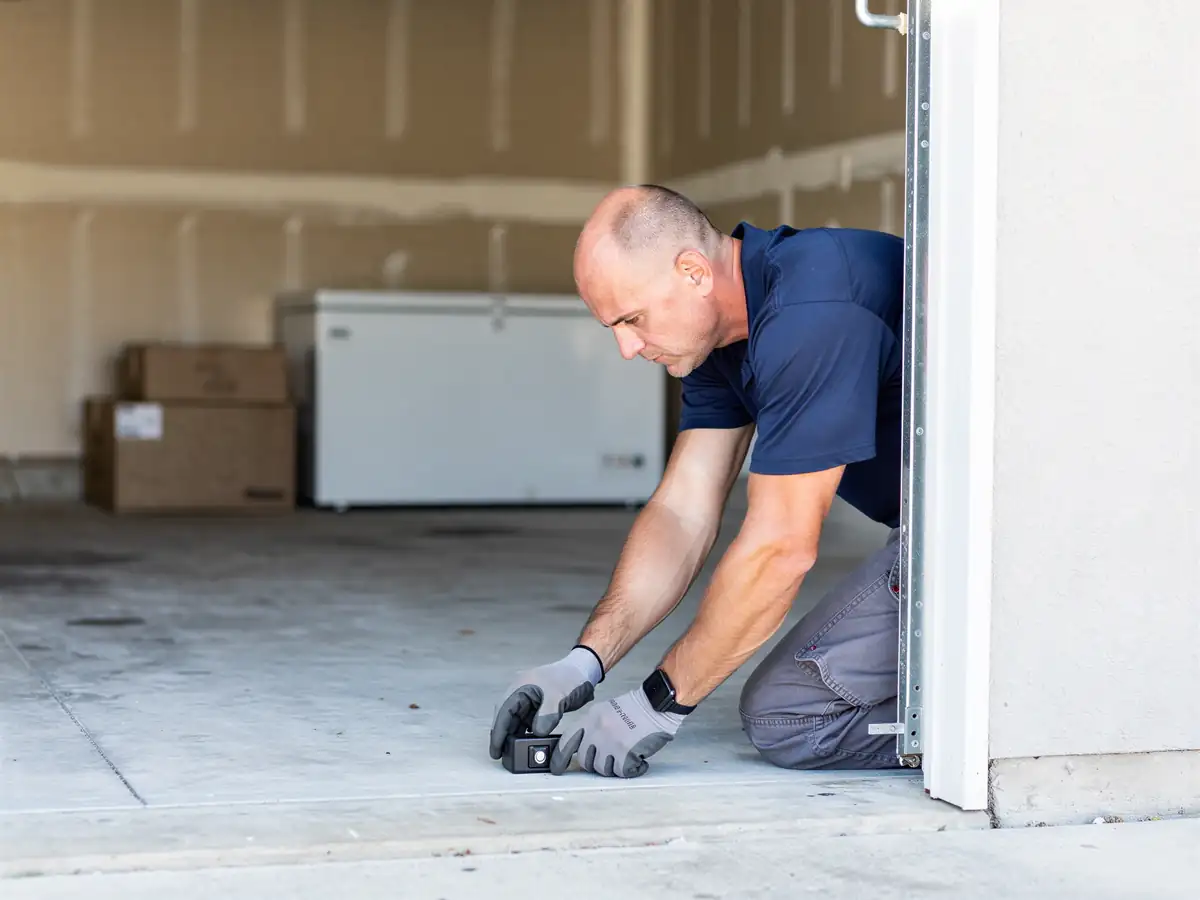
Atkinson homes average 1979-built with 2,971 households. We service openers from Londonderry, 10 miles away, matched to this area's older torsion hardware.
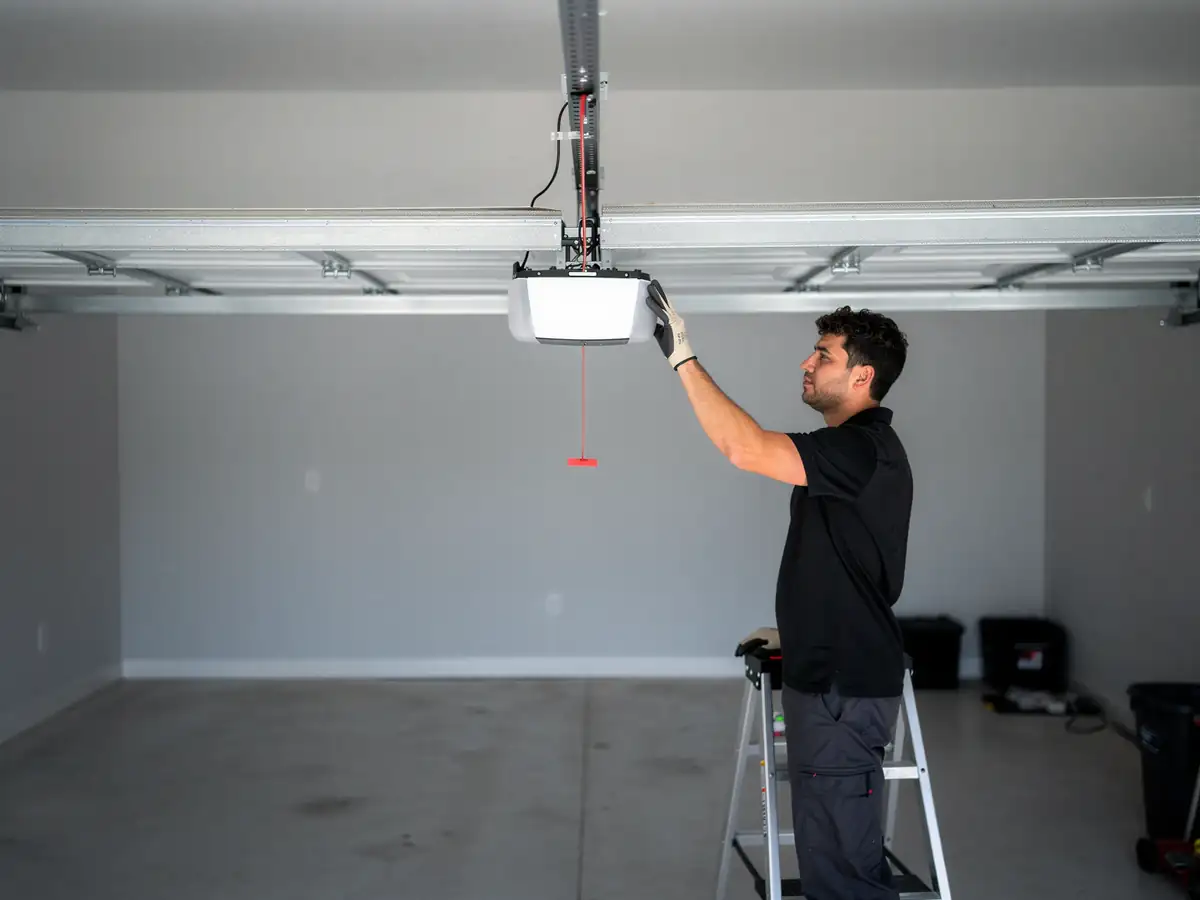
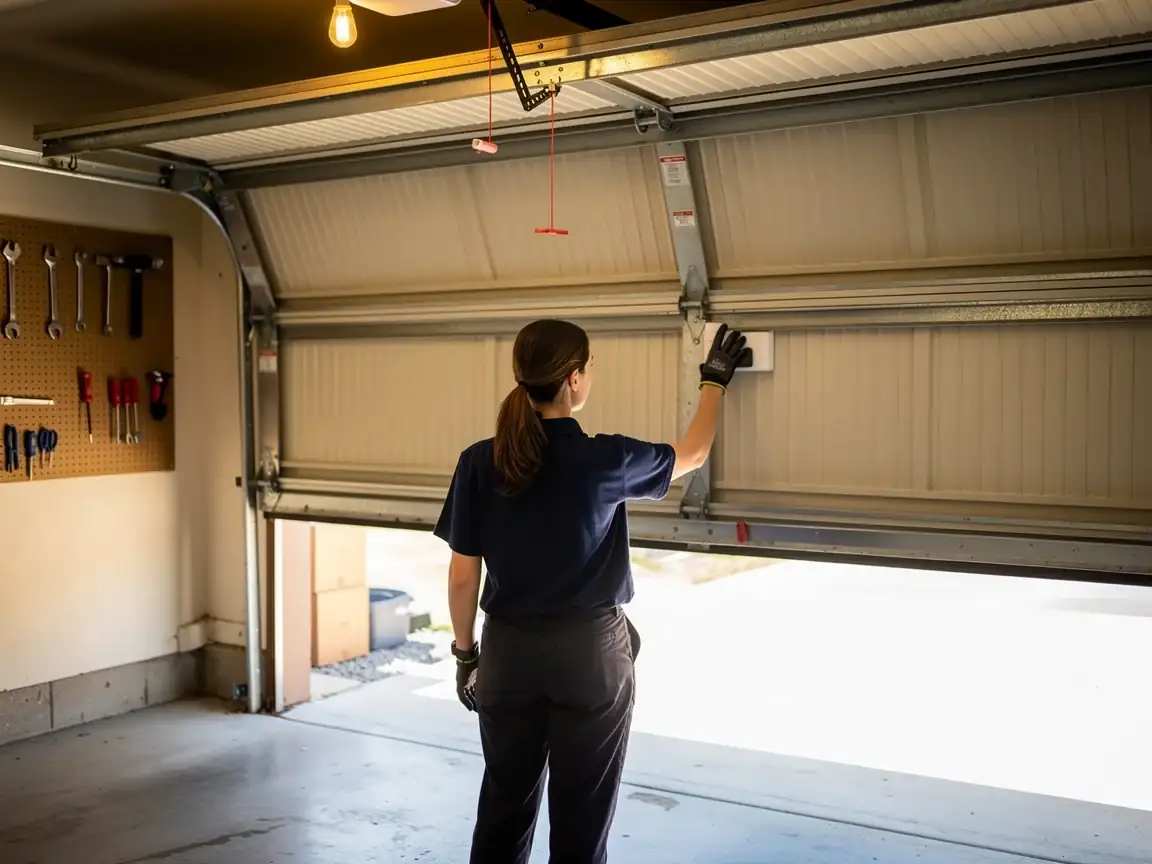
Atkinson is a smaller town than most of the places we cover - about 2,971 households total, spread out rather than packed into subdivisions. That matters for opener work because it means fewer identical houses built by the same developer in the same year, and more one-off installs: a chain-drive unit someone put in themselves in the 90s, a belt-drive swapped in later, a logic board from a brand that stopped making parts a decade ago. When a homeowner here asks whether to pull the cover off and troubleshoot it themselves, the honest answer depends on what's actually inside the housing, not on a YouTube video filmed for a different opener entirely. Checking the wall switch, the safety sensor alignment, and whether the unit is getting power is fair game for anyone with a ladder. Opening the gearbox or touching the circuit board on a unit old enough to predate modern safety standards is where we'd rather you call first. With a town this size, we're not guessing at a housing type - we're expecting the mix, and that changes what we bring on the truck before we even get here.
The Symptom
The two complaints we hear most from this stretch of town are the opener running but the door not moving, and the opener refusing to respond to the remote at all while the wall button still works. Both point toward age more than defect. A median build year around 1979 means a lot of these openers have had at least one motor replacement already, sometimes two, and the gear that drives the trolley is a wear part that doesn't give much warning before it strips. Cold snaps make it worse - grease that was fine in September turns stiff in January, and a motor that's already working against a worn gear has to fight harder to get moving. We also see capacitor failure on units old enough that the capacitor itself has outlived its rated life, which shows up as a motor that hums but doesn't turn. None of these are dramatic failures. They're slow ones, which is why most people live with a sluggish door for months before it finally quits.
Time on the Job
We come from Londonderry, about 10 miles out, so Atkinson calls go on the same route as the rest of that corridor rather than having a dedicated local stop. That's worth saying plainly: we don't keep a depot in town, and if a part isn't one we carry on the truck, getting it can mean a second visit rather than a same-day fix. Most opener repairs - gear and sprocket kits, capacitors, sensor realignment, logic board swaps on common brands - we carry and finish in one trip. Where it slows down is older or discontinued motor units, which sometimes need an order. We'd rather tell a homeowner that upfront than promise a fix we can't deliver that day. For a town with 2,971 households and no high call volume concentrated in one subdivision, that's the honest tradeoff of coverage from one shop instead of a branch on every corner.
Why This Fails Locally
The climate band here is listed as cold and severe, and openers don't fail gracefully in that kind of cold - the circuit boards that control travel limits are especially sensitive to repeated temperature swings, more so than the mechanical parts people usually blame first. Combine that with a median build year of 1979 and you get a specific failure pattern: openers original or close to original to the house, installed before modern photo-eye safety sensors were standard, later retrofitted with sensors that don't always talk cleanly to the old logic board. That mismatch is what causes doors that reverse for no visible reason, or won't close at all once the sensors are added. Median household income here runs higher than the wider service area - $144,481 versus $125,774 - and in practice that means more owners choosing full opener replacement over patching a 40-year-old motor once the gear and the board go in the same year. We won't talk someone out of a repair that still has life in it, but we'll say plainly when a motor's age means the fix won't outlast the part it's replacing.
How it works
From “it’s stuck” to “it’s fixed”
1
Tell us what’s wrong
Describe the symptom - won’t open, loud bang, opener runs but the door won’t move.
2
On-site diagnosis
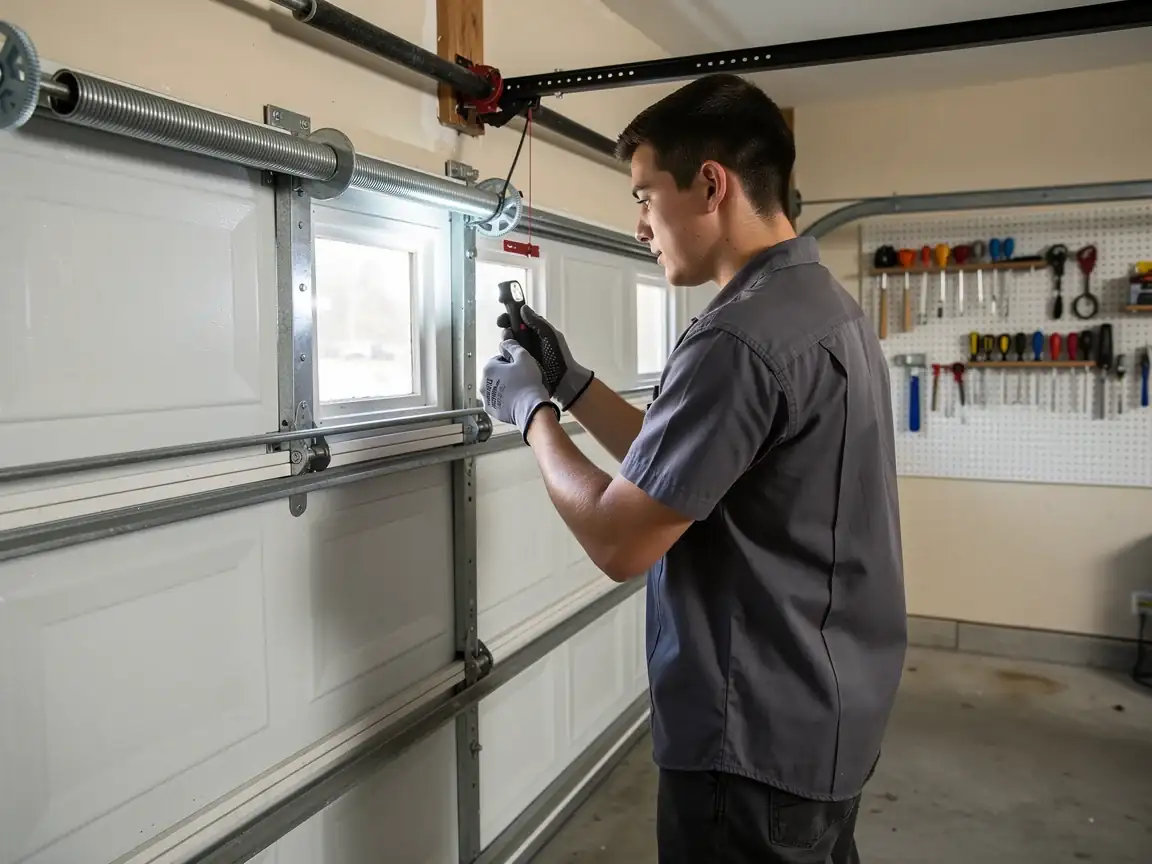
A technician tests the door under power and by hand and finds what actually failed.
3
Clear, up-front plan
You get the fix that’s needed and what drives the cost - before any work starts.
4
Repaired & tested
The repair is done, the door is set true and tested, and the work area left clean.
Next step
Not sure which repair your door needs in Londonderry, NH? Describe what it’s doing - every job starts with a diagnosis.
Why does my opener work fine in summer but struggle in winter?
Grease inside the gearbox thickens in cold weather, and a motor that's already worn has to push harder to overcome that resistance. Given this area's severe cold band, that seasonal strain shows up every winter on openers that are already near the end of their gear life, not just on brand-new failures.
Do you keep an Atkinson location or just dispatch from Londonderry?
We dispatch from Londonderry, about 10 miles away. There's no separate Atkinson branch, so scheduling runs on the same route as the rest of that area rather than a dedicated local stop.
Is it worth repairing an opener from the late 1970s or early 80s?
Often yes, if it's a gear, capacitor, or sensor issue - those are straightforward swaps. If the motor itself is failing on a unit that old, we'll tell you honestly that replacement usually outlasts a second repair on the same aging motor.
Why did my sensors get added after the opener was installed?
Photo-eye safety sensors weren't standard on openers installed when a lot of Atkinson's housing went up, median year 1979. Many homes had them retrofitted later, and that mismatch between old logic boards and newer sensors is a common source of reversing or non-closing doors.
Ready to get your garage door sorted?
Tell us what it’s doing and where you are in Londonderry - we’ll take it from there.