The DIY Question
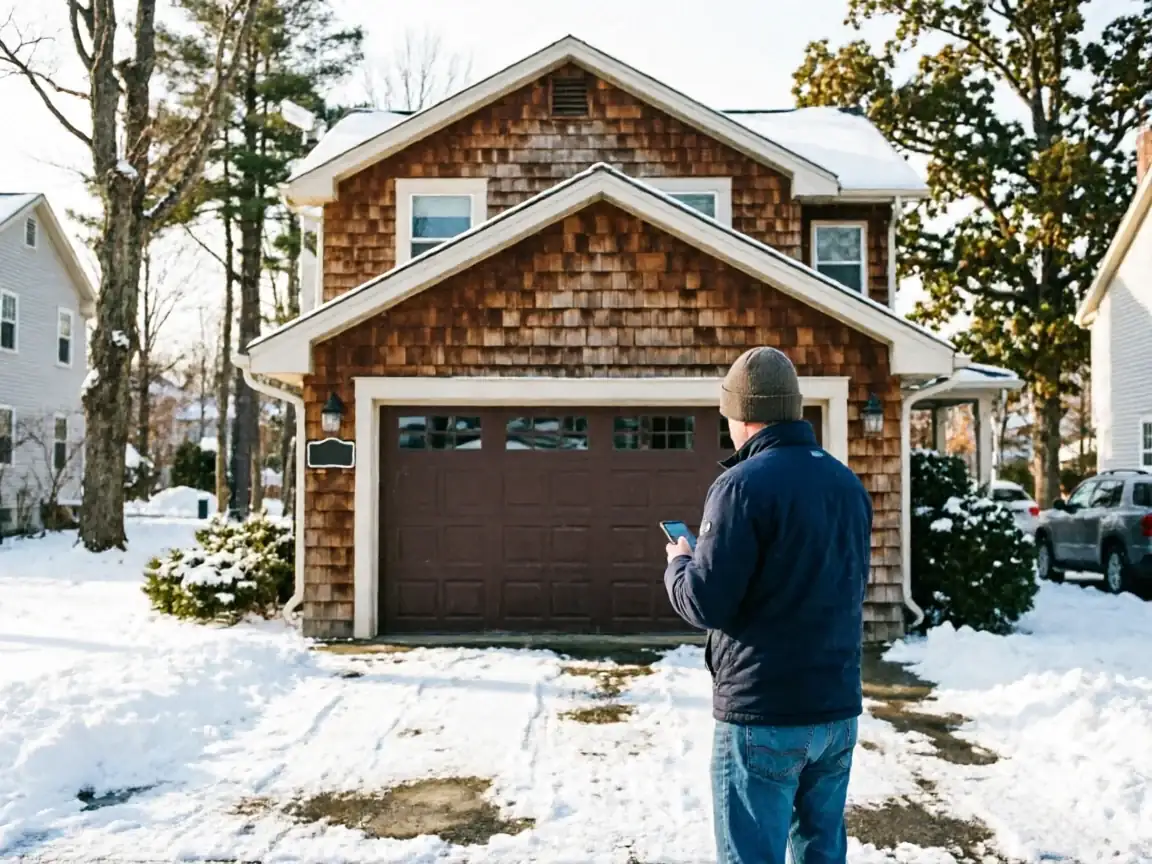
Atkinson's median home was built in 1979
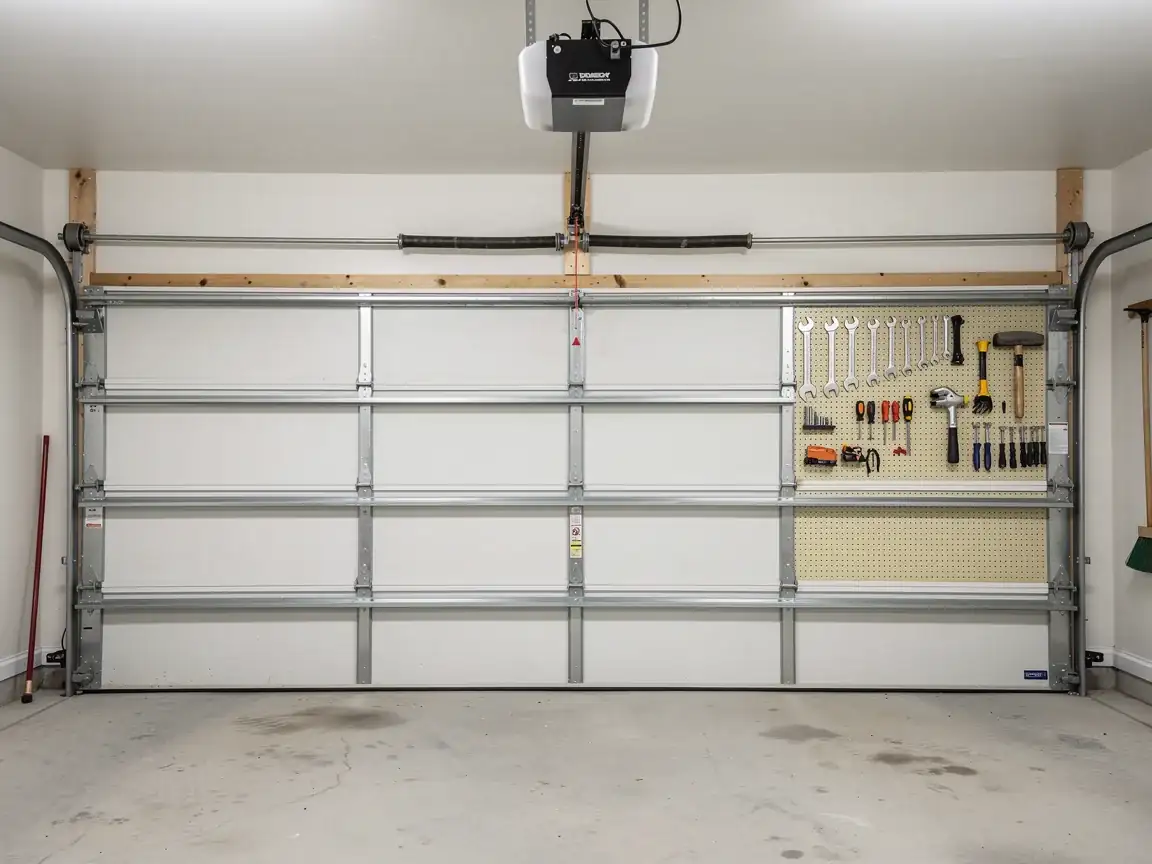
Which puts a lot of these garages a full decade ahead of the wider service area's 1982 median. That matters because a door installed in 1979 has had 46 years to either get fully replaced or sit there mostly untouched, and in a town like this, with 2,971 households and a median income north of $144,000, a lot of owners replaced the opener once in the 90s or 2000s and left the rest alone. The track, the hinges, the drums, and very often the springs are still the originals.
- 46 years
- 2,971 households
That's the part that makes a YouTube fix risky here
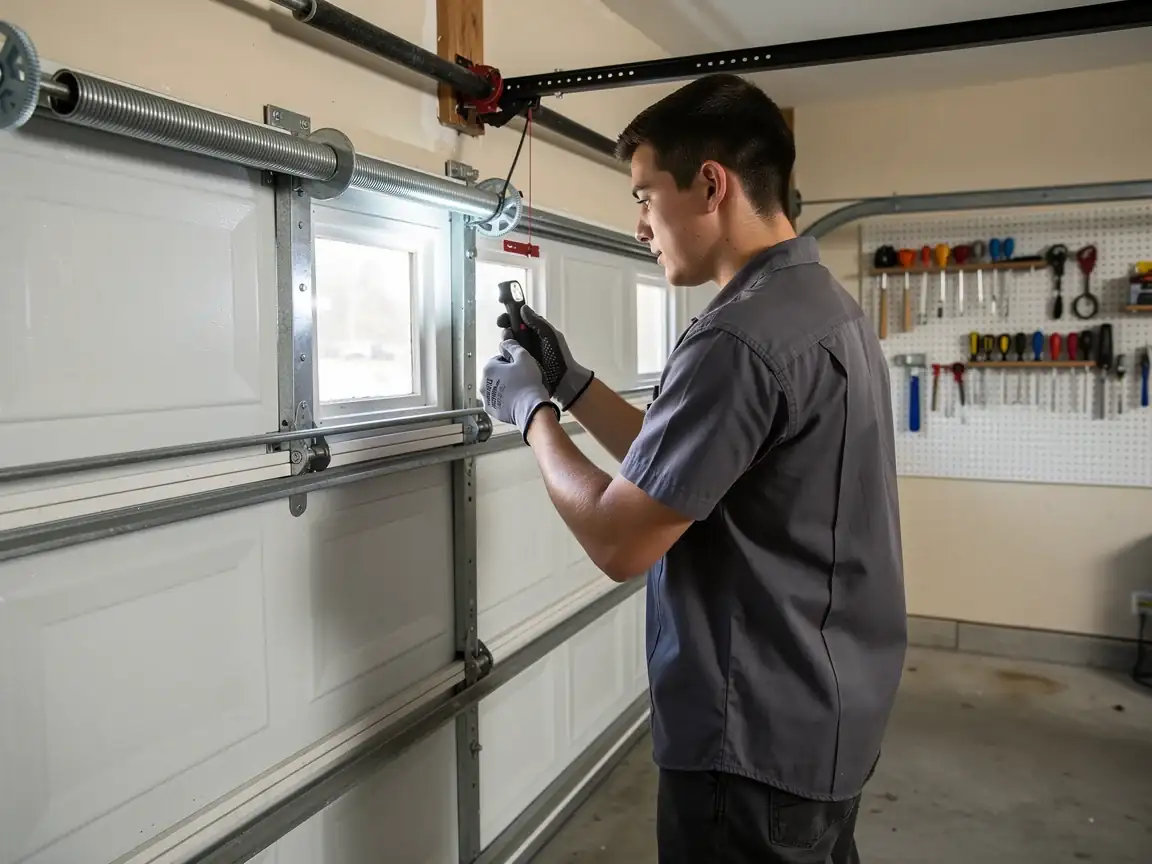
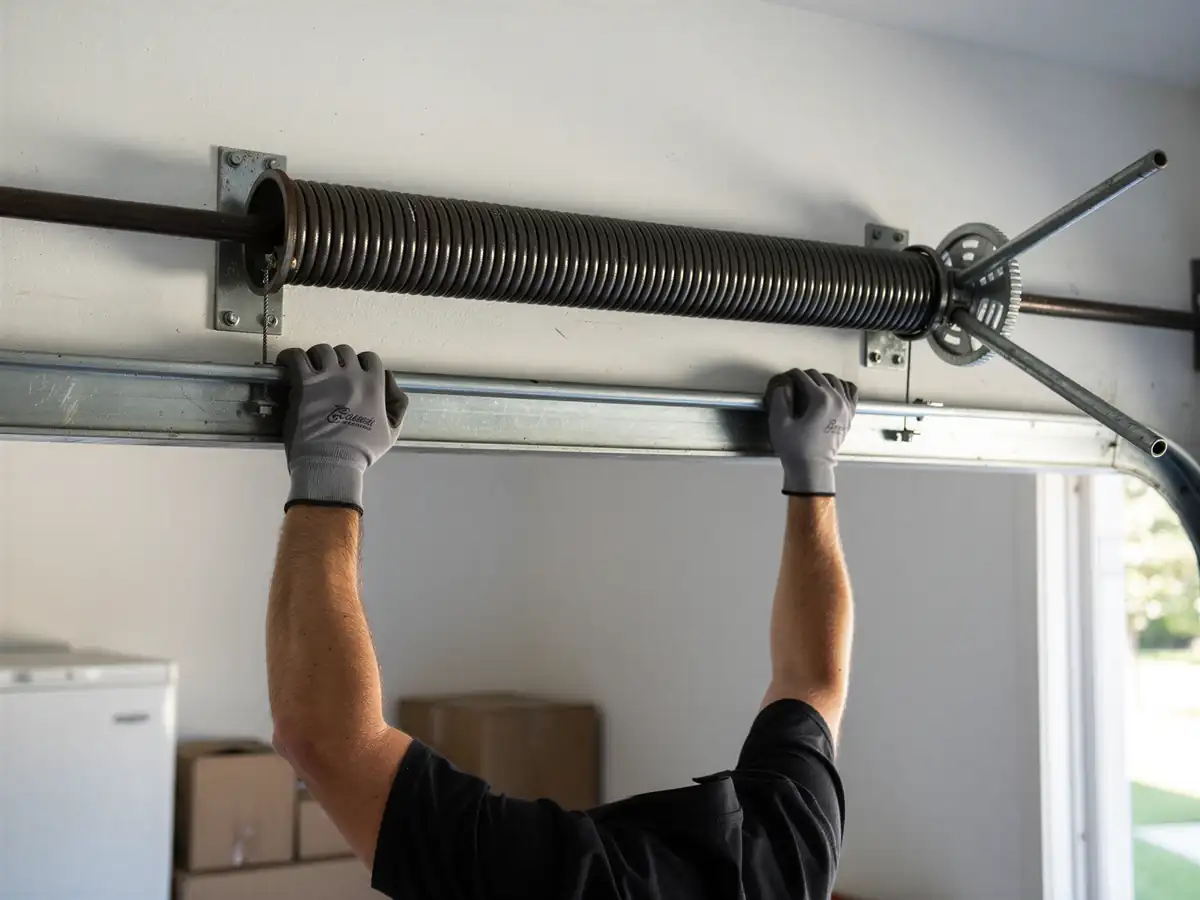
A torsion spring that's been under tension since the Carter administration doesn't behave like a new one - the wire can be fatigued in ways you can't see, and it can let go with more force than a spring half its age. If you're looking at a door that's been original since 1979 and it's making noise or binding, that's a call-a-pro job, not a weekend one. We'll say plainly: replacing a 46-year-old spring yourself is not where you want to learn this trade.
The Symptom
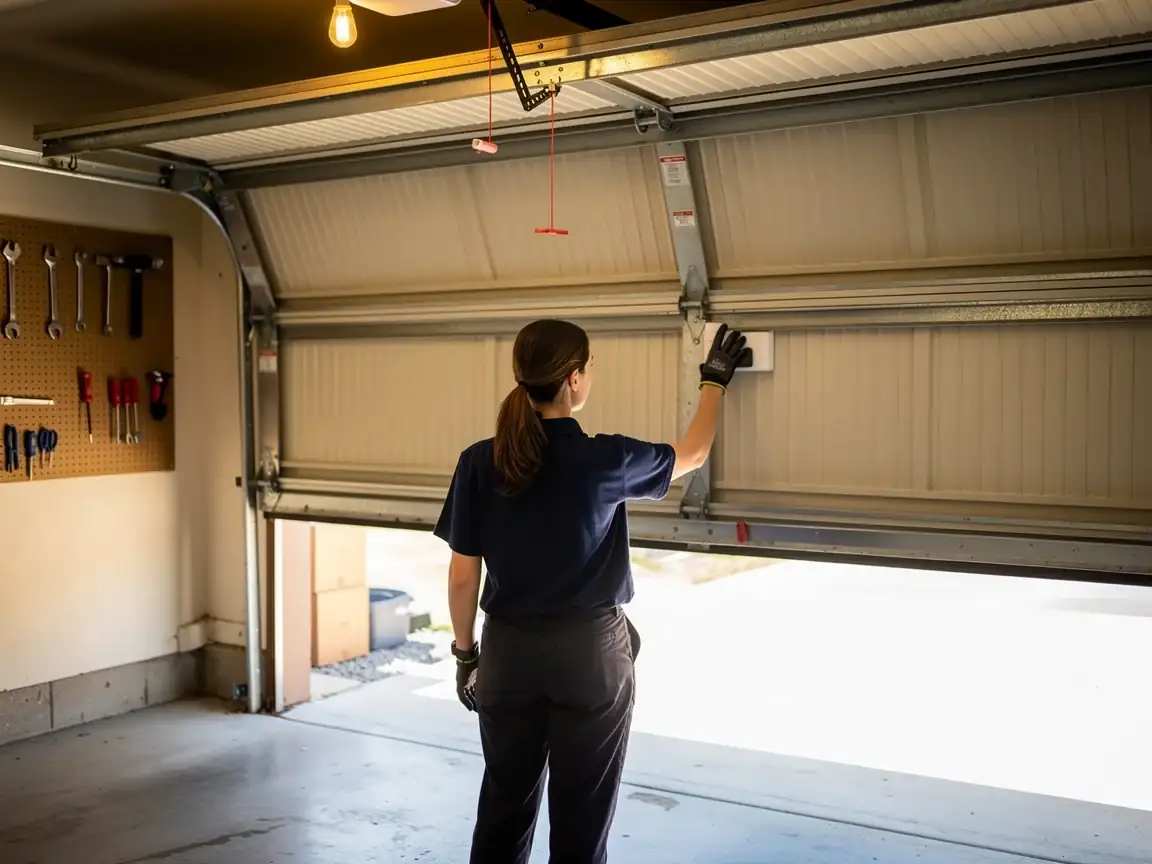
On houses this age, the complaint we hear most isn't a dead opener, it's a door that's gotten loud and heavy to lift by hand, or one that jumps a little at the same spot in the track every time. That's consistent with original rollers and a track that was never reset to square, both common on hardware this old. Another one: a door that reverses right after it touches the floor, which usually points to a sensor or limit setting that's drifted over decades of small adjustments rather than one clean failure.
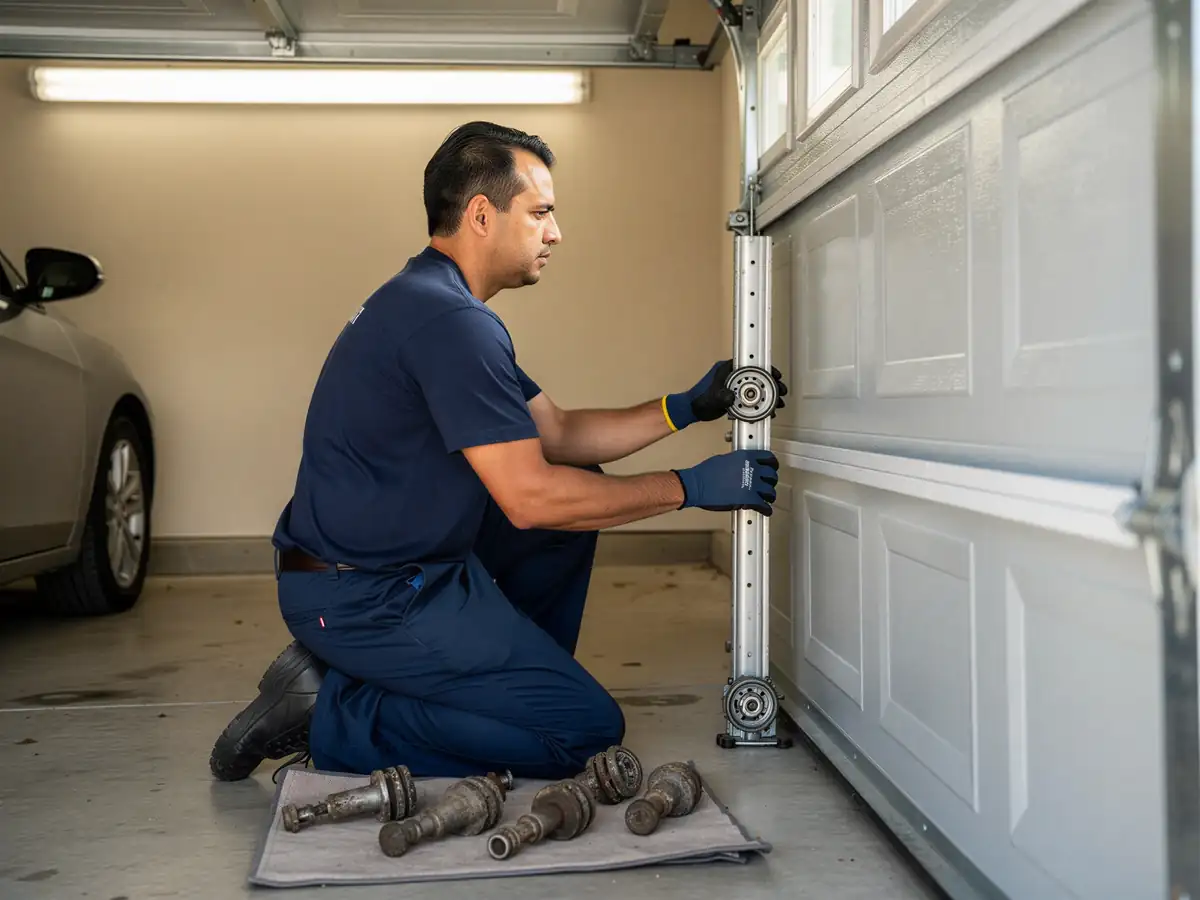
We're not going to tell you every noisy door means a full teardown. Sometimes it's a roller, sometimes it's a hinge pin worn oval from 46 years of travel. But on a door this old, a single new part can expose how worn everything around it is, so the honest answer when we're out is sometimes 'this one part will fail again in six months because the track it's riding in is shot too.'
Time on the Job
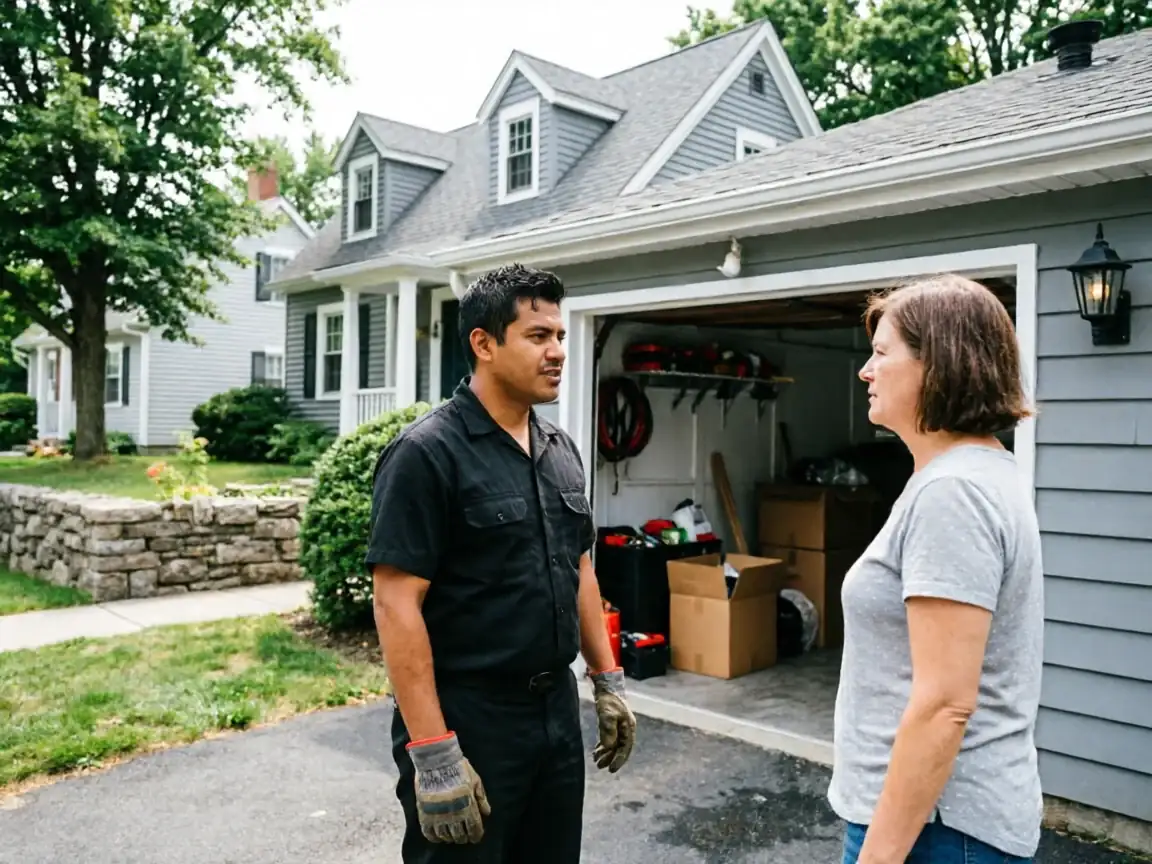
We work out of Londonderry, about 10 miles from Atkinson, so the drive is part of the job every time, not an afterthought. We're not going to promise a response window we don't have data to back - what we can tell you is that the trip is short enough that it doesn't change how we price or plan the work once we're there.
Once on site, a door this age usually takes longer to diagnose than a newer one, not because the fix is harder but because original hardware doesn't always match what's in a parts catalog today. Spring wire gauge, drum size, and track width from 1979 construction can be slightly off from current stock sizes, so we sometimes spend real time cross-referencing before we touch a wrench. That's time well spent - guessing on spring tension is how doors get hurt people.
Why This Fails Locally
This region sits in a cold-severe climate band
And that matters more on original 1979 hardware than it does on anything installed in the last ten years. Galvanized coatings from that era weren't as consistent as what ships now, and decades of winter condensation cycling on steel that's already near the end of its fatigue life is a bad combination. Springs don't just wear from cycles, they wear from corrosion working into stress points, and a 46-year-old spring in a cold-winter town has had both working against it the whole time.
Here's the honest limit
On doors this old, we sometimes can't just swap the failed part and call it done, because the replacement spring or roller doesn't match the original drum or track geometry closely enough to trust. When that happens, the right call is replacing the hardware set rather than patching one piece, even though that's a bigger job than the homeowner called about. We'd rather tell you that up front than have you call back in a year.