The DIY Question
Before you pull up a video and grab a wrench, know what you're actually working on
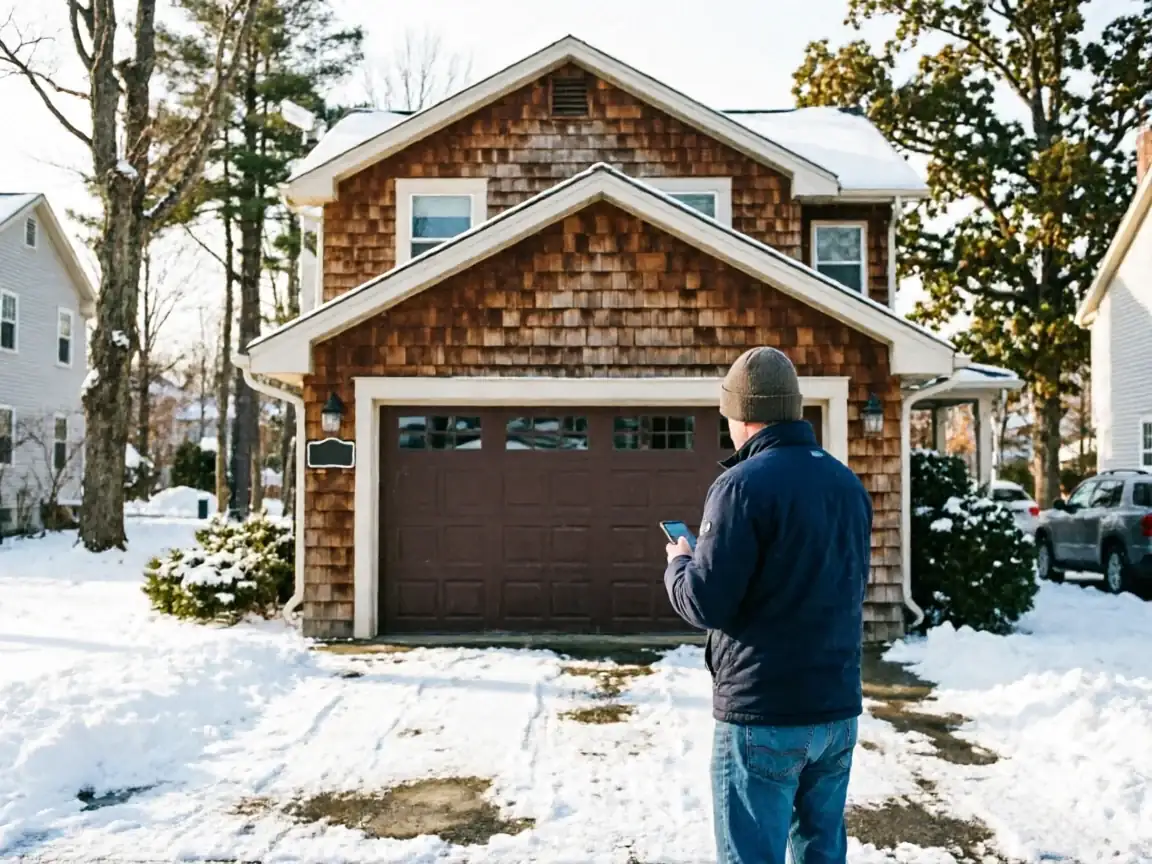
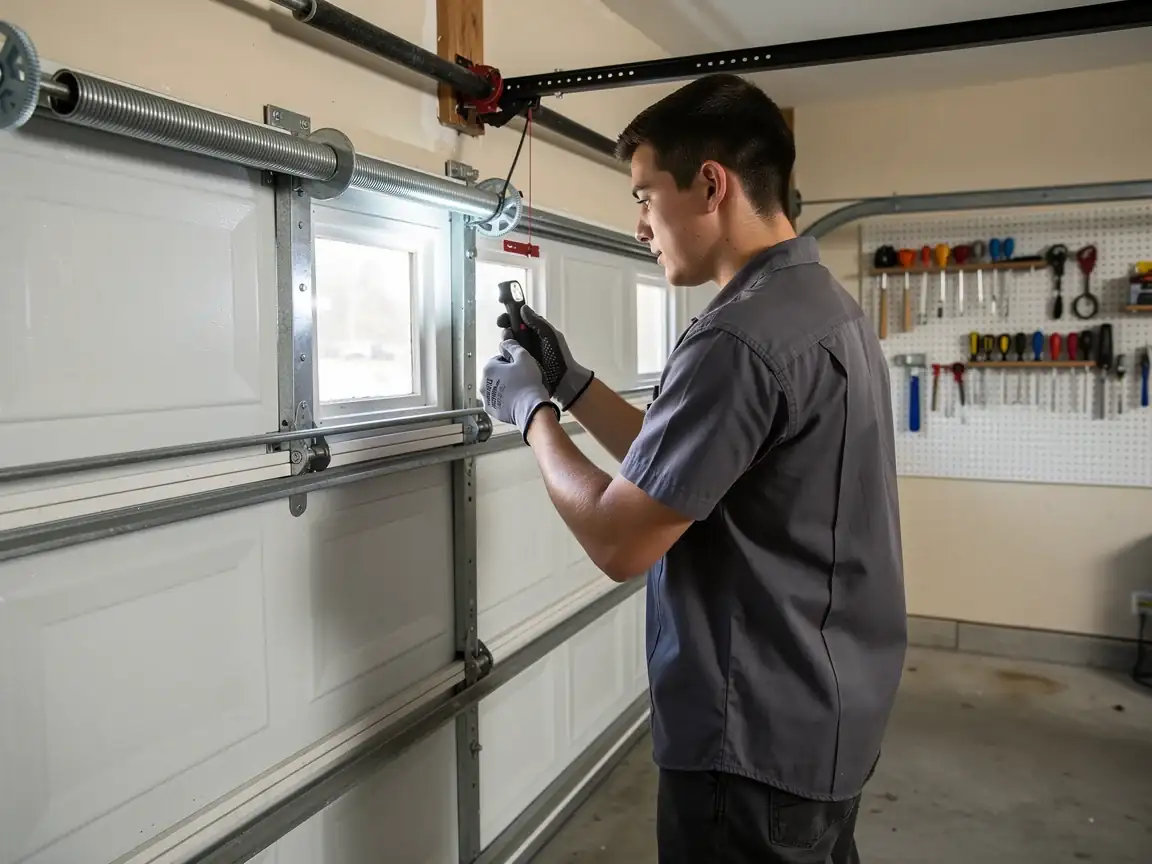
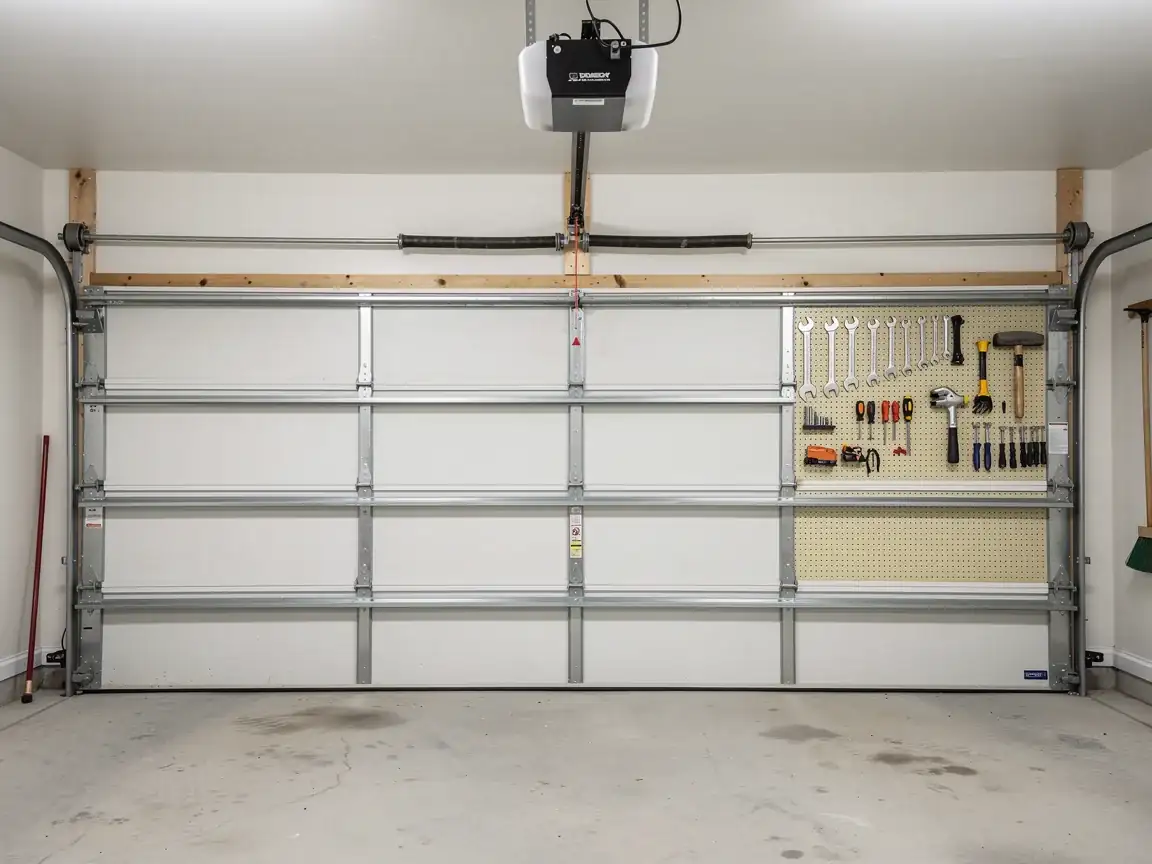
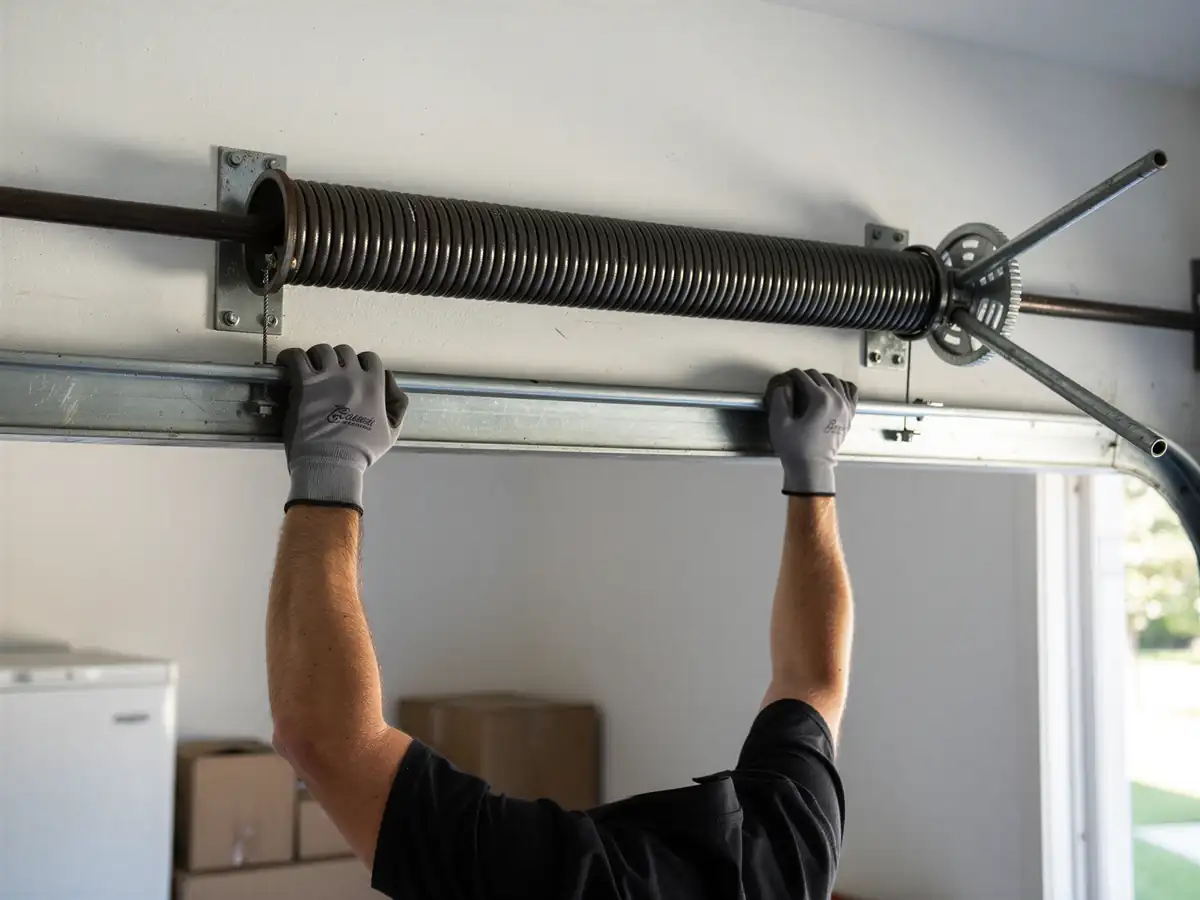
A door built when most Atkinson houses went up - around 1979 - is a single-layer steel sectional door, usually 16x7 for a two-car garage, hung on extension springs mounted along the horizontal tracks rather than a torsion bar over the header. That's an older configuration than what you'll find going into new construction, and it changes what's safe to touch yourself.
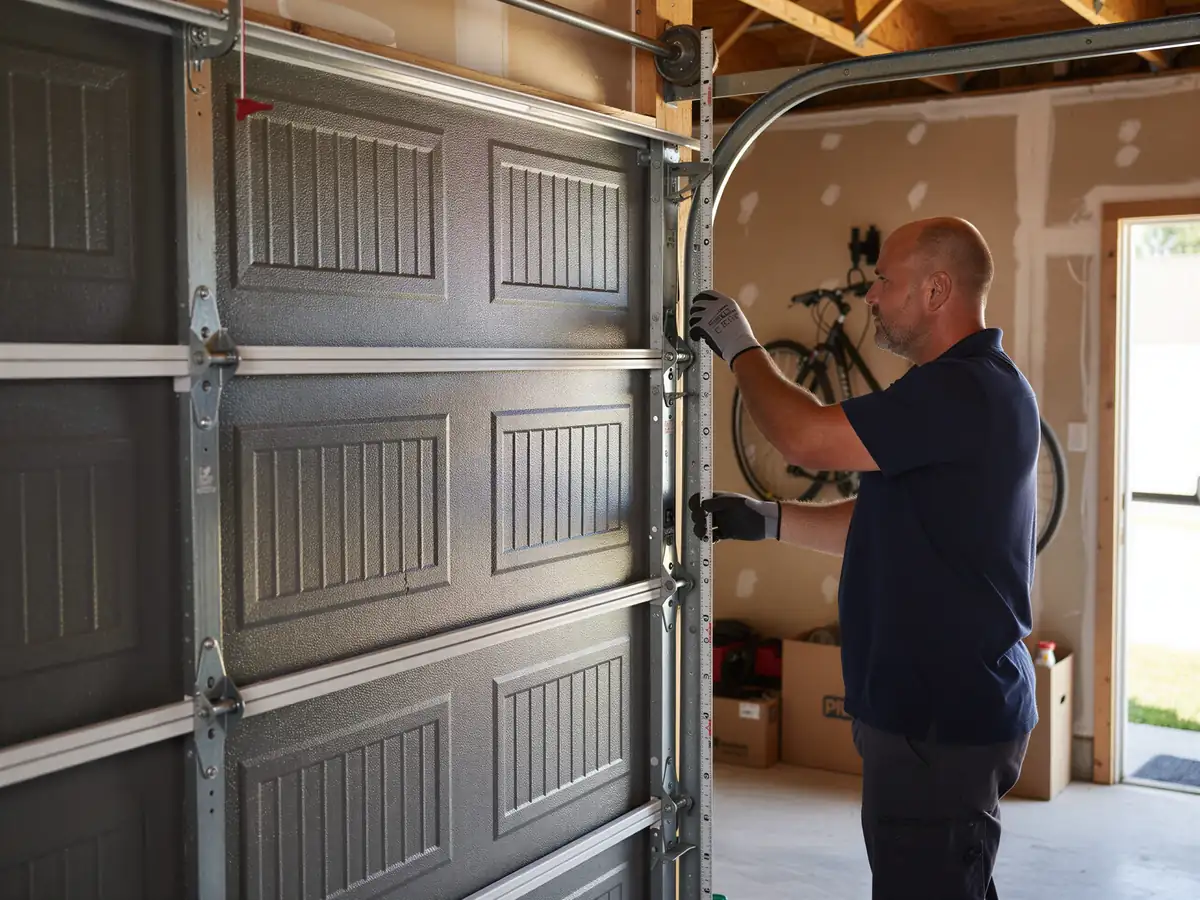
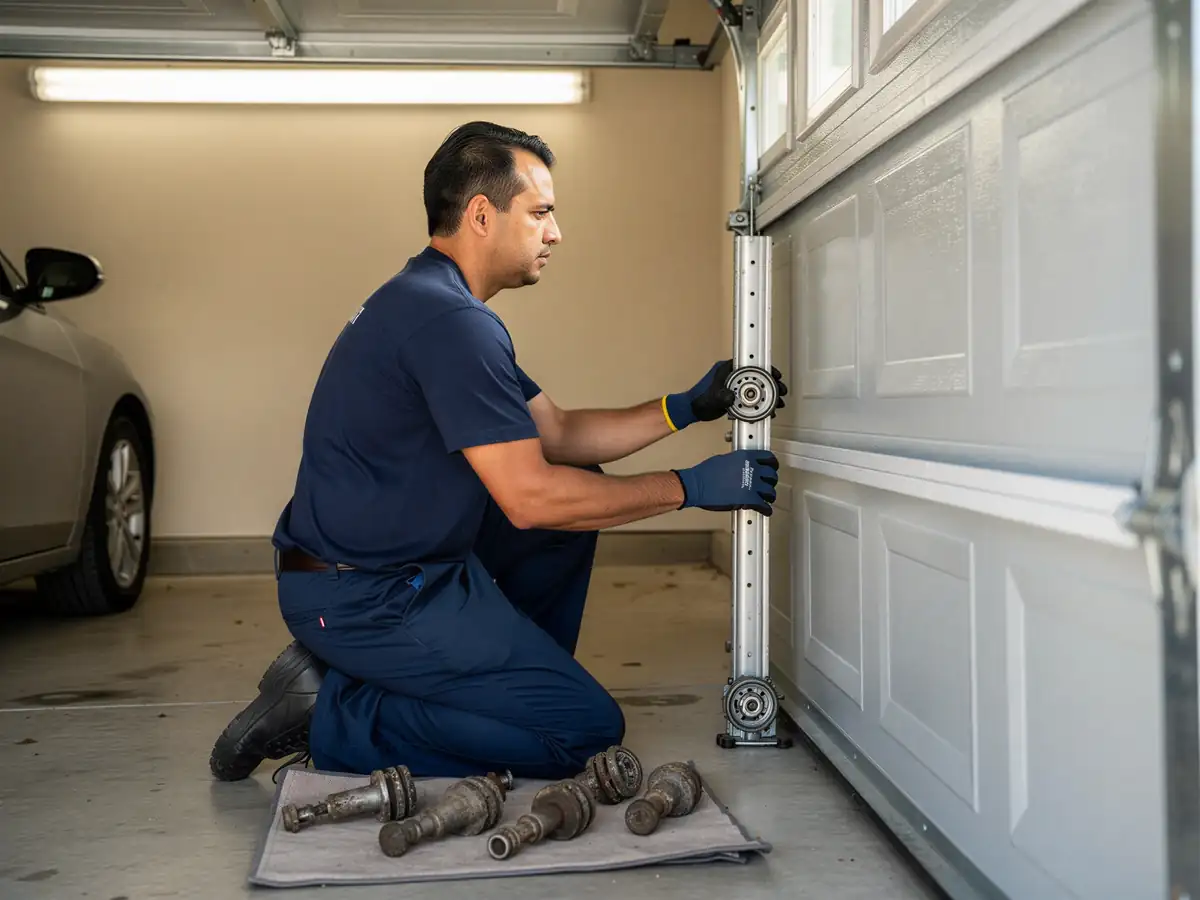
Swapping a roller or tightening hinge bolts is reasonable weekend work
Extension springs under tension are not - they don't have the containment cable that's now code-standard on newer torsion setups, and a snapped one can put a steel rod across a garage at speed. Atkinson's median household income, at $144,481, is well above the surrounding service area's $125,774, and in practice that shows up as owners who'd rather pay once for a torsion conversion than keep patching a 45-year-old spring system. That's a judgment call worth making with someone who's looked at the actual door, not a forum thread.
The Symptom
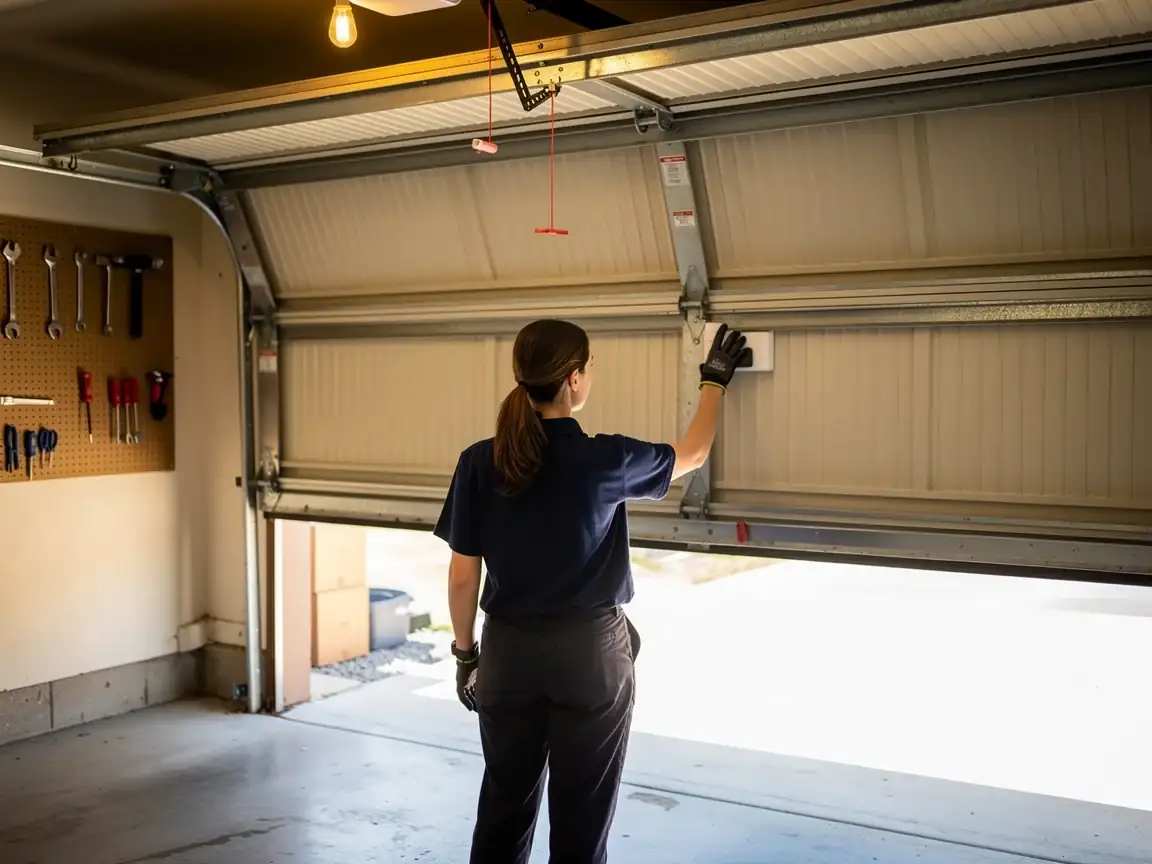
On a door this age, the complaint we hear most isn't "it won't open" - it's a door that opens unevenly, drops the last foot instead of lowering smooth, or groans loud enough to hear from the kitchen. That's the extension spring losing tension unevenly on one side, or the galvanized cable fraying where it loops the pulley. Both are original-hardware problems, not opener problems, and no amount of adjusting the opener's travel limits fixes either one.
Steel panels from this era also don't have the foam-core insulation that became standard later, so a second symptom shows up seasonally: condensation beading on the inside face of the door in winter, sometimes enough to drip and rust the bottom panel from the inside out over the decades. If your door is original to a 1979-built house, check the bottom two feet for that kind of rust before you assume the track is the issue.
Time on the Job
We run this job out of Londonderry, about 10 miles south. That's a short, predictable haul - no different in distance than the runs we make into Hudson - so a spring job or panel swap in Atkinson doesn't carry extra drive time built into the estimate the way a farther town might.
On site, a straightforward extension-spring replacement or cable re-run on a door like the ones common here usually fits in a single visit. Full replacement of an original 1979 door - frame, panels, new torsion hardware - takes longer and sometimes means a second trip if the opening needs reframing, which older sectional installs occasionally do. We'll tell you on the first visit if that's the case rather than guess over the phone.
Why This Fails Locally
New Hampshire sits in a cold-severe climate band
And that matters more for a door built in 1979 than one built in 2015. Non-insulated steel panels contract hard in deep cold, which is when seam gaps widen and weatherstripping that's already decades old finally gives up and cracks. Pair that with extension springs that have already done 45 winters of expansion and contraction, and you get the failure pattern we see most in this stretch of towns: a spring that lets go on the first genuinely cold morning of the season, not in July.
Here's the honest limit
If the door itself is original to the house and the track or jamb has shifted with the foundation over that many years, a new torsion spring on old hardware is a short-term fix. At that point replacement is the better money, and we'll say so rather than keep selling you parts for a door that's reached the end of its hardware's service life.