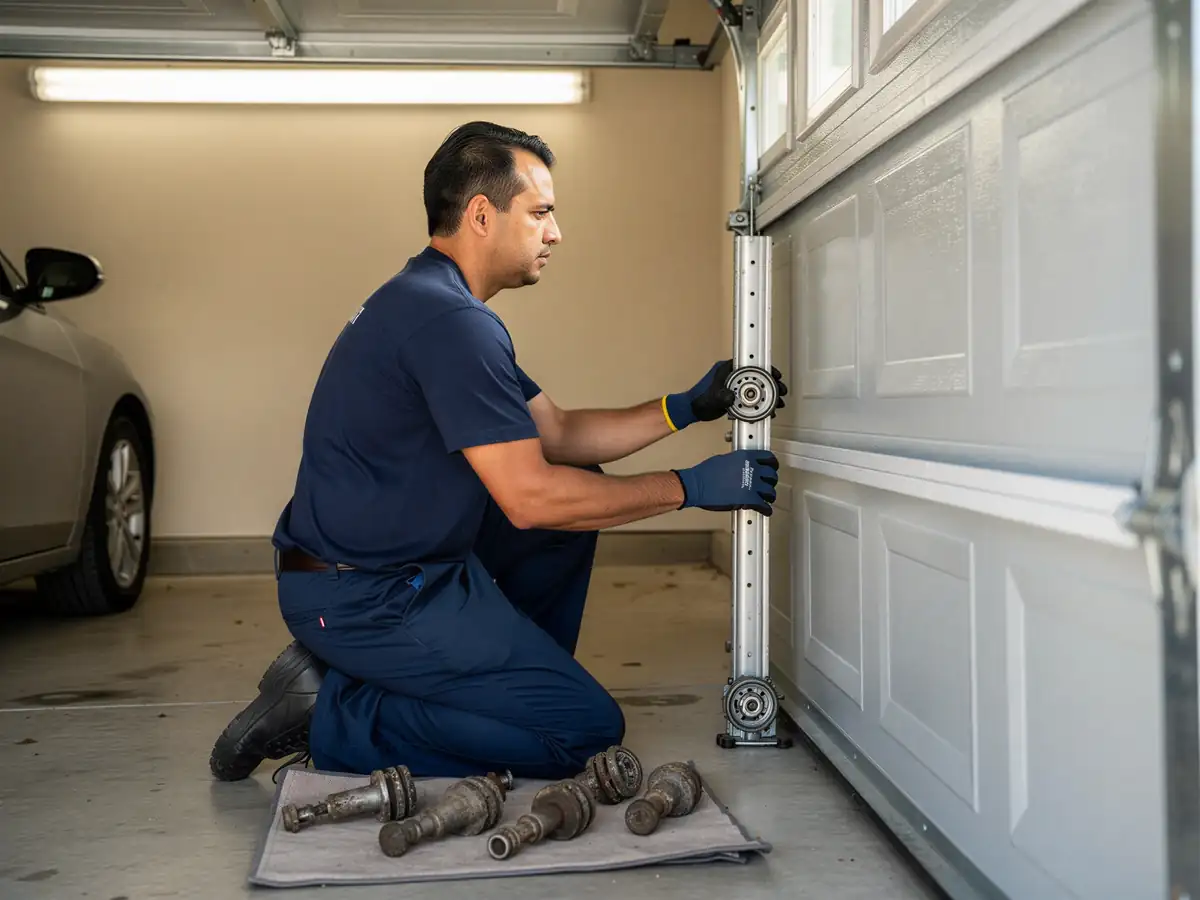
Stocked Parts
Litchfield is a smaller town, about 3,015 households
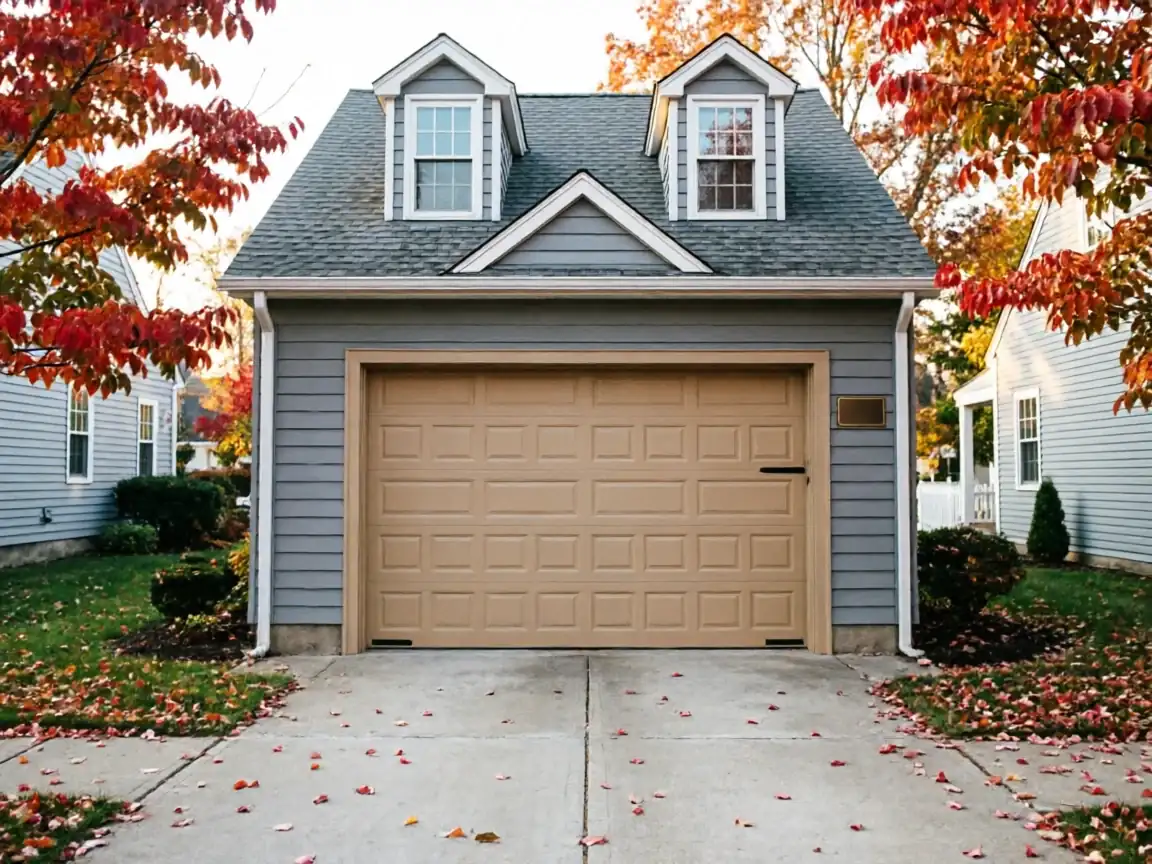
Which means the roller work we see here doesn't vary much door to door - it clusters. Most of this town's housing went up around 1986, part of the broader 1938-1996 stretch across the service area, and that means a lot of garage doors running the same first-generation steel rollers on steel stem, the kind that were standard builder-grade equipment through the 80s and early 90s. Those rollers were never meant to run quiet or run forever - they were meant to pass inspection and get the house sold.
- 3,015 households
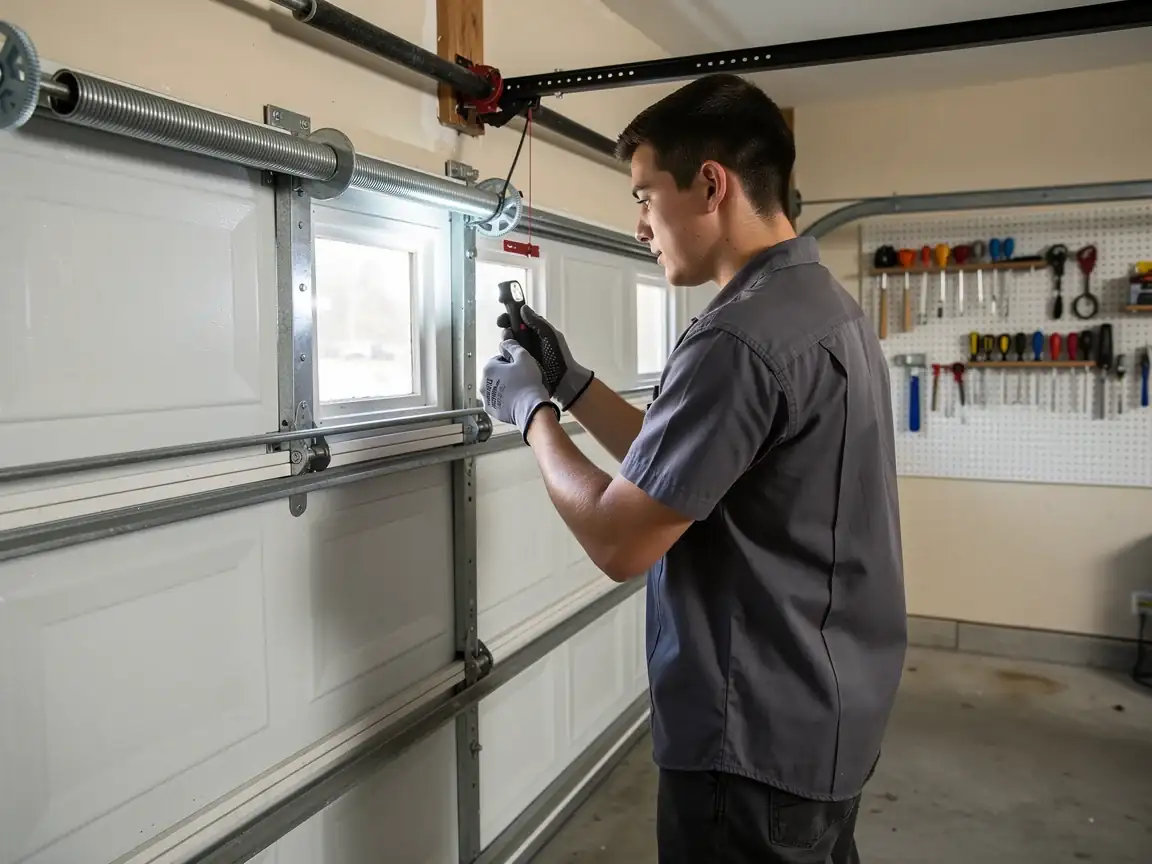
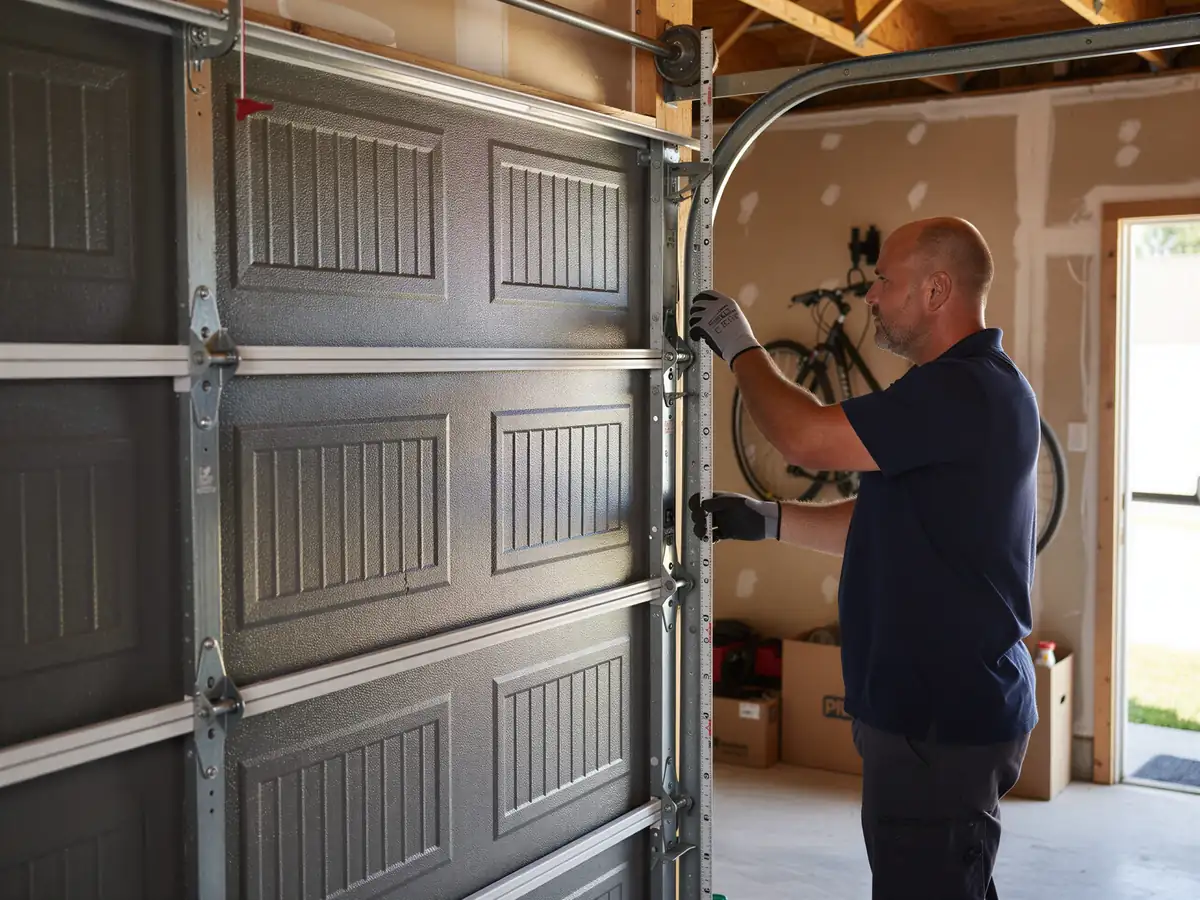
We carry nylon rollers with sealed bearings on the truck because they're the direct swap for that steel-roller hardware
And because they run quieter in an unheated garage, which matters once winter sets in. We also carry the longer-stem versions, since tracks on houses this age sometimes sit slightly out of the original spec after thirty-plus years of settling. We don't stock every roller type ever made - if a door turns out to run an odd proprietary track system, that's a special-order part, and we'll tell you that on-site rather than pretend otherwise.
Time on the Job
A full set of roller replacements on a standard double door, done on-site, is a job we can usually finish in one visit. We bring what a 1986-built Litchfield garage typically needs because we've worked that era enough to know what shows up. What slows a job down is track damage - if the rollers have been grinding bent track for months before anyone calls, we're not just swapping rollers anymore, we're straightening or replacing track, and that adds time most homeowners don't budget for.
We travel to Litchfield from Londonderry, about 5 miles down the road, so there's no local branch adding to the job - just drive time factored into the appointment window we give you when you book.
Getting It Booked In
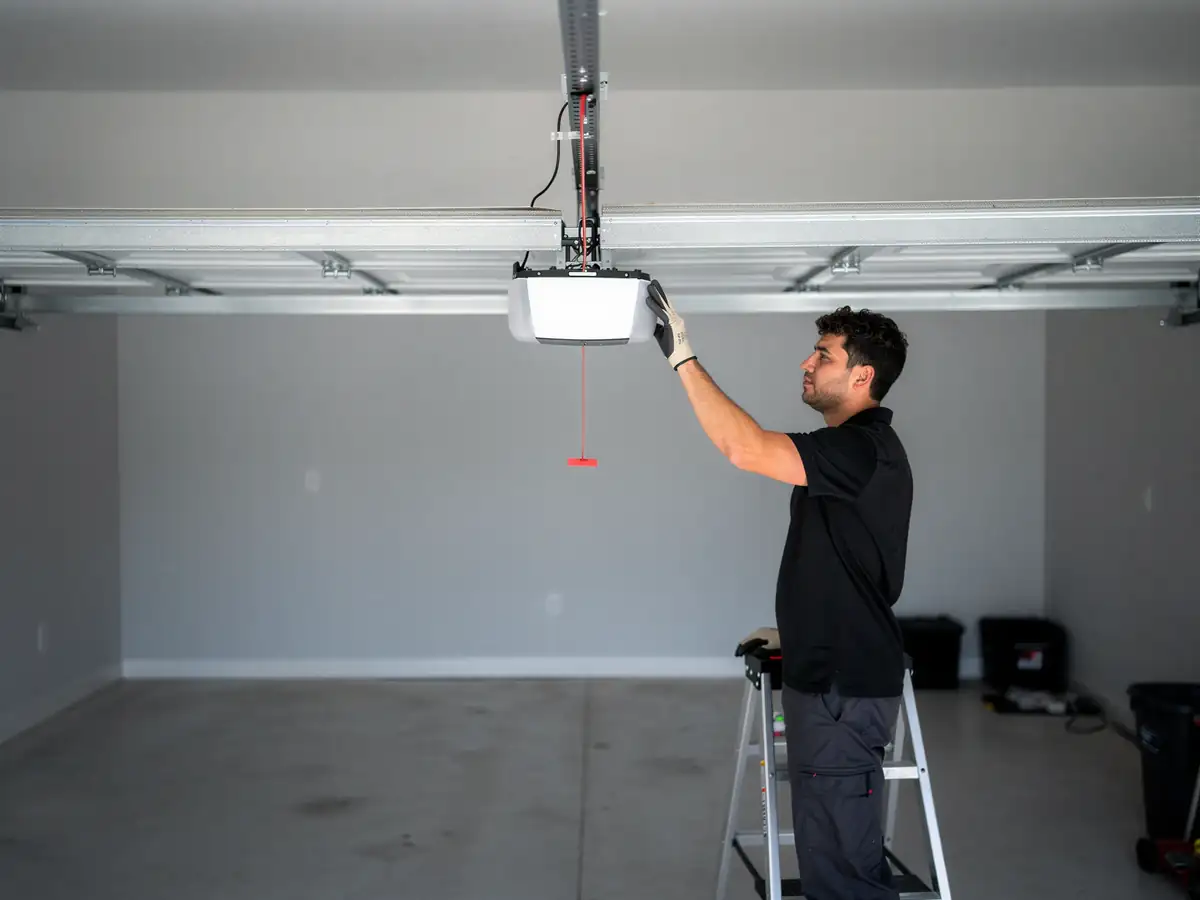
Call it in, describe what the door's doing - grinding, jumping track, visibly worn or cracked rollers - and we'll get a truck scheduled out from Londonderry. Because Litchfield sits close, within that 5-mile stretch, scheduling here isn't any different than scheduling in town; it's the same crew covering it. If you can, check whether the rollers are steel or already nylon before you call - it helps us load the right parts the first time instead of making a second trip.
We don't run a Litchfield branch or keep a crew staged here, so same-day isn't something we promise on the phone. We'll give you a realistic window based on the day's route.
What Can Go Wrong
On houses from this era - median build year 1986 - the failure pattern is pretty consistent
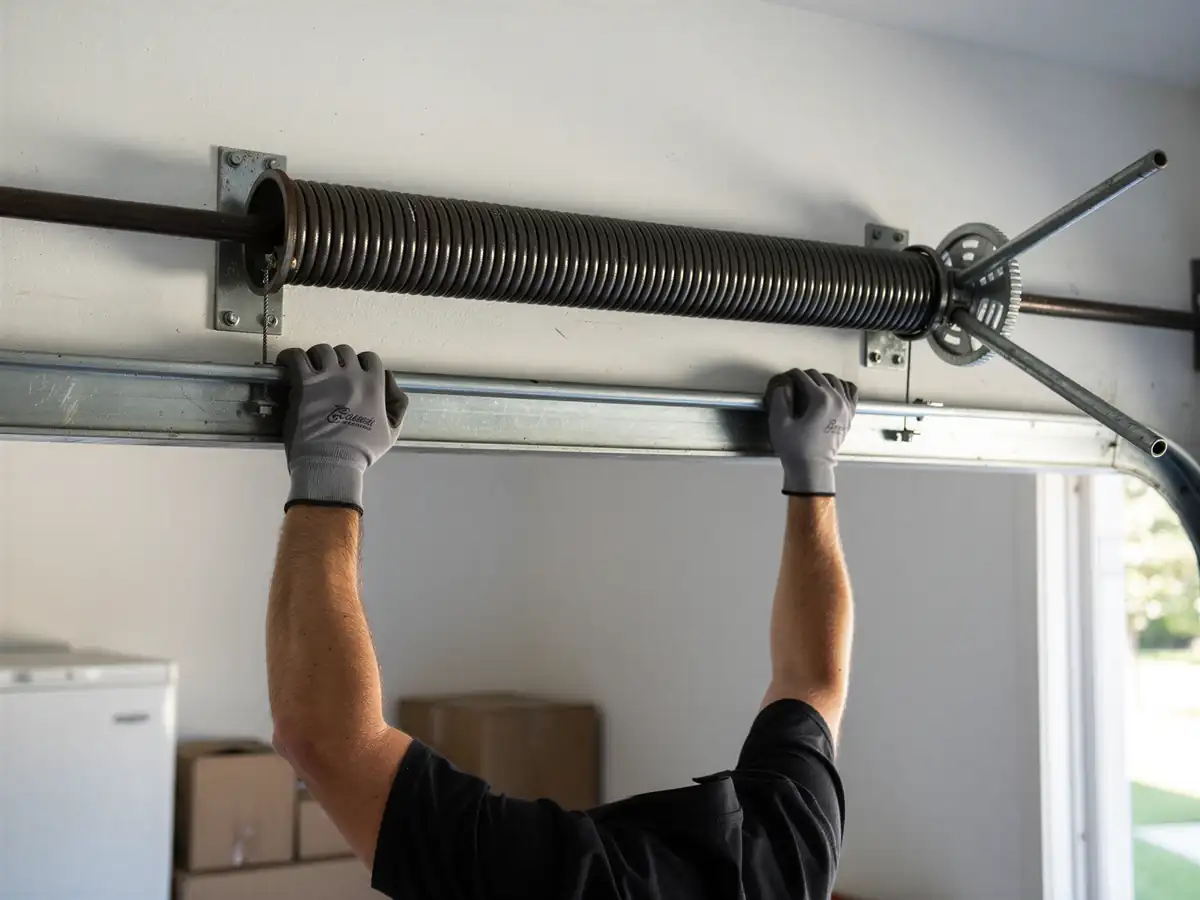
The steel roller wears a groove into itself, starts binding in the track, and the opener motor works harder to compensate. Left alone long enough, that extra strain moves to the next weakest part: the opener's drive gear, or the cables if the door's also running its original springs. We've opened up more than one Litchfield garage where the rollers were the visible complaint but the real problem had already spread to the track brackets.
Cold matters here too
This area sits in a severe cold climate band, and steel rollers with dry or degraded bearings seize up faster once the garage drops below freezing - that grinding you hear on a January morning is often a roller problem that's been building since fall.
Why This Fails Locally
This isn't a generic wear-and-tear story - it's tied to when this town was built. With Litchfield's housing concentrated around 1986, a huge share of garage doors here hit the 30-35 year mark on original hardware around the same window, which means roller failures aren't spread evenly across years, they cluster. A town with newer housing stock, or one built decades earlier with different standard hardware, wouldn't show this same pattern at this same time.
At a median household income of $155,881, we also see more owners catching this early and replacing rollers before the failure spreads to track or opener parts - which is the cheaper way to handle it. That's less common in service areas where deferred maintenance is more the norm. Litchfield's small household count, 3,015, also means this isn't high-volume work for us - it's a 5-mile trip from Londonderry for a job that, size for size, matters as much to the homeowner as any bigger town's.