Getting It Booked In
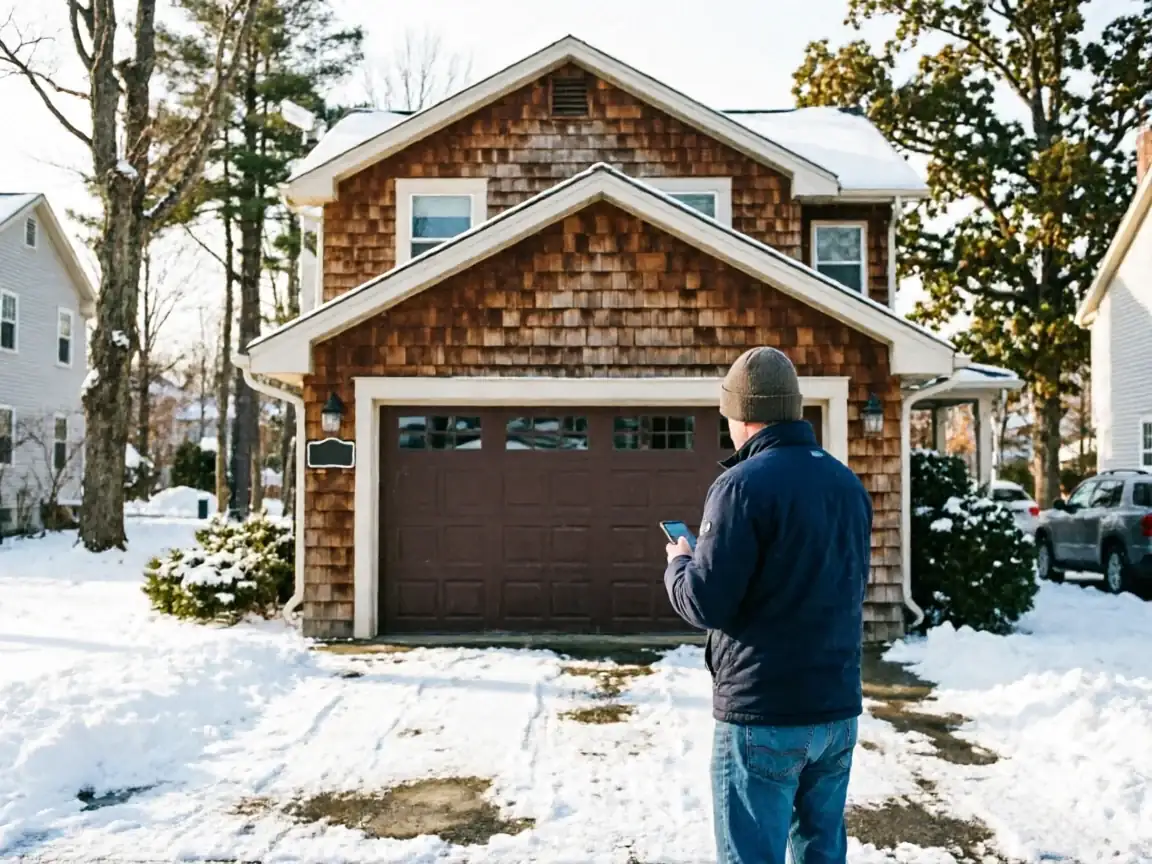
There's no Londonderry Garage Door Pros branch sitting in Chester
We cover the town from our Londonderry base, about 11 miles up the road, and that drive is built into how we schedule the day - Chester calls get grouped with other runs out this way rather than treated as a detour.
- 11 miles
That matters less than it sounds like it should
Chester's housing stock is tighter and newer than a lot of what we service elsewhere in the area - most of the town went up around 1993, well past the older 1940s-60s wave you find closer to the city line. Newer builds mean more uniform hardware: factory-installed torsion spring systems, standard 7-foot openings, openers that are original to the house or one replacement in. When you call, tell us the rough age of the house if you know it - for Chester that's usually enough for us to guess the spring size and opener type before the truck leaves Londonderry, which saves a second trip for the wrong part.
We book the job, not a window promise we can't back up from 11 miles out
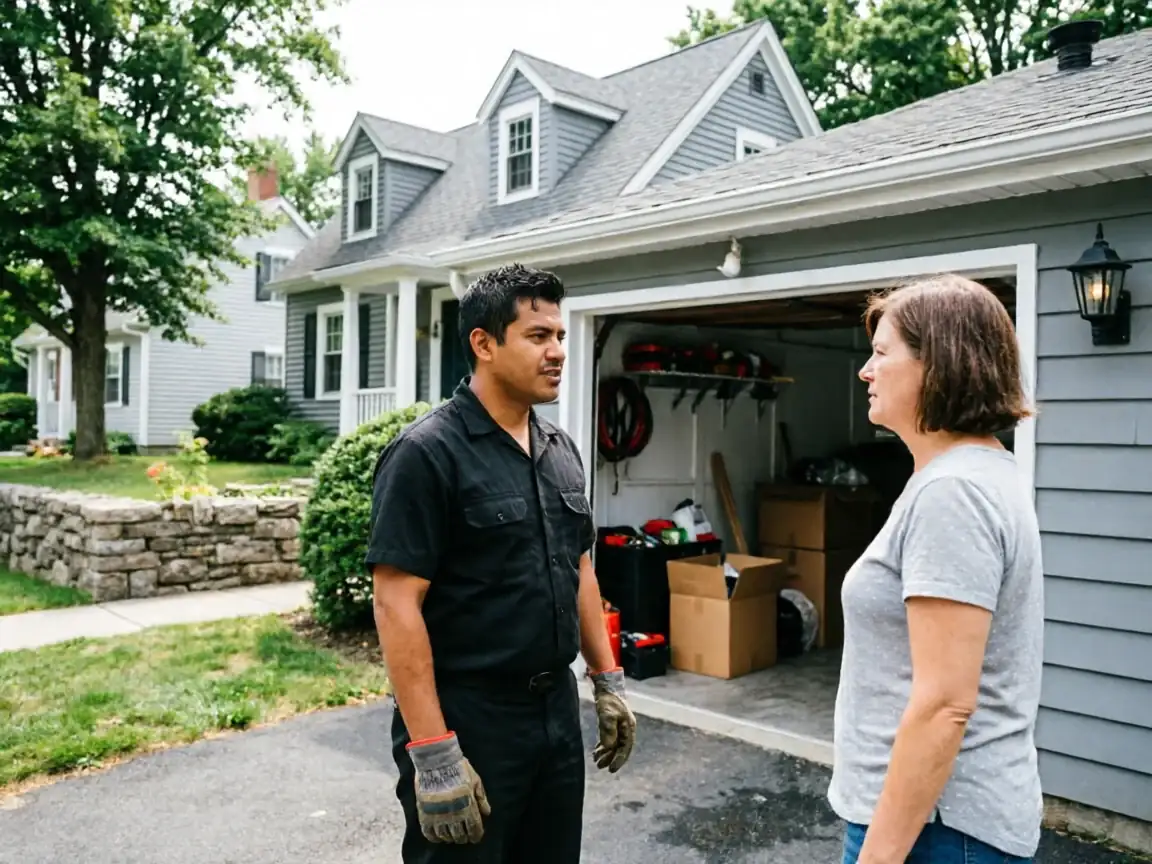
If it's a spring that's gone and the door won't move at all, say so when you call - that changes what gets loaded on the truck.
- 11 miles
Time on the Job
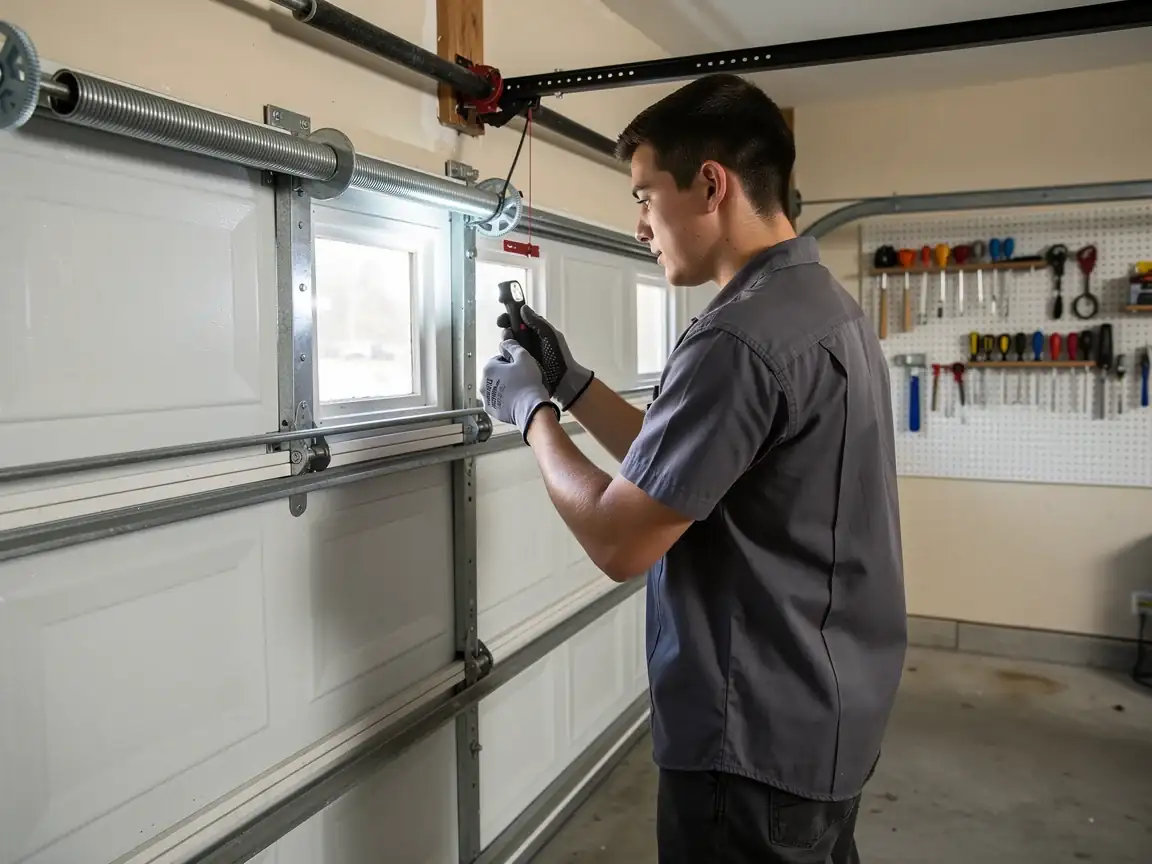
A torsion spring swap on a standard double door is a different job than a chain-drive opener that's grinding its gears, and Chester's 1993-era housing means we see both in roughly even numbers rather than one dominant fault.
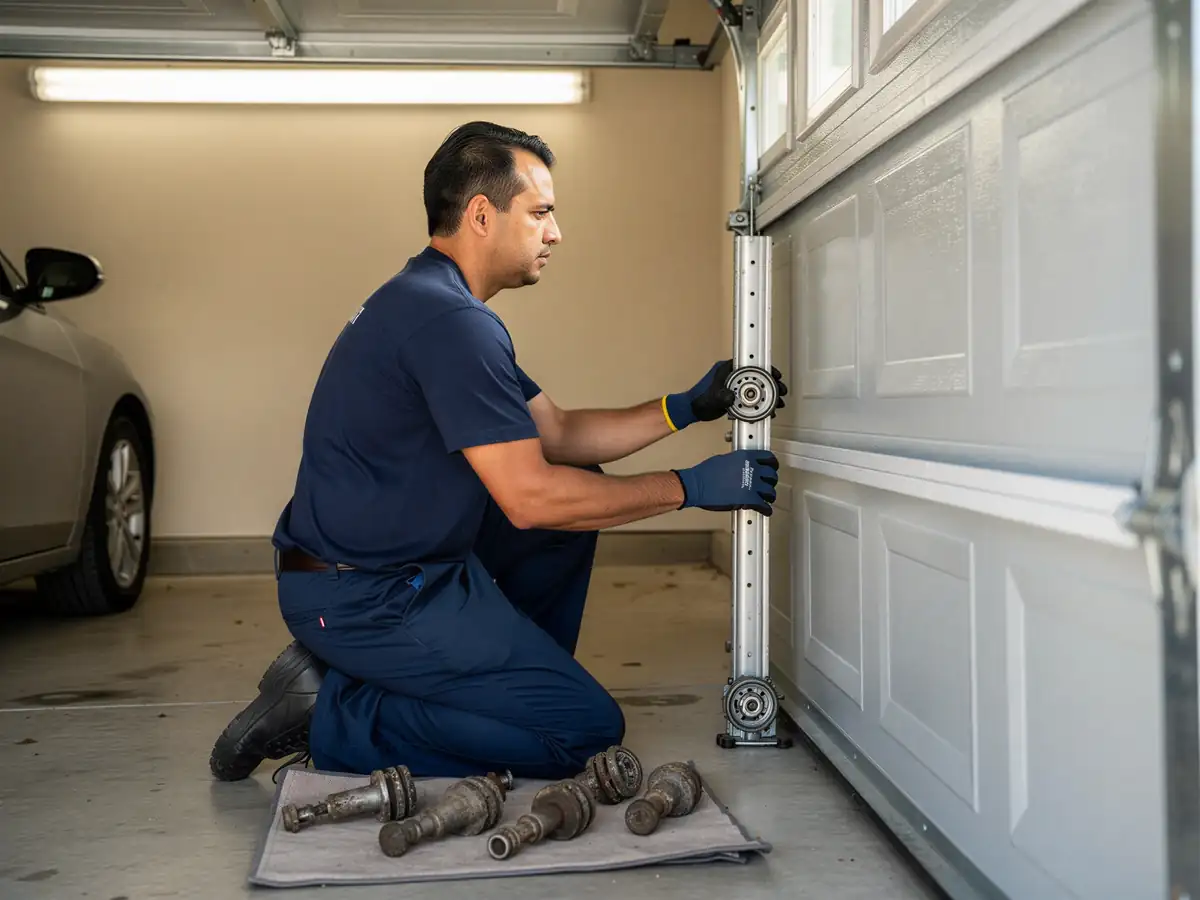
Spring work on these doors is usually straightforward - the hardware is factory standard, not the oddball side-mount setups you get on an older one-piece door, so there's rarely time lost hunting for a part that doesn't exist anymore. Opener work runs longer when the unit itself is original to the house, because a 30-year-old chain drive often needs the whole head replaced rather than a single part, and we won't know that for certain until we're looking at it.
We don't quote a fixed number of minutes over the phone, because the two most common jobs here - spring replacement and opener work - take different amounts of time and the second one depends on what's actually failed inside the unit. What we can tell you is that neither job is a quick bolt-on; both involve taking the door out of service briefly while the work gets done, and we'll tell you up front if a job's going to run long before we start it, not after.
The Symptom
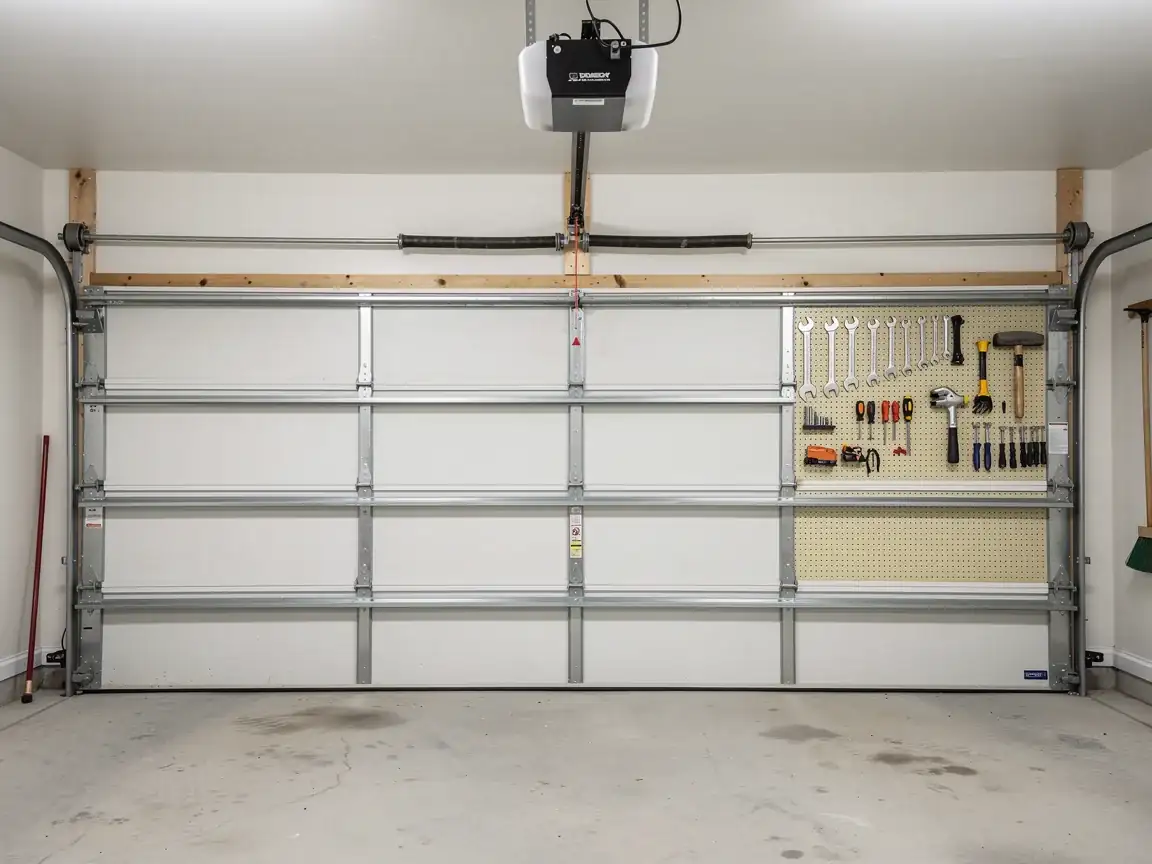
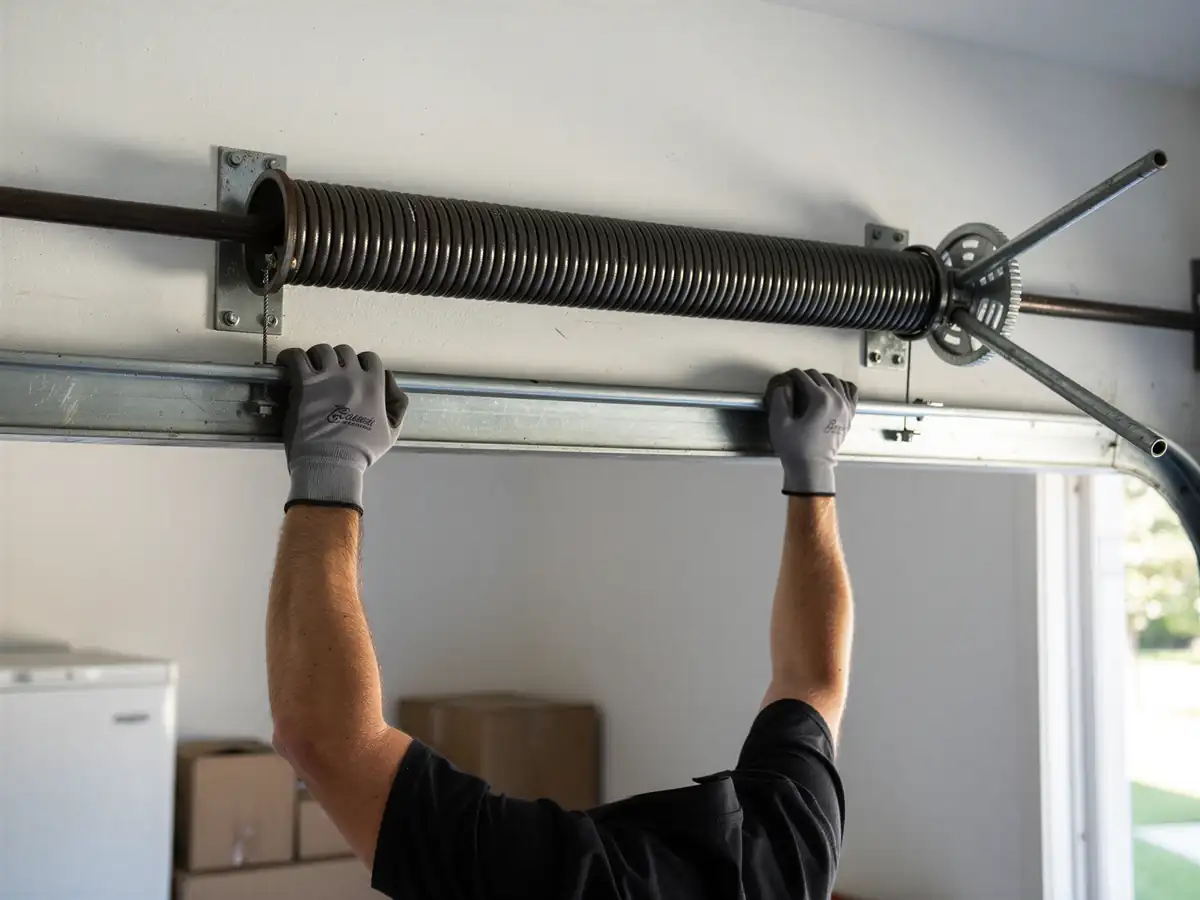
The fault we see most in Chester is a torsion spring that's lost tension gradually rather than snapped outright - the door gets heavier to lift by hand, the opener starts straining and reversing partway up, and eventually it won't lift at all. That pattern fits the build era: a house from 1993 is old enough that its original torsion springs, rated for roughly 10,000 cycles, are well past their working life if they've never been swapped.
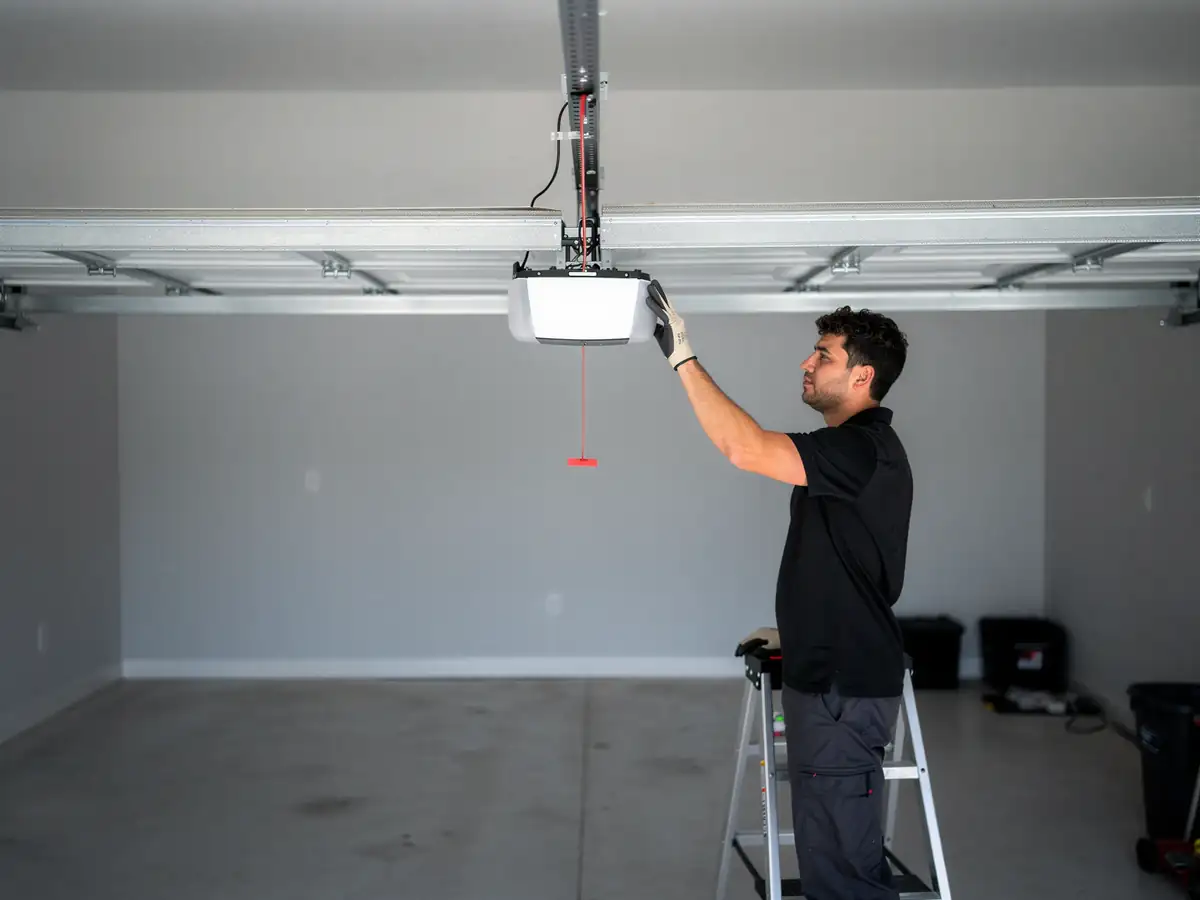
The other common call is a chain-drive opener grinding or stalling on a door that otherwise moves fine by hand - a sign the opener's motor or gearing is wearing out independent of the spring, which is common once a unit passes the 15-20 year mark.
This area sits in a severe cold climate zone, and that plays into spring fatigue too - cold steel is less forgiving under repeated flex, so a spring near the end of its life tends to fail in winter rather than spring or summer. If your door's gotten noticeably harder to lift as the weather's turned, that's not a coincidence worth ignoring.
The DIY Question
Don't touch a torsion spring yourself
It's wound under enough tension to do real damage if it lets go while you're working on it, and that's true no matter how handy you are with a wrench. That's the one job on this list we'd tell anyone not to attempt.
There's plenty you can safely check first, though
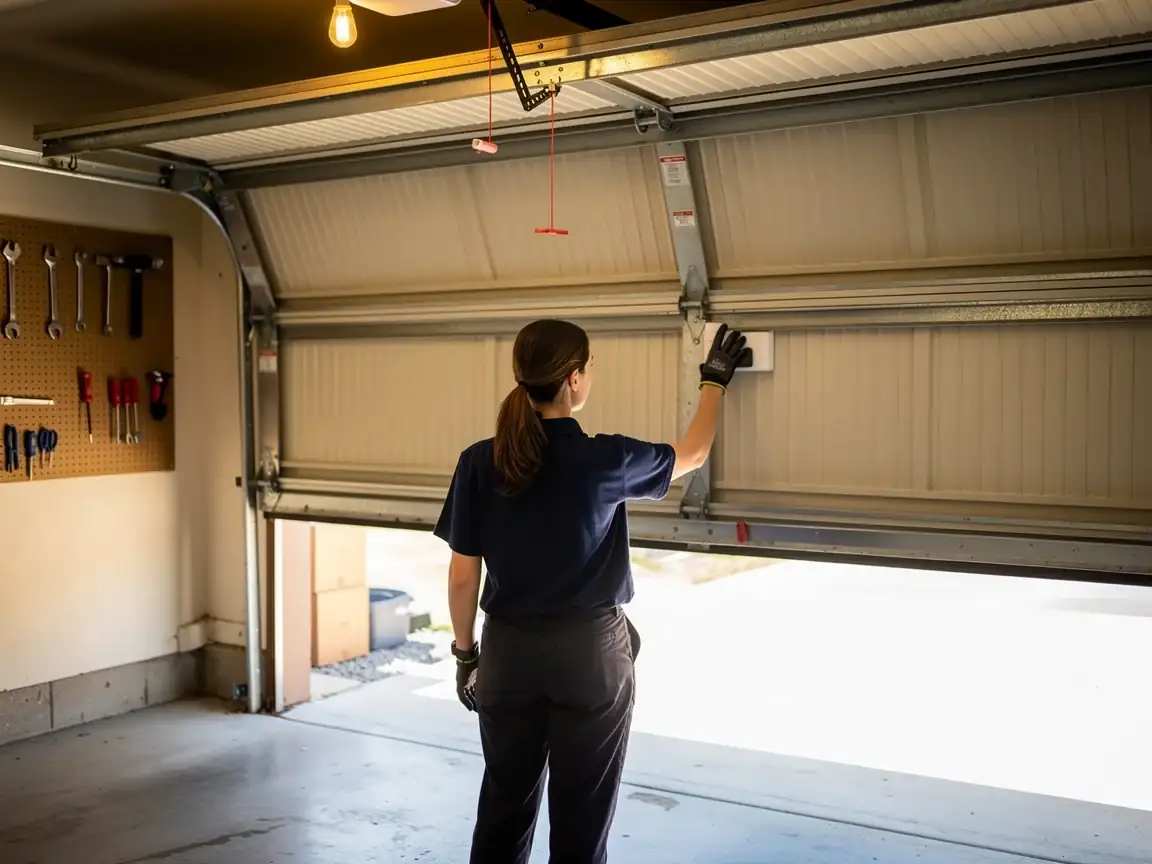
If the door won't close, look at the photo-eye sensors near the floor on each track - a bumped sensor or a stray cobweb across the lens is a common, harmless cause, and realigning them takes two minutes. If the opener runs but the door doesn't move, check that the drive chain or belt hasn't come off its track before assuming the motor's dead.
Worth saying plainly
If a door is original to a house built in 1993, a repair bill that's creeping toward half the cost of a new door is a sign to replace rather than patch. We'd rather tell you that than keep selling parts for hardware that's at the end of its run. We don't do every job that walks in the door, and we'd rather say so than take the money and leave you with a door that fails again in six months.